
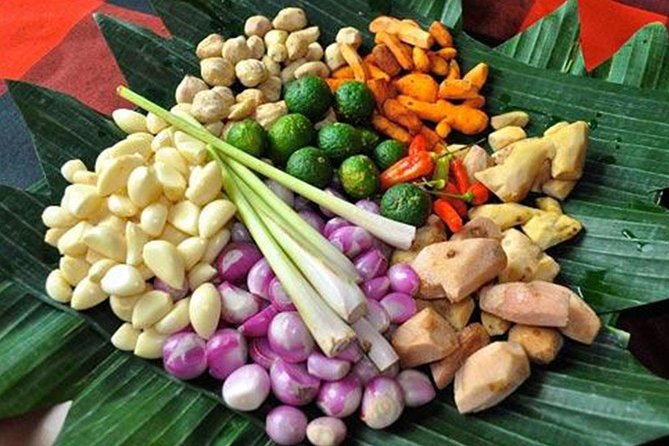
Reviewed · COOKING CLASSES
Balinese Cooking class with traditional morning market visit
Food tells Bali’s story. This six-hour Ubud experience links a local morning market with a hands-on cooking lesson in the village of Laplapan. I especially like the market stop, where you choose vegetables, herbs, meat, fruit, and spices before cooking them, and the offering lesson, which adds a cultural layer beyond food. The class also includes air-conditioned transport and keeps groups to a maximum of eight.
The main consideration is the early start and full half-day commitment. You will spend much of the morning standing, preparing food, and eating a substantial meal, so this may feel long if you only want a quick demonstration. Still, at $35 per person, the combination of transport, market visit, instruction, cultural activity, and lunch makes this a strong value.
In This Review
- Five Things Worth Knowing Before You Book
- Starting at the Morning Market
- Reaching Laplapan and Meeting the Local Team
- Making Canang Before Cooking
- Preparing Several Balinese Dishes
- Eating What You Made
- Why the $35 Price Makes Sense
- Who Will Enjoy This Ubud Cooking Class
- Useful Practical Details for the Day
- Should You Book It?
- FAQ
- Where does the Balinese cooking class take place?
- How long does the experience last?
- Is hotel pickup included?
- How many people can join the class?
- Does the experience include a market visit?
- Are vegetarian options available?
- What happens if I need to cancel?
Five Things Worth Knowing Before You Book
- The market visit comes first: You see local ingredients in their everyday setting, then select produce for the cooking lesson.
- Laplapan adds a village setting: The class takes place in traditional surroundings near Ubud rather than in a generic city kitchen.
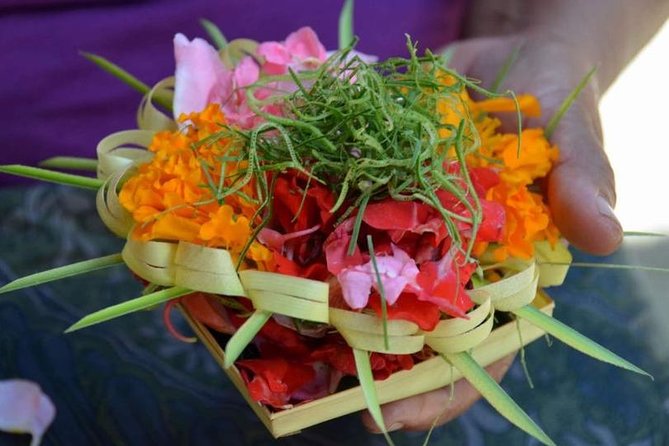
- Canang making is included: You learn how to make a Balinese offering basket and hear about its meaning.
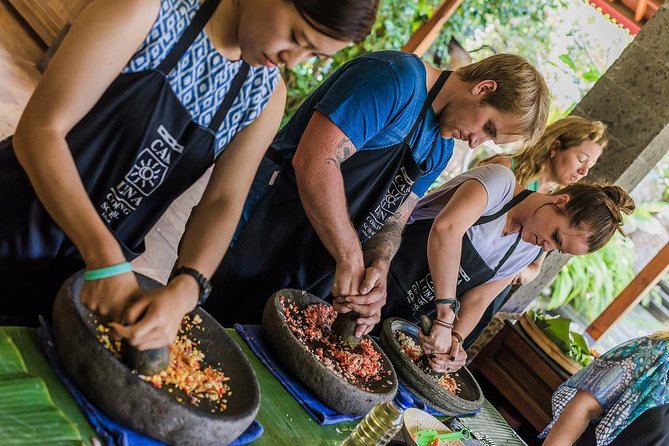
- The class is genuinely hands-on: You prepare several starters, main dishes, and dessert with guidance from local instructors.
- The small group matters: With no more than eight people, you have a better chance to ask questions and take part in the cooking.
- Recipes can go home with you: Several participants received recipes or a recipe book, making it easier to repeat the dishes later.
Starting at the Morning Market
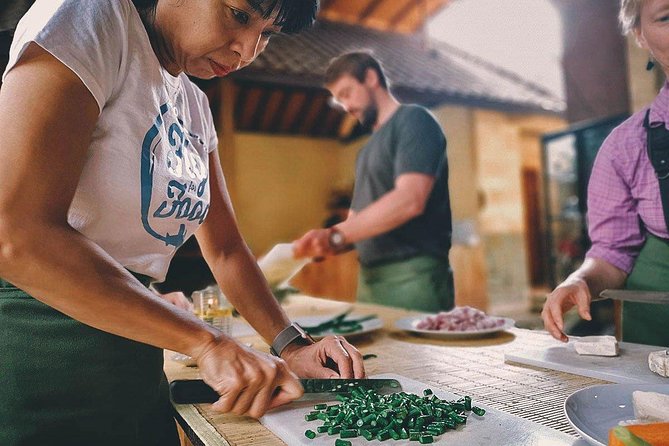
Hotel pickup gets the day moving without the need to arrange a taxi. The vehicle is air-conditioned, an important comfort in Bali, and one driver named Awan has been praised for explaining sights along the route. Pickup is offered from Ubud and, in some cases, from farther away such as Sanur, though you should confirm your exact pickup point when booking.
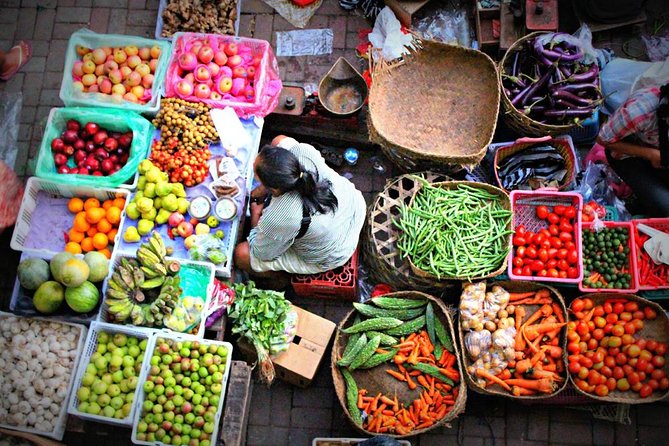
The market visit is not just a quick shopping stop. You walk through displays of vegetables, herbs, spices, fruit, meat, and other fresh ingredients, with the guide explaining what you are seeing and how it is used in Balinese cooking. You may also have the chance to smell or taste unfamiliar foods. One particularly useful part of the visit is learning which ingredients are local and which have arrived from elsewhere.
I like this opening because it gives the cooking class a reason to exist. Instead of chopping ingredients that appeared mysteriously on a worktable, you see the raw materials first. The lesson becomes easier to understand: these are the flavors, textures, and aromas that shape everyday Balinese meals.
The market stop is brief compared with the entire six-hour outing, so do not expect a long food tour with a detailed history of every stall. Its value is practical. You get your bearings, learn a handful of useful ingredients, and see a slice of local life before heading to the kitchen.
More Cooking Classes in Ubud
- Ubud Cooking Class Bali with Balinese Chef
★ 5.0 · 1,609 reviews - PRIVATE Authentic Balinese Cooking Class in Ubud at Putu’s Home
★ 5.0 · 644 reviews - Balinese Ubud cooking school (9 Dish Cooking and Market Tour)
★ 5.0 · 540 reviews
Reaching Laplapan and Meeting the Local Team
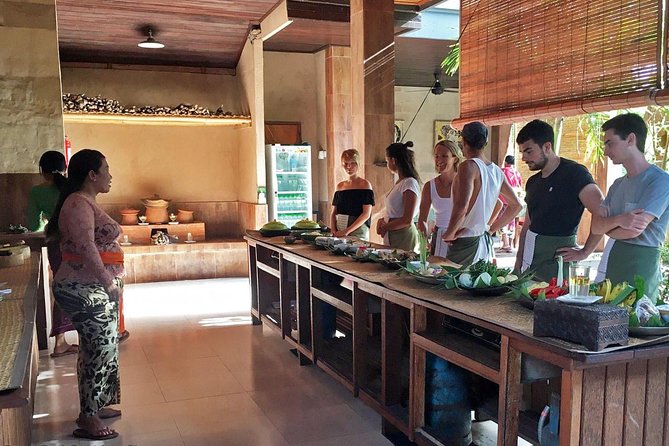
After the market, you continue to the traditional village of Laplapan. The welcome is part of the experience, with local hosts greeting you before the cooking begins. The cooking school is described as a clean, attractive place in scenic surroundings, with a relaxed setting that helps the day feel more personal than a standard classroom.
Several instructors and hosts are named in the feedback, including Wayan, Dewa, Putu, and Puthu. Wayan receives especially strong praise for her warmth, humor, patience, and clear explanations. Dewa and Wayan are also described as treating participants with the easy warmth of family. Since staffing can vary by date, do not assume one particular instructor is guaranteed, but the teaching style appears to be friendly and informal.
That matters if you are new to cooking classes. The atmosphere seems designed to make you comfortable asking simple questions, trying unfamiliar techniques, and working at your own pace. One solo participant found the class a good way to meet other people, while families appreciated instructors who could keep children involved.
The maximum group size is eight. That is small enough to allow direct help, though your exact amount of hands-on work can depend on the number of people and the dish being prepared. Some ingredients may be prepared ahead of time to keep the schedule moving. That is not a flaw, but it means the class is not necessarily eight people making every single component from the first cut onward.
Making Canang Before Cooking
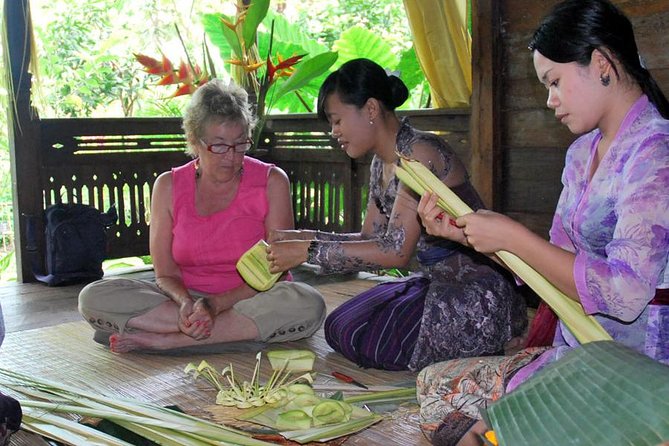
One of the most distinctive parts of the morning is the lesson on Balinese offerings. Before the cooking class begins, you learn how to make a canang, the small offering basket commonly seen outside homes, shops, and temples across Bali. The activity also covers the equipment used to make it.
This is a useful addition because it connects the food lesson to daily religious practice. You are not only learning what goes into a spice paste or how to prepare a dish. You are also seeing how manual skills, flowers, leaves, and ritual fit into ordinary Balinese life.
The activity is practical rather than purely explanatory. You make an offering yourself with instruction from the local team. That gives you something to do with your hands and a better sense of the care involved in these small daily acts.
If your main goal is cooking, the canang lesson does take time away from the stove. I would still consider it worthwhile. It helps explain the setting and gives the morning a wider cultural focus. Just keep in mind that this is a food and culture experience, not a cooking lesson alone.
Preparing Several Balinese Dishes
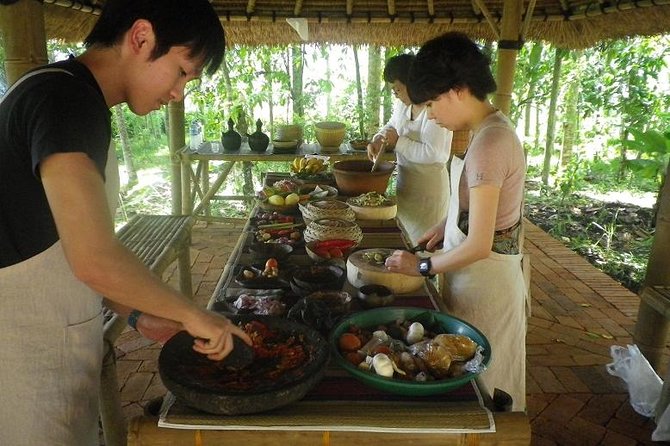
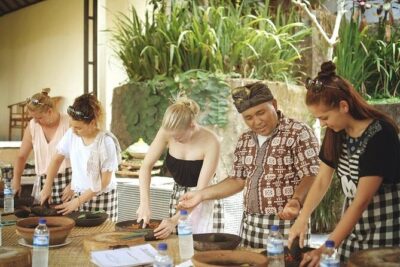
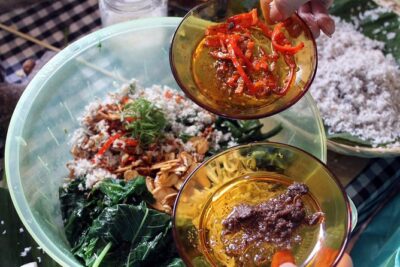
The cooking portion is the heart of the experience. Local chefs guide you through traditional methods as you prepare a selection of starters, main courses, and dessert. The precise menu is not specified, and it may change according to the ingredients available, but several sessions involved five or more dishes, with one account describing nine dishes.
That is a generous amount of food for a half-day class. You are not simply watching a chef demonstrate one recipe before receiving a plate. You take part in the preparation, cooking, and final meal. The instructors explain the techniques and answer questions as you work.
The class is also built for mixed skill levels. A first-time cook can follow step-by-step help, while a more confident home cook can ask about methods and ingredients. One participant described having enough personal attention to prepare and cook every dish during a private session. That level of involvement cannot be guaranteed in a full group, but the small size improves your odds of getting useful guidance.
The staff may handle some advance preparation so the class stays on schedule. This is sensible when the menu includes many dishes. You still get substantial hands-on work, but you should not expect to grind, slice, simmer, and plate every ingredient without assistance.
Vegetarian options are available, and the cooking team has adapted dishes for dietary needs. Tell the provider about your requirements when booking rather than waiting until the class begins. The available information confirms flexibility, but it does not specify every dietary restriction the kitchen can accommodate.
Still Ubud, at a slower pace:
- All-Inclusive Ubud Private Tour
★ 5.0 · 14,344 reviews - Best of Ubud Full-Day Tour with Jungle Swing
★ 5.0 · 8,571 reviews - Ubud: Monkey Forest, Jungle Swing, Rice Terrace, and Water Temple
★ 5.0 · 7,160 reviews - Best of Ubud 1-Day Private Tour
★ 5.0 · 4,451 reviews
Eating What You Made
At the end, you sit down for a shared meal made from the dishes prepared during the class. This is more satisfying than receiving a small tasting plate. Several participants describe cooking a large number of dishes and having plenty to eat afterward.
The meal also lets you judge the techniques while they are fresh in your mind. You can taste how the herbs, spices, vegetables, and other ingredients work together, then ask the instructor why a dish has a particular texture or flavor.
Food quality receives some of the strongest praise. Descriptions repeatedly point to fresh ingredients, delicious recipes, attractive presentation, and a generous quantity. A welcome drink and snack may also be served at the kitchen before the cooking starts, though the core inclusions are the class, equipment, transport, and taxes.
Recipes are another useful takeaway. Some sessions provide recipes or a recipe book, allowing you to try the dishes at home. This adds real value to the $35 price, especially if you are willing to shop for unfamiliar herbs and spices after returning home.
Why the $35 Price Makes Sense
At $35 per person, this is priced below many full half-day food experiences in major tourist areas. The fee includes hotel transport in an air-conditioned vehicle, the market visit, cooking class fees, cooking equipment, and taxes. You also receive the cultural activity and the meal you prepare.
The value improves if you are staying outside central Ubud and would otherwise pay separately for transport. One account notes a convenient pickup from about an hour away in Sanur, although the exact service area should be confirmed before booking.
The price does not include personal expenses. That is a broad category, so bring a little money if you want to buy something separately at the market or purchase personal items during the day. The market ingredients used for class are part of the organized experience, but personal spending is not.
I would not book this solely for the food. Ubud has plenty of inexpensive places to eat. The better reason is the combination of instruction, local ingredients, village setting, transportation, and a meal that you help create. For a first visit to Bali, that package gives you far more context than a restaurant lunch.
Who Will Enjoy This Ubud Cooking Class
This experience suits you if you like to understand a place through food. It is especially good for people who enjoy asking questions, handling ingredients, and learning methods they can repeat at home.
Families can also do well here. Children as young as six have been included in sessions, and instructors have kept children involved with the market, offering activity, and cooking. The class still lasts about six hours, so younger children need to be comfortable with a long morning and sustained participation.
Solo visitors may appreciate the small group format. You have a built-in social setting without needing to arrange a private tour. Couples and friends can divide tasks and compare results, while mixed-skill groups can work at different speeds with help from the instructors.
You may want a different experience if you dislike markets, prefer a short demonstration, or have limited time in Ubud. The morning market is part of the point, and the full schedule takes about six hours. This is also not the right choice if you want a tightly specified menu, since the exact dishes are not provided in advance.
Useful Practical Details for the Day
Wear clothing you do not mind cooking in, though no special clothing requirements are given. The day includes a market walk and kitchen work, so comfortable clothes and shoes are the sensible choice.
Keep your morning flexible. Pickup times and driving times depend on where you are staying, and the class itself includes several stages. A maximum of eight people helps, but a cooking schedule can still stretch if everyone is working through multiple dishes.
Tell the provider about dietary needs before arrival. Vegetarian substitutions have been offered, and the kitchen has adapted to requirements, but advance notice gives the team time to plan.
The experience has a 99 percent recommendation rate and a five-star average from 161 ratings. Those numbers fit the specific strengths of the day: friendly teaching, reliable pickup, tasty food, strong cultural content, and a clean cooking setting. The main limitation remains the time commitment and the possibility that some preparation is done in advance.
Free cancellation is available if you cancel at least 24 hours before the local start time. A cancellation or change made less than 24 hours ahead is not accepted for a refund, so check your schedule before committing.
Should You Book It?
I would book this if you want more than a meal in Ubud. The market gives you a useful introduction to local produce, the canang lesson explains an important part of Balinese daily life, and the cooking class lets you turn those ingredients into a substantial shared lunch.
The strongest reasons to choose it are the small group, hotel pickup, patient instructors such as Wayan and Putu, and the chance to take recipes home. At $35, it offers a lot for the time and money.
Skip it if your schedule cannot spare six hours or if you want a short, menu-focused class with every ingredient prepared entirely by you. For most food-focused visitors, though, this is an engaging and fairly priced way to connect Ubud’s market, village life, and kitchen in one morning.
FAQ
Where does the Balinese cooking class take place?
The experience begins with a visit to a local fresh food market and continues to the traditional village of Laplapan near Ubud, where the cooking workshop takes place.
How long does the experience last?
The activity lasts approximately six hours.
Is hotel pickup included?
Yes. Pickup is offered from your hotel, and air-conditioned transportation is included.
How many people can join the class?
The maximum group size is eight participants.
Does the experience include a market visit?
Yes. You visit a local morning market, learn about the ingredients, and choose vegetables, herbs, meat, fruit, and spices for the class.
Are vegetarian options available?
Yes. Vegetarian options can be provided, and dietary requirements have been accommodated. You should notify the provider in advance.
What happens if I need to cancel?
You can receive a full refund if you cancel at least 24 hours before the experience start time. Cancellations or changes made less than 24 hours before the start time are not accepted for a refund.
More Shopping Tours in Ubud
- Yogyakarta Cooking Class and Market Tour
★ 5.0 · 99 reviews - Ubud Experience ; Swing, Waterfalls, Art Market, Rice Terrace
★ 5.0 · 56 reviews - Jakarta City Tour: Shopping & Culinary Experience
★ 4.5 · 15 reviews - Bali Arts shopping with temples-waterfall visit.
★ 5.0 · 6 reviews
More Market Visits in Ubud
- PRIVATE Ubud Market Tour & Balinese Cooking Class with Putu
★ 5.0 · 125 reviews - Ubud Cooking Class with Optional Market Visit Pickup Included
★ 5.0 · 70 reviews - Balinese Cooking Class with Traditional Market Tour
★ 5.0 · 66 reviews - Active Volcano, Rice Field, Hot Spring, Fruit market, Tea Plantation with Lunch
★ 5.0 · 513 reviews
Just added around Ubud
- Private Mount Batur Sunset Trekking – All inclusive tour★ 5.0 · 63 reviews
- Private Full-Day Handara, Ulun Danu, Jatiluwih and Tanah Lot Tour★ 5.0 · 63 reviews
- Half-Day Tour: Uluwatu Temple and Kecak Fire Dance Show★ 5.0 · 63 reviews
- 3 Days for the best of Ubud Private Tour★ 5.0 · 63 reviews
- Bali Amazing Cooking Class★ 5.0 · 63 reviews
- Balinese Cooking Class with Traditional Market Tour★ 5.0 · 66 reviews
- Mount Batur Sunrise Trekking★ 5.0 · 65 reviews
- Trunyan Cemetery, Hot Spring, Penglipuran Village, and Waterfall Tour★ 5.0 · 65 reviews
Cooking Classes, compared.
PRIVATE Authentic Balinese Cooking Class in Ubud at Putu’s Home
Read our review →
Balinese Ubud cooking school (9 Dish Cooking and Market Tour)
Read our review →
Learn to cook Indonesian food at Gili Cooking Classes Trawangan
Read our review →
Browse the lists this tour appears in