
Reviewed · COOKING CLASSES
Balinese Cooking Class in Seminyak
Come hungry and leave with recipes. This three-hour Balinese cooking class at The Amala gives you a pleasant way to understand Bali through its food. You work with local spices, vegetables, fish, chicken, coconut, and rice, then sit down to eat what you prepared. I especially like the small group size, capped at 10 people, and the option to visit Jimbaran fish market with the chef before the morning class.
I also like the practical extras: you receive a certificate and keep the cooking apron. Chef Putu, Chef Manik, and other members of the team are praised for clear instruction and friendly help. The main drawback is that the hands-on cooking can involve plenty of chopping, and one visitor found the finished food had cooled before serving. If you want a serious chef-training session, this is probably too gentle. If you want a tasty, social introduction to Balinese food, it makes good sense.
In This Review
- Key points to know before booking
- Cooking Balinese food at The Amala
- The optional Jimbaran fish market visit
- Choosing among the three menus
- What the cooking lesson teaches you
- Eating the meal you prepared
- Price, transfers, and group size
- Who will enjoy this class most
- Practical advice before you go
- Should you book the Balinese cooking class?
- FAQ
- How long does the Balinese cooking class last?
- Is hotel pickup included?
- Is the Jimbaran market visit included?
- What food can I prepare?
- Can vegetarians take part?
- What is the minimum age and group size?
Key points to know before booking
- Jimbaran market option: Add the morning market visit to shop for fish, vegetables, herbs, and spices with the chef.
- Three menus: Choose Menu 1, Menu 2, or the vegetarian menu, with one menu shared by the whole group.
- Beautiful cooking setting: Classes take place at The Amala, where the calm surroundings add to the occasion.
- Useful take-home extras: Keep the apron and receive a personalized completion certificate.
- Simple logistics: Round-trip private transfer is included within the Seminyak area, with a maximum of 10 people.
Cooking Balinese food at The Amala
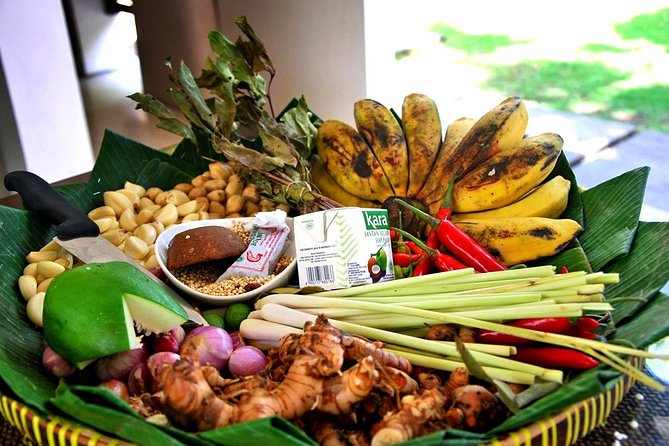
The class takes place at The Amala, a boutique retreat on Jalan Kunti I in Seminyak. The setting is one reason this experience feels more polished than a basic kitchen lesson. You are not simply standing in a crowded room with a recipe sheet. The class takes place in a pleasant hotel setting, and the staff prepare an attractive dining area for the meal at the end.
The schedule lasts about three hours. Morning sessions begin with the optional market visit at 9:30 a.m., followed by the class at 11 a.m. The afternoon option begins at 4 p.m., with cooking starting at 4:30 p.m. The morning session finishes around 1 p.m., while the afternoon class ends around 6 p.m.
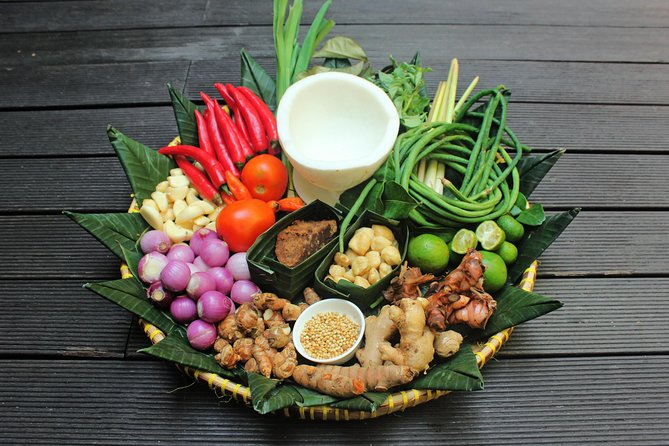
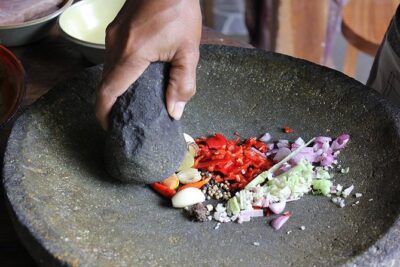
Your first step is an introduction to the ingredients and equipment. This matters in Balinese cooking because the flavor usually comes from a base of chopped and ground ingredients rather than one bottled sauce. The chef explains how the spices work together and how to prepare the vegetables, meat, fish, or tofu used in your chosen menu.
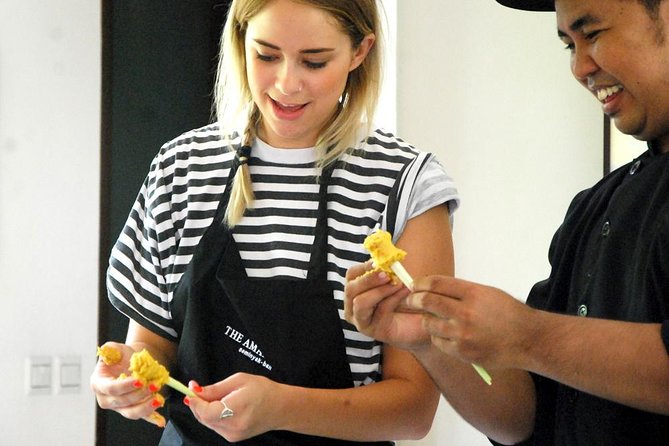
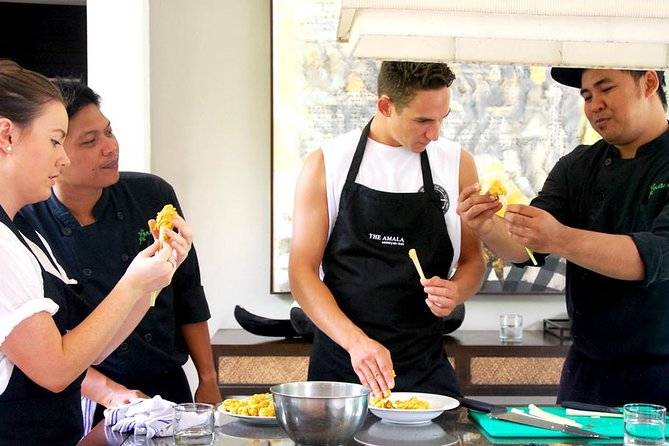
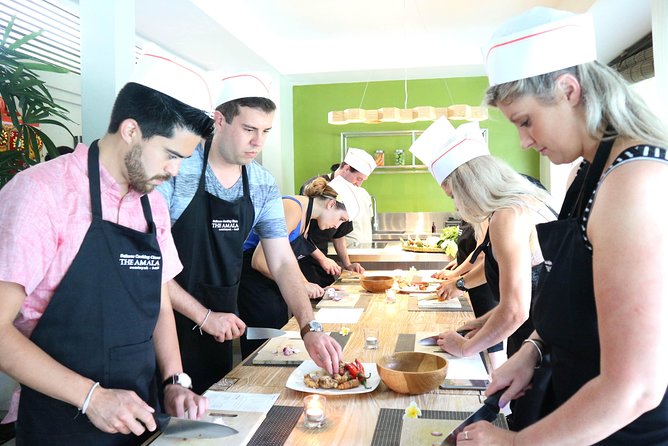
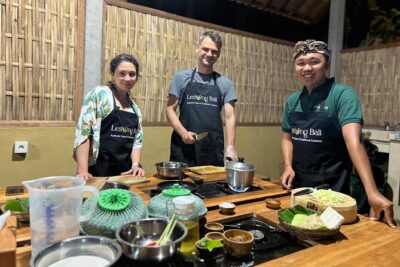
The cooking is shared among the participants. You may chop ingredients, prepare fillings, shape satay, wrap food in banana leaves, and help with the cooking. The class is designed for beginners, so you do not need advanced kitchen skills. The chef and assistants guide you through the process and answer questions as you go.
One point to keep clear: this is a practical introduction, not a full professional kitchen course. Some of your time may be spent chopping ingredients while the chef supervises the larger steps. For many people, that is exactly the right level for a holiday activity. If you want every dish prepared entirely by your own hands, ask how much participation is planned when you book.
More Cooking Classes in Seminyak and Kuta
- Nia Bali Seminyak Cooking Class
★ 5.0 · 127 reviews - Chef Bagus Balinese Indonesian Food Cooking Class
★ 5.0 · 89 reviews - Cooking class in the comfort of your own personal villa. Yes, I’ll come to you!
★ 5.0 · 80 reviews
The optional Jimbaran fish market visit
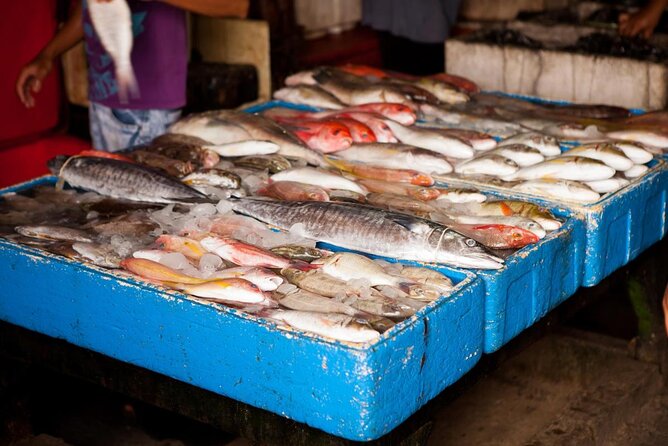
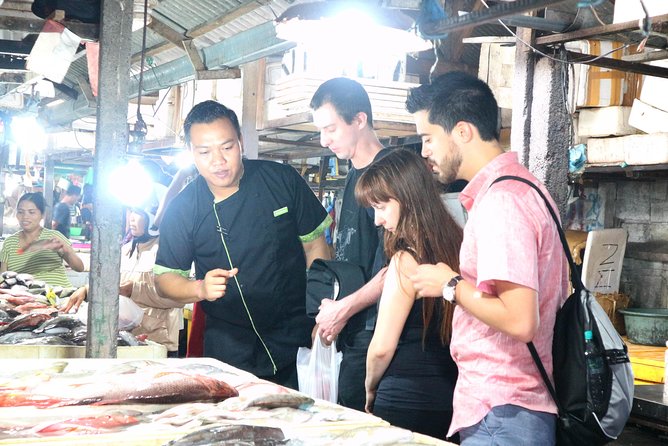
The morning market visit is the most distinctive part of the day. At 9:30 a.m., you meet the chef and go to Jimbaran fresh fish market to help select ingredients for the class. A nearby produce market may also be included, giving you a look at the herbs, vegetables, and other goods used in everyday Balinese cooking.
The chef does more than point at seafood. You learn how to judge freshness, including a useful tip about red snapper: clearer, redder eyes indicate a fresher fish. You can also see how local shopping works before the ingredients reach the cooking table. That small connection between market and meal gives the class more meaning than simply finding premeasured ingredients waiting in bowls.
The market add-on is available with the morning session only. It requires at least two people per booking. A solo booking can take the visit for an additional Rp100,000 net, so check the final cost carefully if you are booking alone.
The visit is optional, but I would choose it if your schedule allows. It adds local context and gives you a better sense of the ingredients. It also means starting earlier, so it may not suit anyone who wants a slow morning after a late night in Seminyak.
Choosing among the three menus
You choose one of three menus, and everyone in the class prepares the same menu. That arrangement keeps the lesson organized, though it means you cannot mix individual dishes from different menus.
Menu 1 includes:
- Lawar salad with green beans, fresh coconut, and chicken
- Tum ikan, fish steamed in a banana leaf
- Dadar gulung, a coconut pancake filled with palm sugar and grated coconut
This is a good choice if you want a broad taste of Balinese cooking. You get a fresh salad, delicate steamed fish, and a sweet finish. Dadar gulung also gives you a chance to work with palm sugar and coconut, two familiar ingredients in Indonesian desserts.
Menu 2 includes:
- Jukut gedang mekuah, young papaya soup with seafood
- Sate lilit ayam, chicken satay shaped around a lemongrass stick
- Godoh biu, Balinese fried banana
This menu has a more varied texture and a hearty finish. The satay is especially interesting because the chicken is formed around lemongrass rather than served on a plain wooden skewer. If you enjoy seafood and want to try a warm soup, Menu 2 may be the best pick.
The vegetarian menu includes:
- Gado-gado with vegetable salad and peanut dressing
- Pepes tahu, bean curd steamed in a banana leaf
- Bubur injin, Balinese black rice pudding
This is not simply a meat menu with the animal products removed. Gado-gado brings vegetables and peanut sauce together, while pepes tahu uses banana leaf steaming to give tofu a fragrant preparation. Bubur injin provides a sweet black rice dessert and makes the meal feel complete.
If your group has mixed preferences, remember that everyone follows the same menu. The vegetarian option works best when the whole booking is happy to eat that way.
What the cooking lesson teaches you
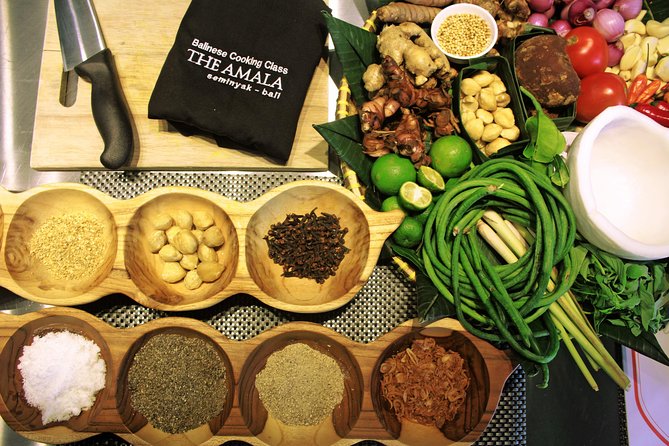
Balinese food depends on balance. Fresh coconut, palm sugar, chili, seafood, vegetables, herbs, and spice pastes each have a role. The chef explains the ingredients as you prepare them, and the recipes are supplied so you can try the dishes again at home.
A useful part of the lesson is learning about substitutions. Some ingredients may be hard to find outside Indonesia, and the chef can suggest alternatives. That makes the class more useful than a one-time holiday meal. You return home with a clearer idea of which elements are essential and which can be adjusted.
The class also helps explain why banana leaves appear so often in Balinese cooking. They are used to wrap and steam foods such as fish and tofu, adding aroma while keeping the food moist. Lemongrass has a practical role too, especially in the chicken satay. These are small details, but they help you recognize the cooking methods behind the finished dishes.
Chef Putu receives particular praise for explaining the food carefully and offering advice that can be used in a home kitchen. Chef Manik and Evi are also noted for keeping the lesson easy to follow and friendly. Staff involvement matters here because a class of up to 10 people can otherwise leave some participants waiting for a turn.
Still Seminyak and Kuta, at a slower pace:
- Bali Full-Day Traditional Village Sightseeing Trip All Inclusive
★ 5.0 · 3,069 reviews - Nusa Penida day trip: boat, 4 snorkeling, Manta rays & Land tour
★ 5.0 · 2,033 reviews - Experts Bali Driver : Best Bali Private Driver for Tour in Bali
★ 5.0 · 1,339 reviews - Bali Nusa Penida West Private All-Inclusive Tour
★ 5.0 · 1,277 reviews
Eating the meal you prepared
At the end, you sit down to eat the three-course meal. The food is generally described as plentiful and delicious, with the final meal being a major part of the appeal. You are not cooking for practice and then left to find lunch elsewhere. Your work becomes the meal.
The dining area is prepared by the staff, adding a calm finish after the activity. Some classes take place with only a small number of participants, which can make the instruction feel more personal. One solo booking even went ahead with just one customer, but the stated minimum booking requirement is two people, so do not assume that arrangement is guaranteed.
There is one fair caution about timing. One person found the food had cooled by the time everyone sat down. That can happen when several dishes finish at different moments or when the group pauses for photos and certificates. If hot food matters greatly to you, ask whether dishes are served as they finish or plated together at the end.
Price, transfers, and group size
The listed price is $66.67 per person. That is not the cheapest cooking lesson in Bali, but it includes more than ingredients and instruction. You receive a three-course meal, hotel pickup and drop-off within the Seminyak area, a certificate, and the apron you wear during class.
The market visit is the part that gives the price its strongest value. You are not only learning recipes. You are seeing where the fish and produce come from, shopping with a local chef, and then using those ingredients in the kitchen. If you skip the market, the class still offers a pleasant meal and cooking lesson, but the experience is less distinctive.
The included transfer is useful if you are staying in Seminyak. The listed meeting point is The Amala Boutique Retreat, and the activity ends there before your return transfer. If you are staying outside the Seminyak area, confirm the pickup terms before paying. One booking from Nusa Dua involved an extra Rp250,000 transfer charge, and the added cost was not communicated as early as it should have been.
The group limit of 10 keeps the class manageable. Smaller groups are possible, and several sessions have had around six people. That is a good size for asking questions and getting a turn at the chopping board or stove.
Who will enjoy this class most
I would recommend this for couples, families with older children, and friends who want an activity that produces lunch or dinner as well as memories. The minimum age is 12, so it suits teenagers who enjoy food and can take part in basic kitchen tasks.
It is also a strong choice for anyone who wants a cultural activity without a long day away from Seminyak. The class takes about three hours, and the afternoon schedule leaves your morning free. Choose the morning option if the market matters to you.
Food lovers should select the menu carefully. Menu 1 offers a rounded introduction with fish and coconut pancake. Menu 2 is a good fit for seafood fans and anyone curious about satay. The vegetarian menu is substantial enough for a full meal, not an afterthought.
I would be less likely to recommend it to someone seeking advanced technique, a private menu designed around personal tastes, or a fast-paced professional workshop. The tone is relaxed and social. The emphasis is on understanding ingredients, sharing tasks, and enjoying the finished food.
Practical advice before you go
Book with at least one other person if you want the market visit. Solo bookings may require the extra market charge, and the stated minimum is two people.
Choose your menu in advance and make sure everyone in your group agrees. The same menu is prepared by all participants, so separate preferences may not be possible within one class.
Wear something comfortable for cooking. You receive an apron and can keep it afterward, but the apron is there to protect your clothing, not to replace sensible holiday clothes.
Allow extra time around pickup, especially if you are staying beyond Seminyak. Confirm any transfer supplement before the day of the class.
The activity depends on good weather. If poor weather causes cancellation, you are offered another date or a full refund. For other cancellations, you need to cancel at least 24 hours before the start time for a full refund. Changes made within 24 hours are not accepted.
Should you book the Balinese cooking class?
Yes, if you want a friendly, well-organized introduction to Balinese food with a meal at the end. The market visit is worth adding for the best version of the experience, especially if you are curious about seafood, produce, and daily shopping in Bali.
The class is less suitable if you want intense hands-on training or complete control over the menu. Still, the calm setting, small maximum group, useful recipes, helpful chefs, included Seminyak transfers, certificate, and keepable apron make the $66.67 price reasonable. Pick the menu that suits your group, confirm transport if you are outside Seminyak, and reserve the morning session if Jimbaran market is on your list.
FAQ
How long does the Balinese cooking class last?
The class lasts approximately three hours. The morning schedule runs from about 11 a.m. to 1 p.m., while the afternoon session runs from about 4:30 p.m. to 6 p.m. The optional market visit begins at 9:30 a.m. before the morning class.
Is hotel pickup included?
Round-trip private transfer is included for hotels within the Seminyak area. The listed meeting point is The Amala Boutique Retreat in Seminyak. Extra charges may apply for pickup outside the included area.
Is the Jimbaran market visit included?
The market visit is optional and available with the morning session only. It requires a minimum of two people per booking. A solo market visit requires an additional Rp100,000 net charge.
What food can I prepare?
You can choose Menu 1, Menu 2, or the vegetarian menu. Dishes include lawar salad, steamed fish in banana leaf, coconut pancakes, young papaya soup, chicken satay, fried banana, gado-gado, steamed tofu, and black rice pudding.
Can vegetarians take part?
Yes. A vegetarian menu is available with gado-gado, pepes tahu, and bubur injin. The same menu is prepared by all participants in the class.
What is the minimum age and group size?
The minimum age is 12. The stated minimum booking is two people, and the maximum group size is 10.
Just added around Seminyak and Kuta
- Bali-Nusa Penida. East Part. Private car. All-inclusive★ 4.5 · 15 reviews
- Ubud Private Tour : Ubud Temple and Authentic of Ubud★ 5.0 · 18 reviews
- Bali Swing Hot Spring And Waterfall Private Guided Tour★ 5.0 · 50 reviews
- Ubud Monkey Forest Sanctuary Tours and Cretya★ 5.0 · 3 reviews
- Ubud Tours and Cretya Day Club Pool★ 5.0 · 3 reviews
- Bali Adventure Tour: Hidden Canyon, Tegenungan Waterfall, Goa Gajah temple★ 5.0 · 48 reviews
- Penglipuran Village Waterfall Swing Private Guided Tour★ 5.0 · 13 reviews
- Bali Sightseeing Car Hire with English-speaking Guide and Driver★ 5.0 · 24 reviews
Cooking Classes, compared.

PRIVATE Authentic Balinese Cooking Class in Ubud at Putu’s Home
Read our review →
Balinese Ubud cooking school (9 Dish Cooking and Market Tour)
Read our review →
Learn to cook Indonesian food at Gili Cooking Classes Trawangan
Read our review →
PRIVATE Balinese Cooking Class in Ubud with Dewa with Transfers
Read our review →Browse the lists this tour appears in