
Reviewed · COOKING CLASSES
Traditional Tempeh Making & Cooking Balinese Cuisine
Tempeh turns lunch into a lesson. This three-hour class gives you two things I especially like: hands-on tempeh making from scratch and a proper Balinese meal cooked with fresh plant-based ingredients. You also get time with Ayu and Ngurah, whose warmth and clear teaching help make the class feel personal rather than staged.
The main point to consider is the meeting location. The experience is marketed for Seminyak, but the class begins at Canang Sari Homestay in northern Denpasar, not central Seminyak. You will need to plan your own way there, and the 9:30 a.m. start means an early departure if you are staying farther south.
- Tempeh is the star ingredient: Learn how this Indonesian food is made, then use it in several dishes.
- Seven dishes make up lunch: You cook and share a full Balinese-Indonesian meal in a garden.
- Ayu and Ngurah lead the class: Their friendly, careful instruction is a major part of the appeal.
- The class stays small: The maximum is 10 people, with a private option available.
- Vegan cooking is easy to arrange: Chicken and tuna can be included or skipped.
- The class ends with lunch: Tea, coffee, water, and a light snack are also provided.
In This Review
- Why Tempeh Makes This Class Different
- Meeting Ayu and Ngurah at Canang Sari Homestay
- A 9:30 a.m. Start With Tempeh From Scratch
- Indonesian Spices Without the Guesswork
- Seven Dishes Served in a Local Garden
- What the Small Group Really Adds
- Is $39 Good Value for Three Hours?
- Who Will Enjoy This Class Most?
- Practical Details Before You Book
- Should You Book the Tempeh Class?
- FAQ
- Where does the tempeh cooking class begin?
- What time does the class start and finish?
- Where does the activity end?
- How long does the experience last?
- Is the class suitable for vegans?
- How many people can join the class?
- Is a private class available?
- What happens if the class is canceled?
Why Tempeh Makes This Class Different
Many Bali cooking classes focus on spice pastes, satay, or the familiar staples of Indonesian home cooking. This one puts tempeh at the center, giving you a closer look at a food that is inexpensive, filling, high in protein, and deeply tied to Indonesian cooking.
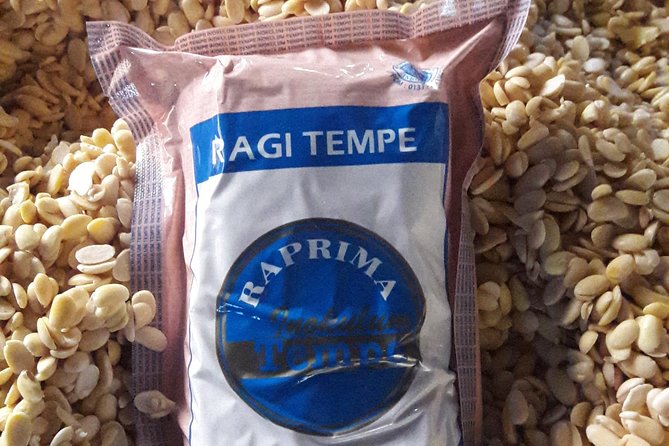
Tempeh is made from fermented soybeans. Here, you learn the process rather than simply buying a packaged block from a market. That matters because tempeh can seem plain when served on its own. The class shows you how preparation, seasoning, frying, vegetables, and coconut change its character.
The experience also explains tempeh’s place in Indonesian food culture. It originated in Java and has been known since the 1600s. It is food for everyday life, not a rare luxury. That makes this a useful class for anyone who wants to understand what people actually cook and eat, rather than only learning restaurant-style dishes.
I like this focus because it gives you something practical to take home. Once you understand the basic method, you can use tempeh in fritters, stir-fries, salads, and other meals. One especially useful lesson is the tempeh fritter, which can be adapted later with ingredients you already have.
Meeting Ayu and Ngurah at Canang Sari Homestay
The class begins at 9:30 a.m. at Canang Sari Homestay, Gg. Kaswari No. 6, Dangin Puri Kaja, in Denpasar. The activity finishes at the same place around 12:30 p.m. Since the meeting point is not in the heart of Seminyak, check the route before booking and leave enough time for morning traffic.
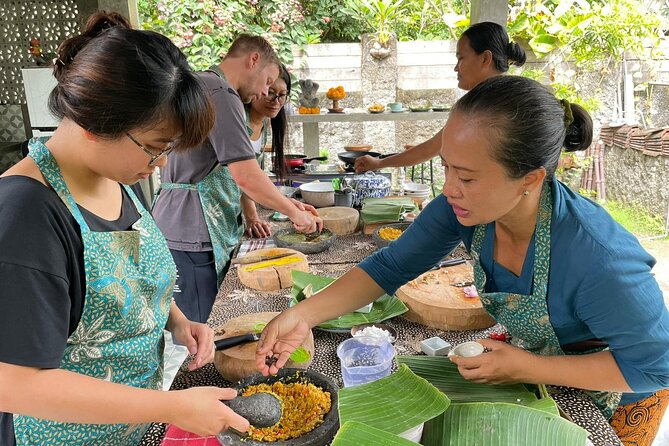
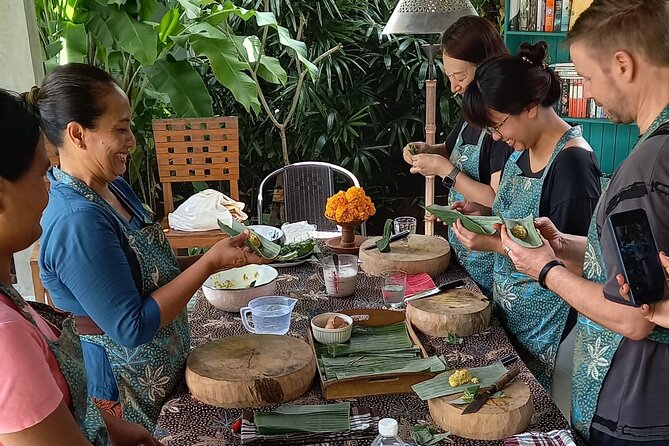
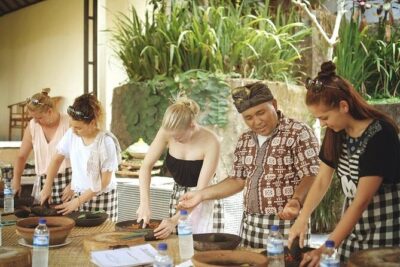
Once you arrive, the setting helps shape the experience. You cook in an open-air kitchen studio connected with a local home, then eat in the garden. This is a more personal setting than a large commercial cooking school, and it gives the class a family atmosphere that many visitors find appealing.
Ayu is the main host, with Ngurah also helping during the class. The strongest praise for the experience centers on Ayu’s kindness, clear instruction, and passion for cooking. That combination matters in a practical class. You need someone who will explain why a step matters, not simply tell you to copy it.
The small-group format supports that style. With no more than 10 people, you should have a better chance to see the preparation, ask questions, and take part rather than standing at the back of a crowded demonstration.
More Cooking Classes in Seminyak and Kuta
- Balinese Cooking Class in Seminyak
★ 5.0 · 281 reviews - Nia Bali Seminyak Cooking Class
★ 5.0 · 127 reviews - Chef Bagus Balinese Indonesian Food Cooking Class
★ 5.0 · 89 reviews
A 9:30 a.m. Start With Tempeh From Scratch
The first major lesson is the tempeh-making process. You learn how this traditional food is prepared and why it has such a useful place in Indonesian kitchens.
The class presents tempeh as a complete food with protein and other nutrients. It is also a practical ingredient because it works well in a number of dishes. Learning the process from the beginning gives you a stronger sense of what you are eating and how it differs from tofu or other soy products.
The exact length of each cooking stage is not specified, so you should not expect a full industrial-style fermentation lesson with every stage completed on the spot. The value is in understanding the method and seeing how tempeh becomes part of a meal.
You may also receive a guide for making tempeh at home. That is a useful extra, especially if you are interested in plant-based cooking beyond your Bali holiday. Still, do not assume every ingredient will be easy to find at home. The class uses local produce and Indonesian seasonings, and one Japanese participant noted that some ingredients and spices might require effort to source elsewhere.
Indonesian Spices Without the Guesswork
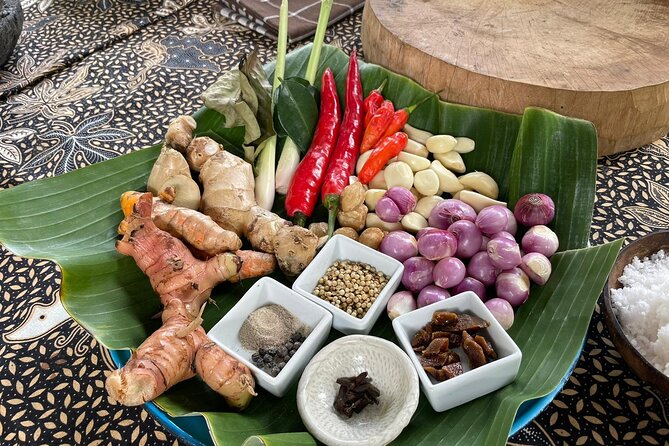
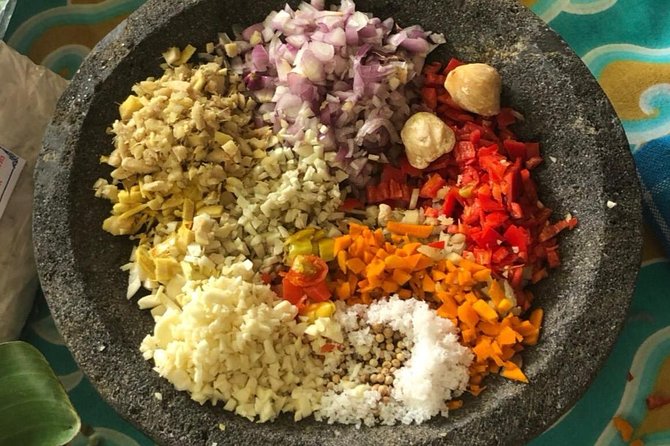
After the tempeh lesson, the class moves into Balinese cooking with fresh plant-based ingredients and traditional recipes. The spice lesson is one of the most useful parts for a home cook because Indonesian food depends on combinations, not just one dominant seasoning.
You get to see the range of spices used in local cooking and learn how they support the dishes. The supplied information does not give a full ingredient list, so I would not book this expecting a detailed shopping guide for every spice. But you will gain a better feel for the way Indonesian meals build flavor from several fresh components.
That distinction is important. A cooking class can hand you a recipe and leave you to figure out the balance later. Here, the focus appears to be on preparing everything from scratch and explaining the steps as you go. The teaching is therefore useful even if you cannot recreate every dish exactly at home.
Because the class takes place in an open-air kitchen, you can expect the cooking itself to be part of the setting. It is not a polished restaurant kitchen or a formal culinary school. If you prefer a relaxed home environment and direct contact with your instructors, that is a plus. If you want advanced chef training, this class may feel too informal.
Seven Dishes Served in a Local Garden
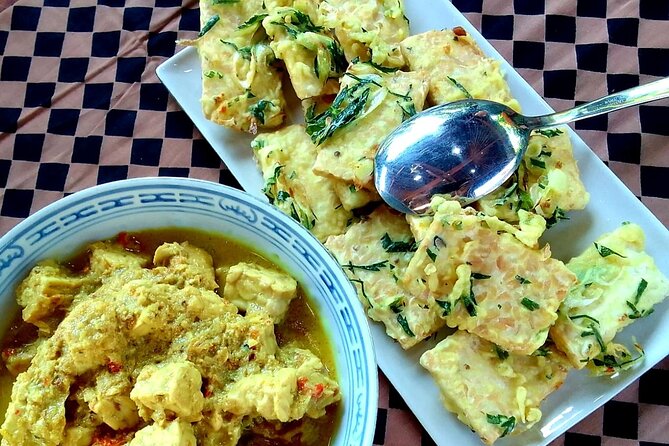
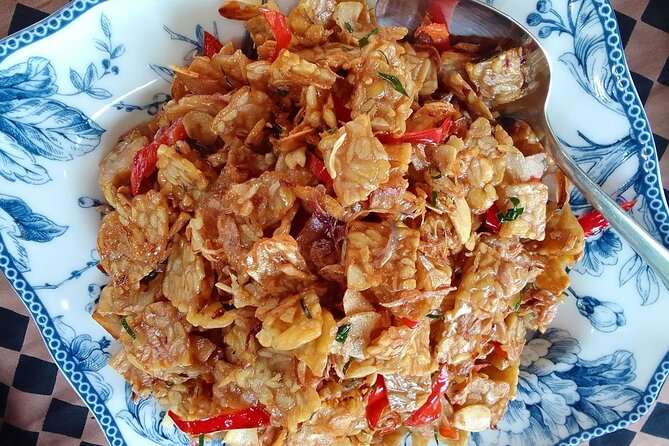
The meal includes seven Balinese and Indonesian dishes made during the class. Tempeh appears in several preparations, while Sayur Urab adds a fresh vegetable element.
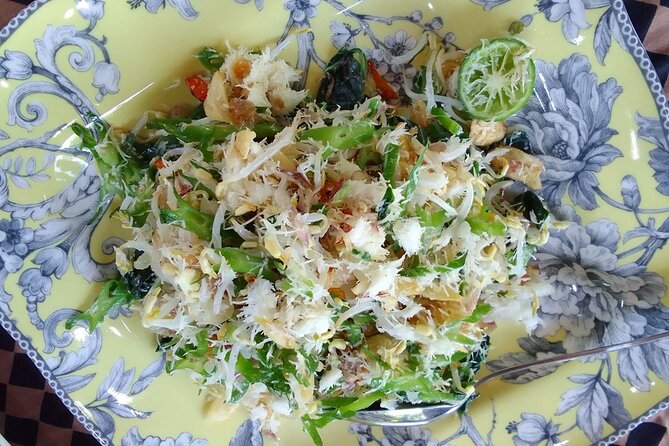
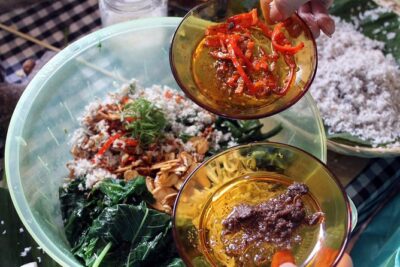
Sayur Urab is made with greens and beans mixed with grilled grated coconut. It gives the meal contrast, pairing vegetables with the smoky, nutty character of coconut. It also helps show that Balinese food is not only about meat, rice, or fried dishes.
The menu can include chicken and tuna, but you can skip both if you are vegan. That makes the class more flexible than many cooking experiences where plant-based participants simply watch while others prepare the main dishes. Be sure to state your preference when booking or before the class begins, so the cooking plan is clear.
When the food is ready, you sit down to eat together in the garden. This shared lunch is more than a final reward. It lets you taste the relationship between the dishes and understand how a Balinese meal comes together as a group of contrasting plates.
Tea, coffee, water, and a light snack are provided during the class. The meal itself is the main food experience, so you should not treat the snack as a separate breakfast or substantial refreshment before lunch.
Still Seminyak and Kuta, at a slower pace:
- Bali Full-Day Traditional Village Sightseeing Trip All Inclusive
★ 5.0 · 3,069 reviews - Nusa Penida day trip: boat, 4 snorkeling, Manta rays & Land tour
★ 5.0 · 2,033 reviews - Experts Bali Driver : Best Bali Private Driver for Tour in Bali
★ 5.0 · 1,339 reviews - Bali Nusa Penida West Private All-Inclusive Tour
★ 5.0 · 1,277 reviews
What the Small Group Really Adds
A maximum of 10 people is a sensible size for a cooking class. It gives the hosts room to correct small mistakes, answer questions, and keep the group involved.
The private option is worth considering for couples, families, or anyone with particular dietary needs. A private class should give you more control over the pace and the conversation, though the available information does not specify the additional cost or exact private-group size.
The standard class can suit solo visitors and small parties who want some social contact. You may share the preparation and meal with other people, which fits the relaxed family-style setting. If you dislike group activities, request the private option before confirming your plans.
The class is also a good fit for people who want more than a food tasting. You are not simply handed a finished plate. You learn about an Indonesian ingredient, prepare several dishes, and eat what you helped make.
Is $39 Good Value for Three Hours?
At $39 per person, the class is priced above a simple cooking demonstration but includes much more than a single recipe. You get about three hours of instruction, tempeh preparation, several dishes, lunch, drinks, a light snack, and access to a small-group format.
I consider that fair value if you care about participation and local food knowledge. Seven dishes create enough variety to justify the time, while the tempeh lesson gives the experience a clear purpose rather than making it a generic Balinese cooking class.
The value is weaker if you are mainly looking for a cheap meal. You can eat well in Bali for much less than $39, and this class requires you to spend a morning at a fixed meeting point. Its price makes sense because you are paying for teaching, preparation, and the chance to cook with local hosts.
The class is also booked about 24 days ahead on average. That suggests you should not leave it until the last few days of a Bali stay, particularly if you want a private session or have only one free morning.
Who Will Enjoy This Class Most?
I would recommend it most strongly to:
- Vegans and vegetarians who want a meal built around plant-based ingredients
- Home cooks curious about tempeh and Indonesian spice combinations
- Couples and families who prefer a personal setting to a large school
- Visitors who enjoy eating in a local home and garden
- Anyone wanting a practical food memory from Bali, not just photographs
It can also suit meat eaters. Chicken and tuna may be added, but the class does not treat meat as the only important part of the meal. The vegetables, coconut, spices, and tempeh remain central.
You may want to choose another class if you need hotel pickup, a Seminyak meeting point, or a tightly scheduled professional kitchen experience. Those features are not included in the information provided here.
Practical Details Before You Book
The activity runs from 9:30 a.m. to about 12:30 p.m. and returns to the same meeting point. The ticket is mobile, and confirmation is provided when you book.
The class requires good weather and a minimum number of people. If poor weather cancels the activity, you can choose another date or receive a full refund. The same applies if the minimum group size is not reached.
You can cancel for a full refund up to 24 hours before the start time. Cancellations or changes made less than 24 hours before the class are not accepted for a refund, so keep your plans firm once that deadline passes.
Ask about the private option if you want a more tailored pace. Also confirm your vegan preference in advance, even though the class explicitly allows you to skip the chicken and tuna.
Should You Book the Tempeh Class?
Book it if you want a warm, hands-on food experience with a clear local focus. The combination of tempeh from scratch, seven dishes, Ayu and Ngurah’s personal teaching, and lunch in a garden gives the morning real substance.
I would especially choose it over a standard Bali cooking class if you are vegan, vegetarian, or interested in learning how tempeh works beyond a restaurant menu. The main cautions are the Denpasar meeting point, the early start, and the fact that a relaxed home class may not satisfy someone seeking advanced culinary technique.
For most food-minded visitors, $39 is a reasonable price for three hours of instruction and a full meal. Plan the route carefully, reserve ahead, and tell the hosts about your diet. Do that, and this should be a memorable and useful part of your Bali stay.
FAQ
Where does the tempeh cooking class begin?
It begins at Canang Sari Homestay, Gg. Kaswari No. 6, Dangin Puri Kaja, Denpasar, Bali 80234, Indonesia.
What time does the class start and finish?
The class starts at 9:30 a.m. and finishes at about 12:30 p.m.
Where does the activity end?
The activity ends back at the meeting point at Canang Sari Homestay.
How long does the experience last?
The experience lasts approximately three hours.
Is the class suitable for vegans?
Yes. The class uses fresh plant-based ingredients, and you can skip the chicken and tuna if you are vegan.
How many people can join the class?
The standard class has a maximum of 10 people.
Is a private class available?
Yes. A private group option is available upon request.
What happens if the class is canceled?
If poor weather or an unmet minimum number of participants causes cancellation, you will be offered another date or experience, or a full refund.
Just added around Seminyak and Kuta
- Bali-Nusa Penida. East Part. Private car. All-inclusive★ 4.5 · 15 reviews
- Ubud Private Tour : Ubud Temple and Authentic of Ubud★ 5.0 · 18 reviews
- Bali Swing Hot Spring And Waterfall Private Guided Tour★ 5.0 · 50 reviews
- Ubud Monkey Forest Sanctuary Tours and Cretya★ 5.0 · 3 reviews
- Ubud Tours and Cretya Day Club Pool★ 5.0 · 3 reviews
- Bali Adventure Tour: Hidden Canyon, Tegenungan Waterfall, Goa Gajah temple★ 5.0 · 48 reviews
- Penglipuran Village Waterfall Swing Private Guided Tour★ 5.0 · 13 reviews
- Bali Sightseeing Car Hire with English-speaking Guide and Driver★ 5.0 · 24 reviews
Cooking Classes, compared.
PRIVATE Authentic Balinese Cooking Class in Ubud at Putu’s Home
Read our review →
Balinese Ubud cooking school (9 Dish Cooking and Market Tour)
Read our review →
Learn to cook Indonesian food at Gili Cooking Classes Trawangan
Read our review →
Browse the lists this tour appears in