
Reviewed · COOKING CLASSES
PRIVATE Balinese Cooking Class in Ubud with Dewa with Transfers
Food tells Bali’s story best. This private half-day visit takes you from Ubud into the village of Keliki, where Dewa and his family welcome you into a traditional Balinese compound, show you their garden, and teach you to cook several home-style dishes. I especially like the family-home setting and the way the visit joins food with village life, religion, farming, and local customs. The main consideration is that this is not a professional cooking school. You are visiting a real home and learning from a family, so expect a relaxed cultural exchange rather than a polished demonstration kitchen.
At $69 per person, the experience offers good value if you want more than a meal and a recipe sheet. Private transfers from Ubud, a garden walk, hands-on cooking, lunch or dinner, beer, water, and cultural conversation are included. The one catch is location: transport is offered only from Ubud hotels and vacation rentals. If you stay outside the Ubud area, you must arrange your own way to Keliki.
In This Review
- Key points to know before booking
- From Ubud to Keliki by private car
- Walking through Dewa’s village and garden
- Entering the traditional family compound
- Cooking over a wood-fired stove
- The meal you helped prepare
- Why the cultural conversation matters
- What $69 includes, and what it does not
- Who should book this experience?
- Practical tips for a better visit
- Should you book Dewa’s Balinese cooking class?
- FAQ
- How long does the cooking experience last?
- Where does the experience take place?
- Is hotel pickup included?
- Is the experience private?
- Who hosts the cooking class?
- What food will I learn to cook?
- Is a vegetarian meal available?
- Are drinks included?
- Can I cancel for a full refund?
Key points to know before booking
- Dewa’s home is the main attraction: You cook and eat in a traditional walled family compound, surrounded by open pavilions and a central courtyard.
- The garden walk comes first: You learn about galangal, cacao, nutmeg, herbs, fruits, and spices before using ingredients in the kitchen.
- You make several dishes: Depending on the menu and the day, expect around five to seven Balinese recipes, including pepes ikan, bumbu kuning, and bregedel.
- The cooking is hands-on: You use a pestle and mortar, prepare spice pastes, and work over a traditional wood-fired stove.
- The cultural talk is a major part of the visit: Dewa explains Balinese beliefs, farming, family life, village traditions, and the balance between food, health, and nature.
- It is private: Only your own group takes part, making this a good choice for couples, families, or friends who prefer a personal pace.
From Ubud to Keliki by private car
The experience lasts about four hours, though the pace can feel unhurried because it includes far more than kitchen time. Pickup is available from hotels and vacation rentals in Ubud, with a private vehicle taking you north toward Keliki in the foothills of Tegallalang.
The drive matters. Ubud’s center can feel packed with shops, cafés, traffic, and tour vehicles. Keliki offers a quieter setting, with rice fields, village roads, gardens, and terraced foothills. Several people who took the experience described the drive as roughly 15 to 30 minutes from Ubud, though traffic and your exact pickup point can change that.
Your listed meeting point is Rumah Makan Jero Nini on Jl. Arjuna in Keliki. If you are staying outside Ubud, the included transfer does not apply, and you meet Dewa directly at his home area. Check this carefully before paying, since the $69 price makes the most sense when you use the included Ubud transfer.
I like the private vehicle arrangement because it removes a common Bali headache: finding a rural address on your own. It also lets the visit begin with a calm ride rather than a scramble over directions. The tour ends back at the meeting point, with the return transfer included for Ubud pickups.
More Cooking Classes in Ubud
- Ubud Cooking Class Bali with Balinese Chef
★ 5.0 · 1,609 reviews - PRIVATE Authentic Balinese Cooking Class in Ubud at Putu’s Home
★ 5.0 · 644 reviews - Balinese Ubud cooking school (9 Dish Cooking and Market Tour)
★ 5.0 · 540 reviews
Walking through Dewa’s village and garden
The first part is a walk through the village and surrounding greenery. This is not filler before the cooking starts. Dewa uses the walk to explain how local food connects with farming, medicine, religion, and daily life.
You may see or learn about ingredients such as:
- Galangal
- Cacao
- Nutmeg
- Lemongrass
- Bananas
- Local herbs and vegetables
- Other fruits and plants grown around the family home
The exact garden produce depends on the season. That is part of the point. Balinese home cooking is shaped by what grows nearby and what is fresh that day, not by a fixed supermarket list.
Dewa’s explanations also reach beyond ingredients. He talks about Balinese history, Hinduism, Buddhism, animism, village customs, and the family’s way of living. The information supplied about this experience repeatedly points to his ability to connect food with spirituality and everyday values. He is described as a calm, generous host who enjoys sharing his village and his outlook on life.
You should wear comfortable shoes for this section. The walk can include village streets, gardens, forest paths, rice fields, and uneven ground. Anyone expecting to step from a car straight into an air-conditioned cooking studio may find the route more active than expected.
The village visit is also where this experience earns its cultural value. You are not simply being shown a list of exotic plants. You are seeing where ingredients come from and hearing why they matter. That small shift can change how you understand the meal later.
Entering the traditional family compound
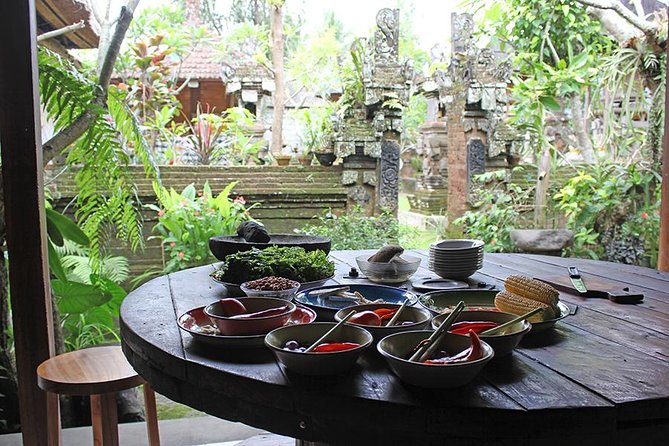
Dewa’s home is arranged as a traditional Balinese family compound, with several open pavilions around a central courtyard. Extended family members live and gather within this shared space, and the visit gives you a look at how the household is organized.
This is a real family home, not a set built for tourists. That makes the experience more personal, but it also calls for good manners. Listen when family customs are explained, ask before taking photographs, and remember that you are being welcomed into someone’s daily world.
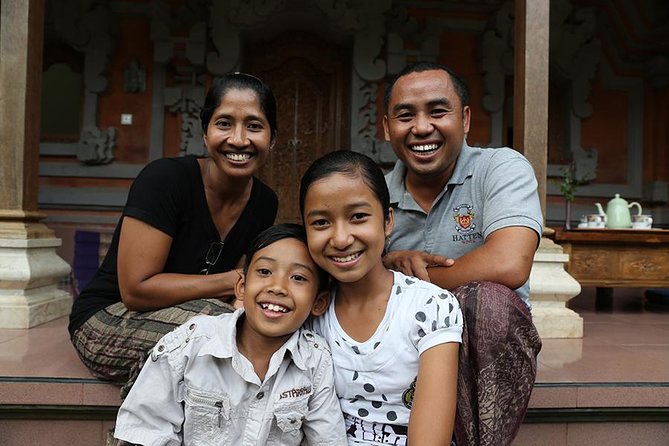
The family’s hospitality is one of the strongest parts of the visit. Dewa’s wife, Jero, helps host the cooking, and other family members may be present. If Dewa is unavailable, an equally welcoming family member may host alongside Jero.
The open-air arrangement also gives the meal a pleasant sense of place. Cooking and eating take place amid the compound’s greenery and courtyards rather than in a restaurant dining room. The setting is simple, but that simplicity is exactly what makes the visit feel different from a standard food tour.
Cooking over a wood-fired stove
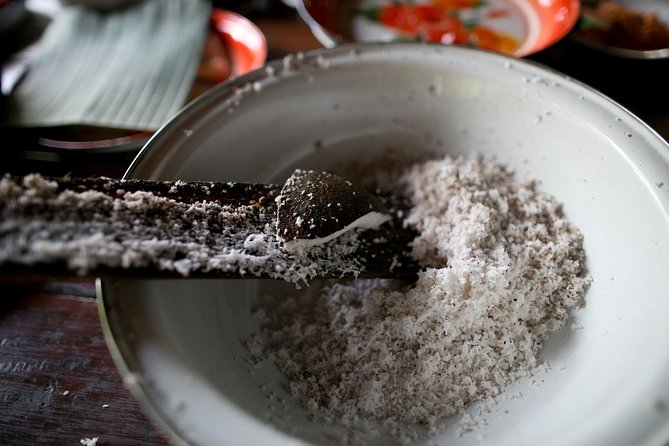
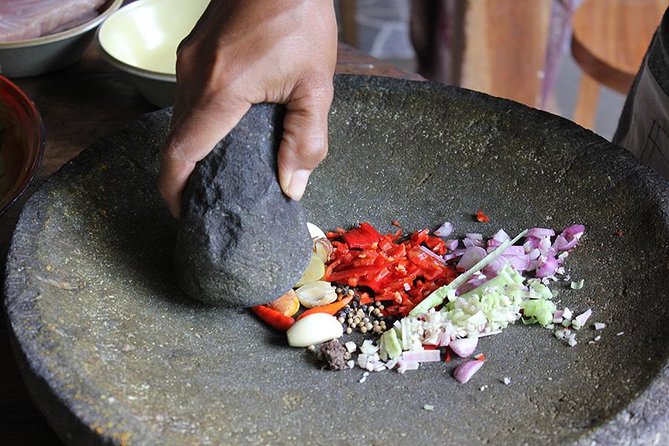
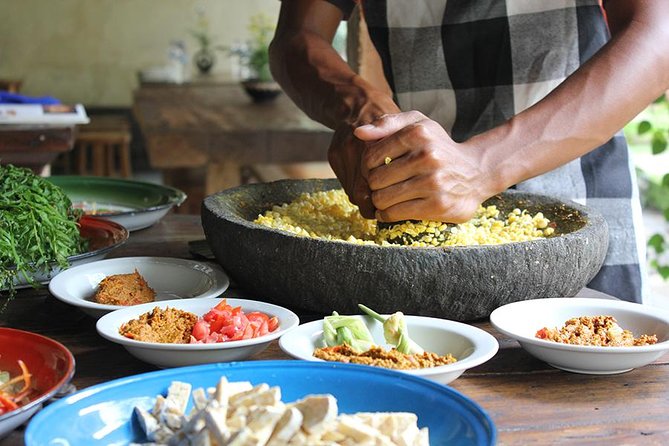
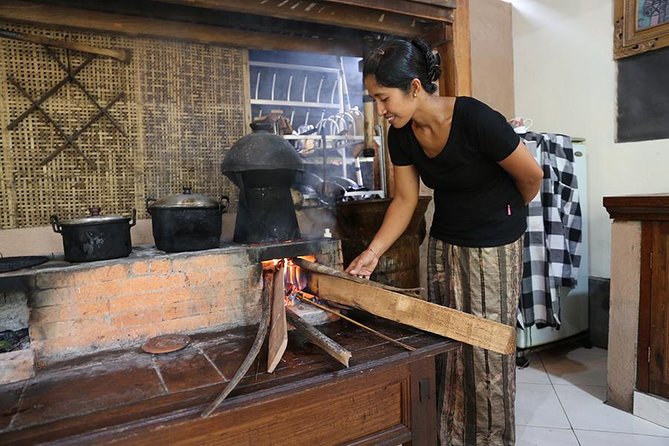
The kitchen session is practical and participatory. You learn to prepare Balinese dishes using equipment such as a pestle and mortar, then cook over a traditional wood-fired stove.
That equipment is not just decorative. Grinding spices by hand changes the texture and helps you understand how Balinese spice pastes are built. It also takes more effort than tipping a prepared sauce from a jar, so do not expect the class to move at restaurant speed.
The menu can include dishes such as:
- Pepes ikan: Tuna seasoned and grilled in banana leaves
- Bumbu kuning: Chicken cooked with fresh turmeric and coconut milk
- Bregedel: Hand-ground corn fritters
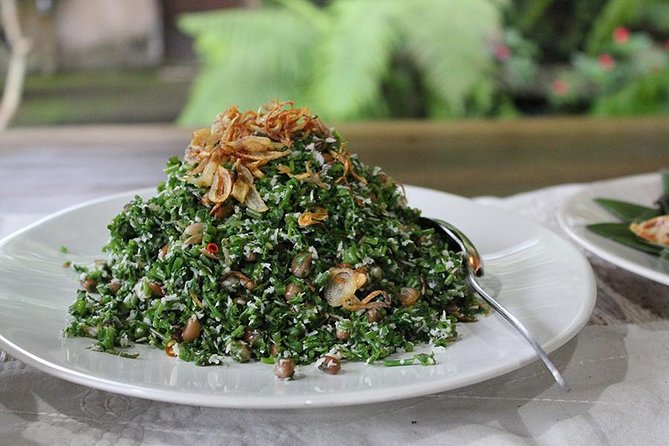
- Traditional salads, side dishes, sauces, and dessert items
The precise number of dishes varies in the descriptions, with past sessions producing about five, six, or seven recipes. Plan on making several courses rather than one main dish. The work may include chopping, grinding, mixing, shaping, and cooking, with everyone in the private group taking part.
The teaching style is home cooking rather than culinary school instruction. Dewa and Jero explain the ingredients and methods, then guide you through the preparation. You may have to write down some quantities and steps yourself because family cooks often work by feel. That can be useful if you want to understand how the food is actually prepared at home, but it is less convenient than receiving a formal technical handout.
Several details make the class especially useful after your Bali trip. You can receive a small handmade or locally produced recipe notebook, and the recipes are intended to take home. If you enjoy recreating meals, bring a pen and take notes as you go. Some ingredients may be difficult to find outside Southeast Asia, but the method and use of spice pastes can still be adapted.
Still Ubud, at a slower pace:
- All-Inclusive Ubud Private Tour
★ 5.0 · 14,344 reviews - Best of Ubud Full-Day Tour with Jungle Swing
★ 5.0 · 8,571 reviews - Ubud: Monkey Forest, Jungle Swing, Rice Terrace, and Water Temple
★ 5.0 · 7,160 reviews - Best of Ubud 1-Day Private Tour
★ 5.0 · 4,451 reviews
The meal you helped prepare
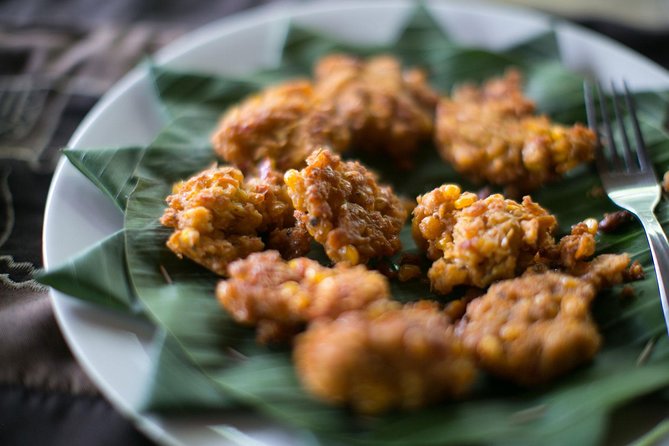
After the cooking, you sit down to eat what the group has made. Beer and water are included, and the meal is served in the family compound.
The food is praised for its freshness and strong flavor, but the approach is not based on heavy seasoning. One useful explanation from the experience is that traditional Balinese cooking often focuses on health and balance, using fresh ingredients and spice combinations rather than lots of salt.
That makes the meal a good lesson in how food functions within Balinese life. The dishes are not presented as isolated restaurant specialties. They come from the garden, the family kitchen, and a way of eating shaped by local plants and customs.
The meal also gives the visit a natural ending. You have watched ingredients being gathered, prepared the dishes yourself, and then eaten them in the same home. I find that more satisfying than a cooking class where the dishes appear on a plate with little connection to the place around you.
Beer is included, but alcohol is not required. Water is also provided. Vegetarian food is available if you request it when booking. Make that request in advance, since the class needs time to plan a suitable menu.
Why the cultural conversation matters
Many cooking classes teach recipes. This one puts the recipes inside a wider story about Bali.
Dewa explains local history, religious influences, farming practices, village life, and his family’s values. Past participants have especially appreciated his ability to explain Hindu, Buddhist, and animist influences, as well as his ideas about living in balance with nature.
You should choose this experience for the conversation as much as for the food. If you only want to master a precise restaurant recipe, a formal cooking school may suit you better. If you want to understand why ingredients, family compounds, gardens, and ritual matter in Bali, this visit offers much more.
The personal setting also means the talk can respond to your questions. In a private group, you can ask about an ingredient, a custom, or a detail you noticed during the village walk. That is harder to do in a large class with a fixed script.
The cultural material should be received with respect. Dewa is sharing his own family and community perspective, not presenting every Balinese tradition as a single rule. Listen carefully, and you will gain a more useful picture than you would from a quick temple stop or a staged cultural show.
What $69 includes, and what it does not
The $69 per person price includes:
- Round-trip transfers from Ubud hotels and vacation rentals
- A private garden and village visit
- The cooking class with Dewa, Jero, or a family member
- The meal you prepare
- Local beer and water
- A private experience for your group
For a four-hour private outing, that is a fair price. A basic cooking lesson might cost less, but it would not necessarily include transportation, a garden walk, a family visit, and a full meal. The value here comes from the complete afternoon or morning, not simply the amount of food you cook.
Group discounts are available, which can improve the price for families or friends. Since the activity is private, you do not share the kitchen session with unrelated participants.
There are two practical limits. Transport is not included outside the Ubud region, and confirmation is subject to availability within 48 hours of booking. Free cancellation is available if you cancel at least 24 hours before the start time. Changes or cancellations made later are not accepted for a refund.
The experience is near public transportation, and service animals are allowed. The supplied information does not describe full accessibility details, so ask before booking if uneven paths, village walking, or the open kitchen could be a concern.
Who should book this experience?
I would point this experience toward several types of visitors.
Food lovers will appreciate the range of dishes, fresh ingredients, hand-ground spices, and recipes to take home. The meal gives you a reason to pay attention to technique instead of simply watching someone else cook.
First-time visitors to Bali get a useful introduction to village life, family compounds, farming, religion, and food in one outing. It is a strong way to see something beyond Ubud’s main streets.
Couples and families may like the private format. You can ask questions freely, share the work, and set a comfortable pace within the four-hour schedule.
Culturally curious visitors will get the most from Dewa’s stories and explanations. The experience has a reflective side, and the conversation may be as memorable as the dishes.
I would be more cautious if you dislike walking, outdoor kitchens, or informal instruction. The visit is not designed as a professional chef course, and the rural setting may feel too low-key if you are looking for polished facilities or advanced culinary training.
Practical tips for a better visit
Wear comfortable shoes and clothing suitable for walking through a village, garden, and possibly uneven paths. The tour includes time outdoors before you reach the cooking area.
Tell the provider about vegetarian requirements when booking. The available information confirms a vegetarian option, but it must be arranged ahead of time.
Keep your group small if you can. The private format already helps, but a smaller party makes it easier for everyone to work at the stove, use the mortar, and speak with Dewa and Jero.
Bring a pen for the recipe notebook. You may receive recipes to take home, but writing down extra notes about substitutions, textures, and cooking order will make them easier to recreate.
Allow room in your schedule. The listed duration is approximately four hours, and the drive from Ubud depends on traffic. Do not place a tightly timed temple visit or flight immediately afterward.
Finally, approach the compound as a home, not an attraction. A little patience and courtesy will help the family share more openly, and it will make the visit feel like the respectful exchange it is meant to be.
Should you book Dewa’s Balinese cooking class?
Book it if you want a private cultural visit that happens to end with a very good meal. The village walk, garden ingredients, family compound, wood-fired cooking, and conversation about Balinese life make this much broader than a standard recipe lesson.
At $69, it is especially worthwhile for visitors staying in Ubud who value personal contact and included transportation. I would skip it only if you want a formal culinary course, need a fully accessible route, or are staying well outside Ubud and do not want to arrange transport.
For most food-focused visitors, couples, and families, this is one of the stronger ways to spend four hours near Ubud. Dewa’s warmth, Jero’s cooking, and the chance to eat in the home where the food belongs give the experience its lasting appeal.
FAQ
How long does the cooking experience last?
The experience lasts approximately four hours.
Where does the experience take place?
It takes place in Keliki, in the Tegallalang area north of Ubud, at a traditional Balinese family compound.
Is hotel pickup included?
Round-trip transfers are included from hotels and vacation rentals in Ubud. Pickup and drop-off outside the Ubud region are not included.
Is the experience private?
Yes. Only your own group participates in the activity.
Who hosts the cooking class?
Dewa hosts the experience when available, with his wife Jero helping with the cooking. If Dewa cannot host, an equally welcoming family member may lead the visit with Jero.
What food will I learn to cook?
Possible dishes include pepes ikan, bumbu kuning, and bregedel. The menu can also include other traditional Balinese dishes, with sessions producing about five to seven recipes.
Is a vegetarian meal available?
Yes. A vegetarian option is available, but you must request it at the time of booking.
Are drinks included?
Local beer and water are included with the meal.
Can I cancel for a full refund?
Yes. You can cancel at least 24 hours before the experience start time for a full refund. Cancellations or changes made less than 24 hours before the start time are not accepted for a refund.
Just added around Ubud
- Private Mount Batur Sunset Trekking – All inclusive tour★ 5.0 · 63 reviews
- Private Full-Day Handara, Ulun Danu, Jatiluwih and Tanah Lot Tour★ 5.0 · 63 reviews
- Half-Day Tour: Uluwatu Temple and Kecak Fire Dance Show★ 5.0 · 63 reviews
- 3 Days for the best of Ubud Private Tour★ 5.0 · 63 reviews
- Bali Amazing Cooking Class★ 5.0 · 63 reviews
- Full Day Private Guided Tour to Bali★ 5.0 · 65 reviews
- Balinese Cooking Class with Traditional Market Tour★ 5.0 · 66 reviews
- Mount Batur Sunrise Trekking★ 5.0 · 65 reviews
Cooking Classes, compared.
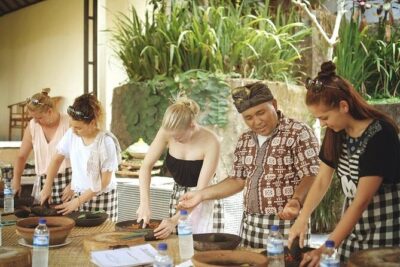
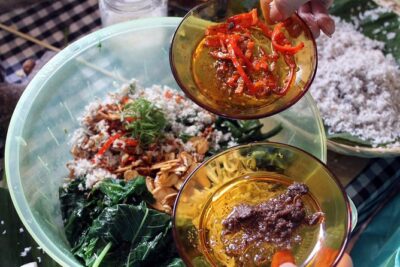
PRIVATE Authentic Balinese Cooking Class in Ubud at Putu’s Home
Read our review →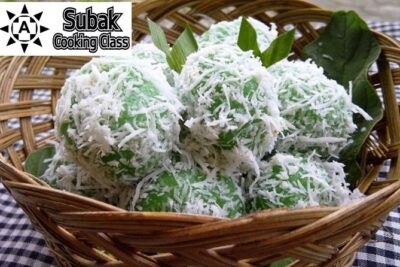
Balinese Ubud cooking school (9 Dish Cooking and Market Tour)
Read our review →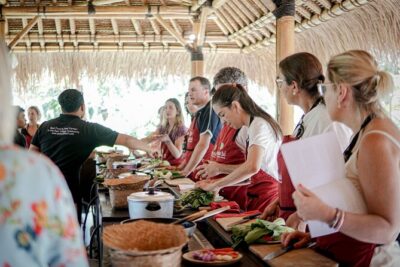
Learn to cook Indonesian food at Gili Cooking Classes Trawangan
Read our review →
Browse the lists this tour appears in