
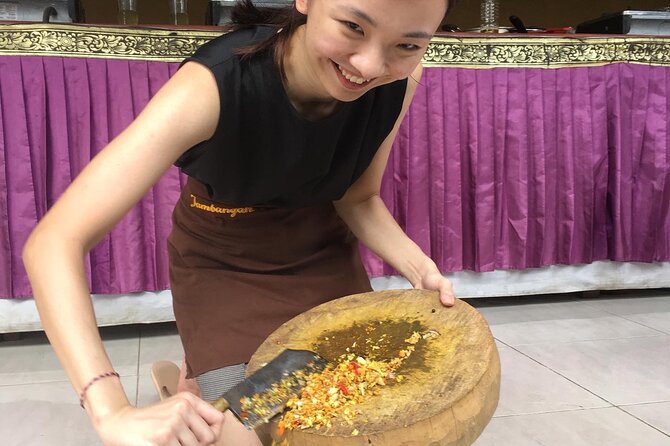
Reviewed · COOKING CLASSES
Jambangan Bali Cooking Class
Food is the best way into Bali. The Jambangan Bali Cooking Class combines a traditional market visit, a family home, and a hands-on meal, giving you more than a restaurant ever could. I especially like the market ingredient tour and the chance to cook in an open kitchen while learning about daily Balinese customs. The class also includes lunch, recipes, and several cultural activities for about $34.
I also like the warm family setting and the flexible lunch or dinner option. The main drawback is timing: an evening class may not include the market visit because it closes earlier, and the class can last about five hours, which may feel long for young children or anyone with a packed Ubud schedule.
In This Review
- Key points to know before booking
- Why this Ubud cooking class feels different
- Start at the market with herbs, spices, and fresh produce
- The rice fields and the journey to the family home
- Cooking several Balinese dishes from start to finish
- Coconut oil, Hindu offerings, and bamboo music
- Lunch, dinner, and the important timing choice
- How much value do you get for $34?
- Who will enjoy Jambangan Bali Cooking Class most?
- Practical details, cancellation, and what to bring
- Should you book this Balinese cooking class?
- FAQ
- Where does the Jambangan Bali Cooking Class meet?
- How long does the cooking class last?
- Is lunch included?
- Can I choose between a lunch and dinner class?
- Is the market visit available with the evening class?
- How many people can join the class?
- Can I cancel for a full refund?
Key points to know before booking

- Shop before you cook: Morning participants visit a traditional market to choose herbs, spices, meat, and vegetables.
- Cook in a Balinese family home: The open-air kitchen gives you a close look at household life, not just restaurant techniques.
- Prepare several dishes: Past menus have included as many as eight dishes, with recipes provided afterward.
- Add cultural activities: You may learn about coconut oil, make a simple offering, see a household offering, and play rindik bamboo music.
- Choose your timing carefully: Morning is best for the market; evening may replace it with a plantation visit or coffee and tea tasting.
- Good value at $34: Lunch, instruction, cultural activities, and a five-hour program make this a strong choice for food-focused visitors.
Why this Ubud cooking class feels different
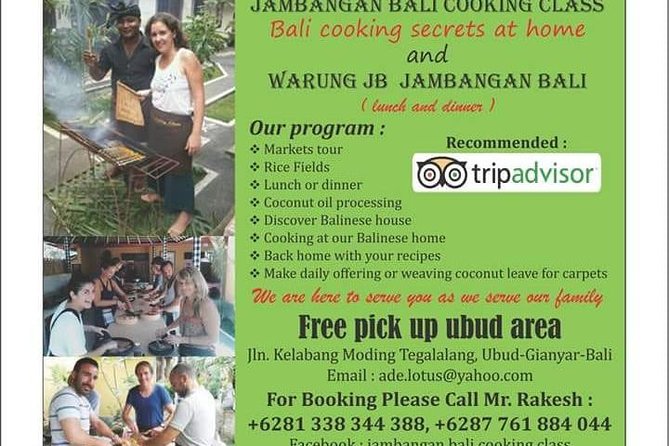
Many cooking classes begin at a tidy teaching kitchen. Jambangan starts closer to everyday Balinese life. You meet at Warung JB Jambangan Bali on Jalan Kelabang Moding, then head toward the market and surrounding countryside before cooking at a local home.
That change of setting matters. You are not only learning how to chop, pound, mix, and cook. You are seeing where ingredients come from and how food fits into family routines and Hindu practice.
I like the balance here. The class is practical enough for someone who wants recipes to use at home, yet cultural enough for anyone curious about life beyond Ubud’s restaurants and cafés.
The experience is conducted in English by Balinese chefs who explain the food and customs. The group can include up to 15 people, so it is not a private lesson, but the size remains small enough for hands-on participation in most cases.
More Cooking Classes in Ubud
- Ubud Cooking Class Bali with Balinese Chef
★ 5.0 · 1,609 reviews - PRIVATE Authentic Balinese Cooking Class in Ubud at Putu’s Home
★ 5.0 · 644 reviews - Balinese Ubud cooking school (9 Dish Cooking and Market Tour)
★ 5.0 · 540 reviews
Start at the market with herbs, spices, and fresh produce
The morning schedule begins early at a traditional market. This is the most useful part of the timing, since you get to see ingredients before they are reduced to neat portions on a cooking-school table.
You can help select fresh herbs, spices, vegetables, and a preferred cut of meat. The market visit also gives the chef a chance to explain what you are buying and how each item fits into Balinese cooking.
That explanation is valuable because many ingredients may be unfamiliar. Instead of simply handing you a recipe with a long shopping list, the class shows you the ingredients in their everyday setting.
If you book the lunch session, you have the best chance of receiving the full market experience. The early start may require a little planning, especially if you are staying outside central Ubud, but it makes the five-hour program feel like a full morning and afternoon outing rather than only a cooking lesson.
Some schedules also include a look at rice farmers doing their daily work. This adds useful context before you enter the home. Rice is not just a side dish on a Balinese plate. It is part of the daily rhythm of the island, and seeing the fields helps connect the food to the land around Ubud.
The rice fields and the journey to the family home
After the market, the group continues through the rice-growing area toward the cooking location. The precise order can vary, but the experience is designed to move from ingredients to agriculture and then to the home kitchen.
This section is not a formal sightseeing stop with a long presentation. Instead, it gives you a quiet look at the setting that supports Balinese food. You may see rice farmers at work and get a better sense of why fresh produce and rice play such a large role in local meals.
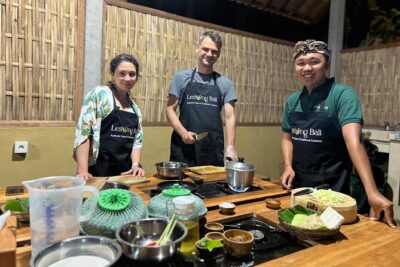
The class takes place in a Balinese family compound with an open kitchen and garden dining area. That setting is one of the strongest reasons to choose this activity. You are cooking beside a family home, not in a hotel ballroom.
Past participants have described being shown around the home and learning about family life. I would treat this as a respectful cultural visit rather than a staged house tour. The value comes from the small explanations: how the household is arranged, what happens in the compound, and how food preparation fits into daily life.
The setting also works well for families. Children can see ingredients in their natural form, help with simple preparation, and take part in activities beyond sitting at a restaurant table.
Cooking several Balinese dishes from start to finish
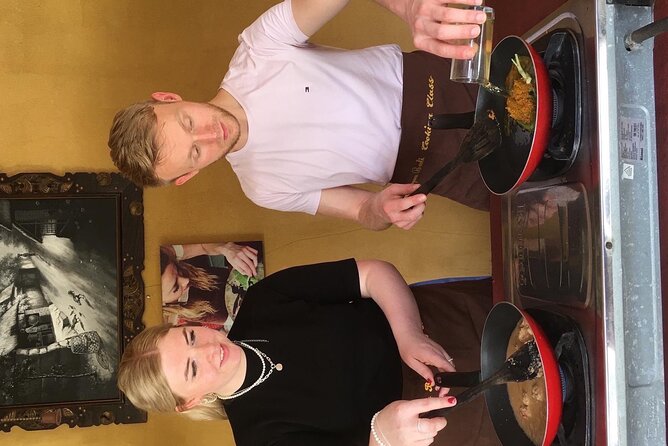
The central lesson is hands-on. You make the recipes yourself, guided by Balinese cooks who explain the ingredients, techniques, and cultural background.
The exact menu can vary, but past participants have prepared up to eight dishes. That is a generous amount for a class of this length, especially when you consider that you will also visit the market and take part in other activities.
I like that the food is not treated as a quick demonstration. You are involved in the preparation and then eat the meal you helped make in the garden.
The recipes are another practical benefit. You receive copies afterward, so the class does not end when you leave Bali. You can try to recreate the dishes at home, using the substitutions and ingredient alternatives explained during the lesson.
One particularly useful detail is the attention to dietary needs. A participant with a chicken allergy was accommodated without trouble, allowing that person to cook and eat with the group. You should still communicate any allergy or dietary requirement when booking, but the class has shown flexibility in adapting the meal.
The food itself receives very high praise, but the important point is why. You are working with fresh ingredients, learning how they are used, and eating the finished dishes while the process is still fresh in your mind. That creates a stronger connection than simply ordering Balinese food from a menu.
Still Ubud, at a slower pace:
- All-Inclusive Ubud Private Tour
★ 5.0 · 14,344 reviews - Best of Ubud Full-Day Tour with Jungle Swing
★ 5.0 · 8,571 reviews - Ubud: Monkey Forest, Jungle Swing, Rice Terrace, and Water Temple
★ 5.0 · 7,160 reviews - Best of Ubud 1-Day Private Tour
★ 5.0 · 4,451 reviews
Coconut oil, Hindu offerings, and bamboo music
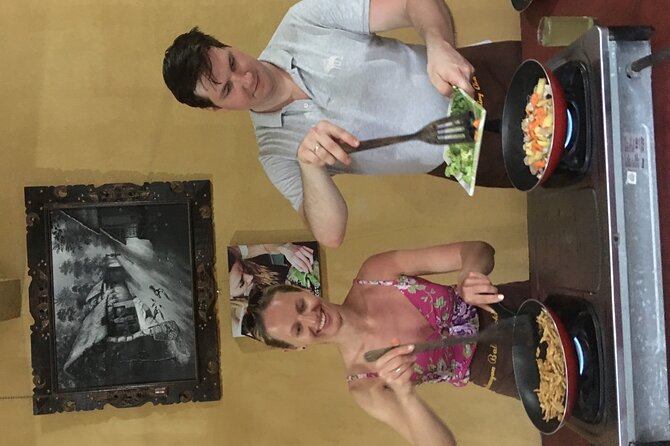
The cooking is only part of the program. At the family home, you can learn about traditional coconut oil processing, make a simple offering, and witness a household’s daily Hindu offering.
These activities give the class a cultural center. You are not being asked to observe a ceremony as a tourist spectacle. Instead, you are being shown a small household practice that helps explain how religion appears in ordinary Balinese life.
The offering lesson may be especially meaningful for visitors who have seen small flower arrangements outside homes, shops, and temples but did not know how they were made or why they matter.
You may also play rindik, a traditional Balinese instrument made from bamboo. The music lesson is light and participatory, making it a good change of pace after food preparation. It also gives children and adults something active to do together.
The coconut oil demonstration adds another link between local resources and household use. These activities may not appeal to someone who wants only a fast cooking lesson, but they are exactly what makes this program broader than a standard recipe class.
Lunch, dinner, and the important timing choice
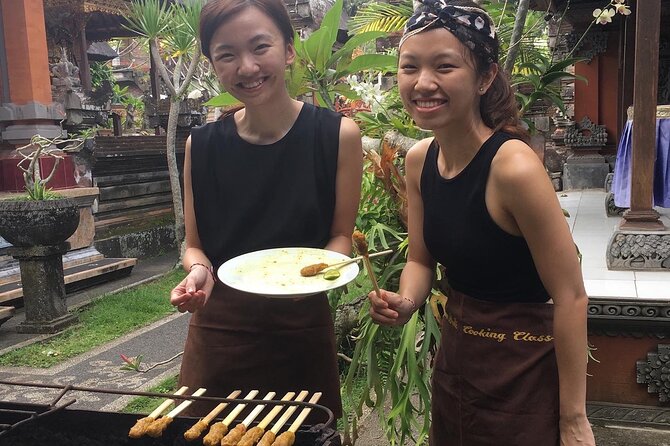
The class offers a lunch or dinner option, but the two schedules do not provide exactly the same experience.
Choose lunch if the market visit is important to you. The market is open earlier in the day, and the morning schedule also fits best with seeing rice farmers and selecting the ingredients used in your meal.
The dinner class can still be worthwhile, particularly if you prefer a slower afternoon. However, the traditional market may be closed by then. In that case, the program can substitute a small plantation visit with coffee and tea tasting, including coffee luwak in at least one reported experience.
That plantation stop is not clearly guaranteed for every evening booking, so I would not book the dinner class solely for it. Think of it as a possible replacement, not a fixed promise.
Dinner may suit you if you have already visited a market elsewhere in Bali or prefer not to start early. Lunch is the safer choice if you want the fullest connection between shopping, farming, cooking, and home life.
How much value do you get for $34?
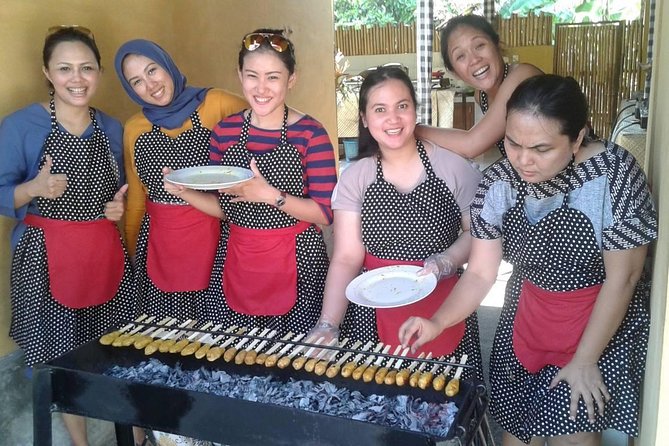
At around $34, this is a strong value for a five-hour Ubud activity. Your price includes lunch, instruction, the market visit when scheduled, cultural activities, and the meal you prepare.
The value is even better for families or couples who want one activity that covers food and culture. You do not need to pay separately for a restaurant meal afterward, since the class includes the dishes you prepare.
A group of up to 15 people keeps the cost reasonable, but it also means this is not an intimate private lesson. If you want one-on-one attention or a highly customized menu, a private class may suit you better.
The program can also include transportation arrangements in some cases, as one participant described being picked up from a hotel. Since the listed meeting point is Warung JB Jambangan Bali, you should confirm pickup details rather than assume hotel transport is included.
The meeting point is in Kelabang Moding, Tegallalang, north of central Ubud. It is near public transportation, but the rural setting means you should allow enough time to reach Jalan Kelabang Moding No. 713.
Who will enjoy Jambangan Bali Cooking Class most?
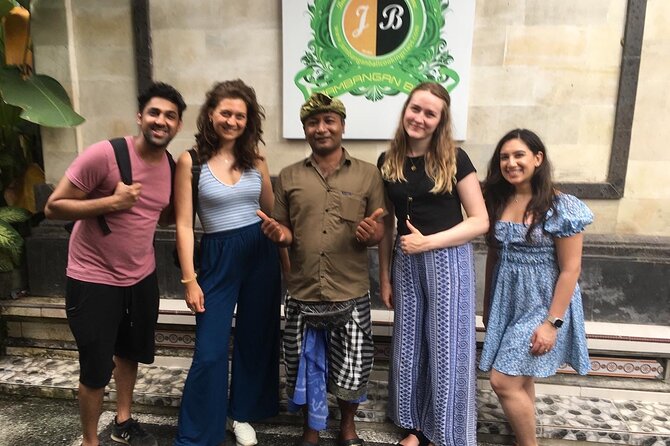
I would recommend this class to food lovers who want more than a finished plate. It suits you if you enjoy asking what an ingredient is, where it comes from, and how it fits into a household meal.
Families are also a good match. The mix of market shopping, cooking, music, and cultural activities gives children several ways to participate. The five-hour duration is the one concern, especially for very young children.
This is also a good choice for couples and small groups. The family setting creates a friendly social atmosphere, and the meal gives everyone a natural reason to talk and compare results.
You may want to choose another activity if you dislike early starts, have limited time in Ubud, or want a highly polished professional kitchen. This class is about local life and participation, not speed or restaurant-style presentation.
English is used throughout, which makes the lesson accessible to English-speaking visitors. The maximum group size is 15, so expect a shared class rather than a private family visit.
Practical details, cancellation, and what to bring
The experience lasts approximately five hours and ends back at the meeting point. A mobile ticket is accepted, and booking confirmation is provided at the time of reservation.
Lunch is included, but alcohol is not. If you choose the dinner option, confirm what meal is included and ask about the exact schedule, particularly if the market visit matters to you.
Free cancellation is available if you cancel at least 24 hours before the local start time. Changes or cancellations made inside that window are not refunded. The class also depends on good weather, with a different date or full refund offered if poor weather causes cancellation.
Wear comfortable clothing suitable for cooking and walking through a market. Since the program includes a home visit and cultural activities, a respectful, easygoing attitude will serve you better than expecting a formal restaurant lesson.
Should you book this Balinese cooking class?
Yes, if you want food, family life, and local customs in one well-priced half-day. The strongest version of the experience is the morning class, when you can visit the market, see rice farming, choose ingredients, cook several dishes, and eat lunch in the garden.
The class is especially good for first-time visitors to Bali who want a direct introduction to Balinese cuisine. The recipes, welcoming hosts, and cultural activities give you plenty to remember and something useful to take home.
Choose the evening session only if its timing fits your day or you are comfortable missing the market. At $34, Jambangan Bali Cooking Class offers a lot for the money, with the main tradeoff being a shared group format and a schedule that may change after dark.
FAQ
Where does the Jambangan Bali Cooking Class meet?
The meeting point is Warung JB Jambangan Bali, Jalan Kelabang Moding No. 713, Kelabang Moding, Tegallalang, Kecamatan Ubud, Kabupaten Gianyar, Bali 80571, Indonesia.
How long does the cooking class last?
The experience lasts approximately five hours.
Is lunch included?
Yes. Lunch is included in the activity price. Alcohol is not included.
Can I choose between a lunch and dinner class?
Yes. The experience offers a lunch or dinner option. The morning or lunch schedule is best if you want to visit the traditional market.
Is the market visit available with the evening class?
The market may be closed in the evening, so it may not be included at that time. A plantation visit with coffee and tea tasting may be offered instead, but this should not be assumed as a guaranteed part of every evening class.
How many people can join the class?
The activity has a maximum of 15 participants.
Can I cancel for a full refund?
Yes, if you cancel at least 24 hours before the experience start time. Cancellations or changes made less than 24 hours in advance are not refunded, and poor-weather cancellations may result in a different date or a full refund.
Just added around Ubud
- Bali Amazing Cooking Class★ 5.0 · 63 reviews
- Private Mount Batur Sunset Trekking – All inclusive tour★ 5.0 · 63 reviews
- Private Full-Day Handara, Ulun Danu, Jatiluwih and Tanah Lot Tour★ 5.0 · 63 reviews
- Half-Day Tour: Uluwatu Temple and Kecak Fire Dance Show★ 5.0 · 63 reviews
- 3 Days for the best of Ubud Private Tour★ 5.0 · 63 reviews
- Ubud ATV Quad Bike and Snorkeling at Blue Lagoon Beach★ 5.0 · 64 reviews
- Full Day Private Guided Tour to Bali★ 5.0 · 65 reviews
- Balinese Cooking Class with Traditional Market Tour★ 5.0 · 66 reviews
Cooking Classes, compared.
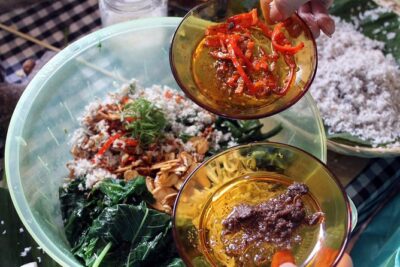
PRIVATE Authentic Balinese Cooking Class in Ubud at Putu’s Home
Read our review →
Balinese Ubud cooking school (9 Dish Cooking and Market Tour)
Read our review →
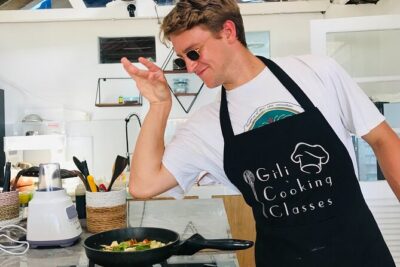
Learn to cook Indonesian food at Gili Cooking Classes Trawangan
Read our review →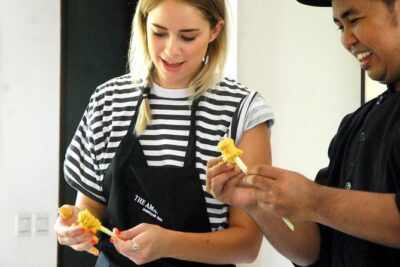
Browse the lists this tour appears in