
Reviewed · WORKSHOPS
Batik Master Class with Full Process
The best souvenirs carry a little work. This three-hour batik class near Prambanan lets you make a genuine Yogyakarta textile from start to finish, using traditional wax tools, dyes, and patient instruction. I like the hands-on process, and I like that your finished work is a useful keepsake rather than a factory-made trinket. Local snacks, coffee, and tea make the workshop feel warm and informal.
The main consideration is time. Drawing, waxing, coloring, drying, and rinsing take about three hours, and your piece may still be damp when you leave. The standard project is handkerchief-sized, while a tote bag costs extra. You will also need to arrange your own way to the meeting point at Pasar Prambanan.
In This Review
- Key Points to Know Before You Book
- Why This Batik Class Fits a Yogyakarta Itinerary
- Meeting at Pasar Prambanan
- Starting With Batik Tools and Technique
- Drawing and Waxing Your Design
- Adding Color in Several Stages
- Fixing, Rinsing, and Drying the Cloth
- Adding Prambanan and Sojiwan Temple
- The Teaching Style and Atmosphere
- Who Will Enjoy It Most
- Booking, Weather, and Cancellation Details
- Should You Book This Batik Master Class?
- FAQ
- How long does the batik class last?
- Where does the experience start and end?
- What will I make during the class?
- What does the batik process include?
- Are snacks and drinks included?
- Is the class suitable for children?
- Can I cancel for a full refund?
Key Points to Know Before You Book

- Traditional canting work: You trace a pattern and apply hot wax with a small tool called a canting.
- A full batik process: The class covers drawing, waxing, coloring, chemical fixing, rinsing, and drying.
- Close to Prambanan: The workshop is about 10 minutes from Prambanan Temple Complex, making it a useful add-on.
- A practical souvenir: You take your completed handkerchief home, or choose a tote bag for an additional charge.
- Friendly instruction: The master batik artist demonstrates each stage and gives patient help, including one-on-one guidance when available.
- Small comforts included: Coffee, tea, and local snacks are served while you work.
Why This Batik Class Fits a Yogyakarta Itinerary
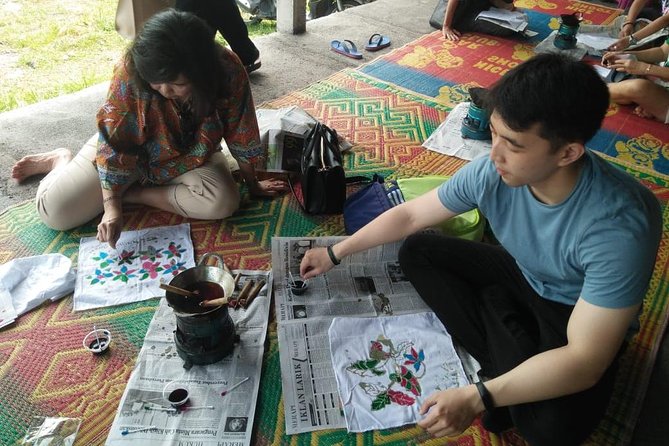
Batik is not simply fabric with pretty lines on it. It is a method. You use wax to block parts of the cloth from absorbing dye, then build color in stages. The wax creates the borders and patterns that give batik its familiar look.
That makes this class more satisfying than a quick painting session. You are not only decorating a cloth. You are learning why the cloth behaves as it does, how the wax controls the dye, and how small slips become part of the finished design.
The workshop is in the Prambanan area, in a peaceful setting near one of Java’s great Hindu temple complexes. That location matters because you can pair a major historic sight with a slower, creative activity. After the stone carvings and open temple grounds, sitting down with a cup of tea and a piece of cloth changes the pace of the day.
The class costs about $19.50 per person. For roughly three hours of instruction, materials, refreshments, and a finished souvenir, I consider that good value. You are paying for time and teaching, not just an object from a shop. The tote bag option costs extra, so check the price before choosing a larger project.
The activity has a maximum of 30 people. That is not a guarantee of a private lesson, but the teaching style can be personal. One account describes one-on-one instruction, and the class is led by an experienced local batik artist. If you are hoping for constant individual help, ask about the group size when you book.
A few more Yogyakarta trips worth comparing
- Borobudur Sunrise from setumbu Hill , Merapi Volcano & Prambanan Full Day Tour
★ 5.0 · 1,030 reviews - Borobudur Temple Climb To The Top & Prambanan Temple – 1 day tour
★ 5.0 · 638 reviews - Menoreh Village Cycling
★ 5.0 · 611 reviews
Meeting at Pasar Prambanan
The meeting point is Pasar Prambanan, at Ps. Prambanan, Jl. Merpati No. 60, Klurak Baru, Bokoharjo, in Sleman Regency. The activity ends at the same point.
This is not a hotel pickup tour. You need to reach the market meeting point yourself, so transportation deserves some thought. A private car and driver is the simplest choice if you are combining this with Prambanan and Sojiwan Temple. One person made the trip from a hotel in about an hour by private car, while another put the drive from Malioboro at around 35 minutes.
Those times can vary, so leave room in your schedule. The best plan is usually to visit Prambanan first, continue to the class, and then see Sojiwan Temple if the timing works for your booking. Another practical option is to ask a hired driver to wait or return at an agreed time.
The class is mobile-ticketed, and booking confirmation is provided at the time of purchase. Save the meeting details on your phone, especially if you are navigating from central Yogyakarta.
Starting With Batik Tools and Technique
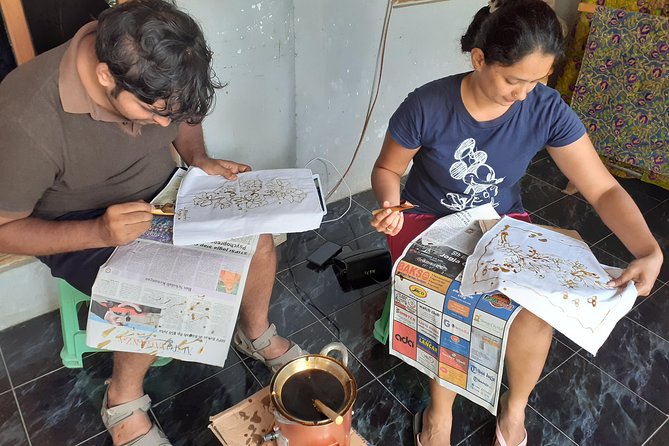
The class begins with an introduction to batik and the tools you will use. The instructor explains how to handle the canting and how to apply the melted wax correctly.
The canting is the key tool. It holds hot liquid wax, which you guide along the drawn lines of your design. This sounds simple until you try to keep the flow steady. The wax needs control, and your hand may not cooperate right away.
That is part of the appeal. The instructor does not expect a perfect first attempt. Patient guidance is a major strength here, especially for beginners and children. One useful lesson from the class is that a crooked line does not ruin the artwork. It becomes part of your personal version.
You will probably appreciate the calm pace. This is not an activity where you rush through three stations for a photograph. You sit, concentrate, and gradually see the pattern take shape. Coffee, tea, and local snacks help make the work feel social rather than technical.
Drawing and Waxing Your Design
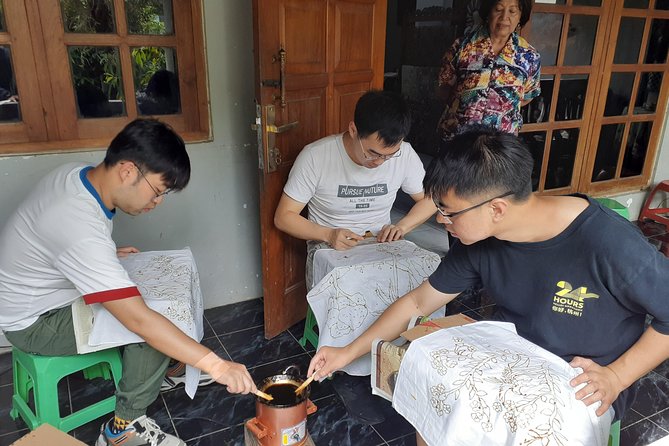
After the demonstration, you trace a pattern onto your cloth. The usual project is about handkerchief size, which is manageable for a first attempt and practical to carry home.
Next comes the wax. You outline the design with the canting, following the lines that will resist the dye. This stage takes focus. If the wax line is too thin or incomplete, color may cross into an area you meant to keep separate.
The instructor shows you how to use the tool, but you still do the work yourself. That balance is important. You receive help without losing the feeling that the finished piece is yours.
The class works well for families because children can take part in the coloring and see a direct result from each step. Parents should still expect a moderate level of physical activity. You will be seated and working with your hands for a long period, and the hot wax requires care. The experience is not described as suitable for people needing low physical effort.
If you want a larger souvenir, you can choose a tote bag for an added cost. A tote gives the design more room, but it also means more drawing, waxing, and coloring. For a first class, the handkerchief is the easier choice. For someone who enjoys crafts or wants a more useful item, the tote may be worth the supplement.
Still Yogyakarta, at a slower pace:
- Yogyakarta: Borobudur Top Access & Prambanan Temple Private Tour
★ 5.0 · 390 reviews - Small-Group Walking and Food Tour by Night in Yogyakarta
★ 5.0 · 313 reviews - Borobudur(climb up), Merapi Volcano and Prambanan Temple Tour
★ 5.0 · 297 reviews - Authentic Yogya Bicycle Tour
★ 5.0 · 232 reviews
Adding Color in Several Stages
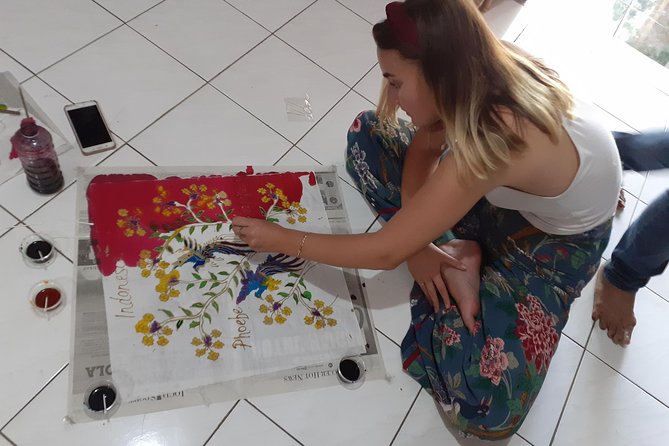
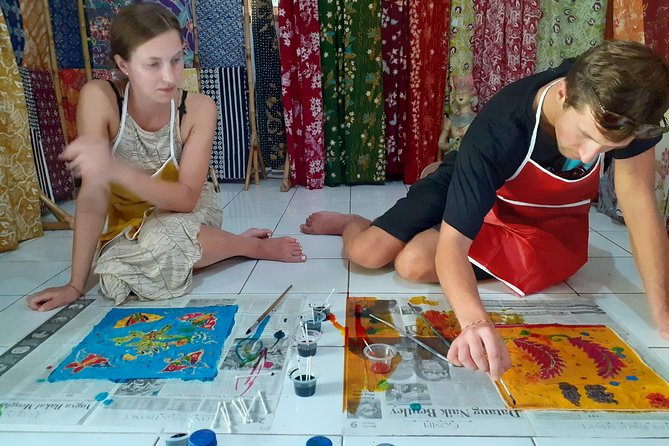
Once the wax lines are ready, you paint or dye the cloth in sequence. The order matters because each layer affects the next one. The wax protects selected areas while other parts take on color.
This is where the process becomes especially rewarding. A plain cloth gradually turns into a patterned textile, and the wax boundaries begin to make sense. You can see how traditional batik depends on patience rather than speed.
The class is suitable for people with no previous art experience. You do not need precise drawing skills to enjoy it. In fact, imperfect control can make the result more personal. The teacher’s encouragement is useful here, since beginners may otherwise spend too much time worrying about small mistakes.
The color stage is also the most popular part for children. It gives them a clear, hands-on task after the more careful waxing work. Adults who like art may want to take their time and think about color placement, but you should not expect a museum-quality textile after one short class. The value is in learning the method and making something with your own hands.
Fixing, Rinsing, and Drying the Cloth
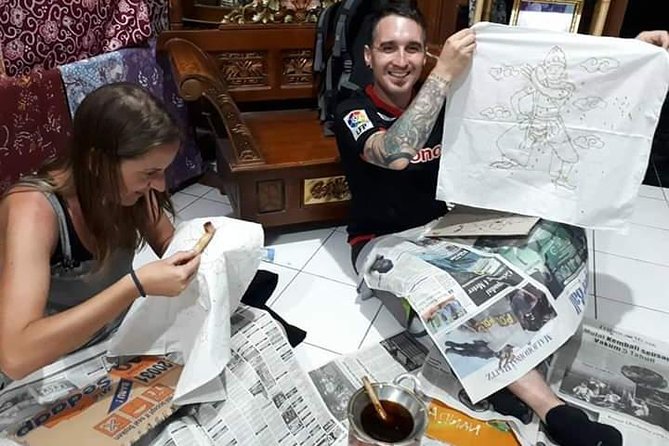
When the coloring is finished, the cloth is dried and then placed in a chemical solution. It is later rinsed in water before the final drying process.
This final stage explains why the class lasts about three hours. Batik is not finished when the last brushstroke is complete. The dye needs to be fixed, and the cloth needs to be washed so the process produces a usable piece.
Plan for the possibility that your work will still be wet when you leave. One account describes carrying the cloth on newspaper in a car and then letting it continue drying at the hotel. That is an easy problem to solve, but it is worth knowing in advance. Bring a small plastic bag or another way to protect your belongings if the cloth has not dried fully.
Once the process is complete, the work is yours to take home. You will leave with a souvenir that connects directly to the time you spent in the Prambanan area. It may not be perfectly symmetrical, and that is fine. The small irregularities show that you made it rather than bought it.
Adding Prambanan and Sojiwan Temple
Prambanan Temple is listed as the first stop in the wider itinerary. The workshop’s location makes it particularly easy to combine with a visit to the temple complex. The class is described as being about 10 minutes from Prambanan, so you do not lose much time moving between the two.
This pairing works because the experiences have different rhythms. Prambanan gives you monumental architecture and centuries of religious history. Batik gives you a table, a tool, and time to make something. You get a fuller day by including both rather than filling the entire schedule with sightseeing.
Sojiwan Temple is the second listed stop. It is another nearby temple option, which gives the day a quieter counterpoint to Prambanan. The provided details do not specify how long you spend at either temple or exactly when the visits occur, so confirm the timing if seeing both is important to you.
Do not assume the batik class itself replaces a proper temple visit. If you want enough time for Prambanan’s main structures, carvings, and grounds, allow a separate block of time for sightseeing. The workshop is best treated as an add-on, not as a rushed substitute for the temple complex.
The Teaching Style and Atmosphere
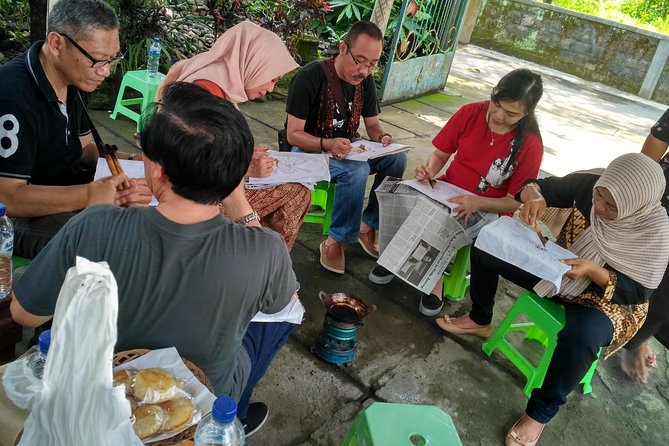
The strongest part of this experience is the instruction. The class is led by a master batik artist in Prambanan, with demonstrations of the tools and the full process. English explanation is available, and one account specifically praised the English translator.
That matters because batik has several stages that are hard to understand by watching a quick demonstration online. You need to know how the wax is applied, why the dye is used in sequence, and what happens during the chemical and rinsing stages.
The atmosphere is described as relaxing and comfortable. I can see why: you work at your own piece, have refreshments nearby, and are not pushed through a fixed line of attractions. The setting is peaceful, which suits an activity requiring steady hands.
The class also supports local women, according to the available description. That gives the experience a community connection beyond the craft itself, although the details of that support are not provided. I would view it as a welcome local benefit, while judging the class mainly on its teaching and the quality of the activity.
Who Will Enjoy It Most
I would recommend this class to:
- Families looking for an activity children can actively join
- Couples or friends who want a shared creative project
- Art-minded visitors who enjoy process more than polished souvenirs
- Anyone visiting Prambanan who wants a slower afternoon activity
- First-time batik makers who want instruction rather than a shop demonstration
- Visitors seeking a small, locally made souvenir at a modest price
You may want to skip it if your Yogyakarta schedule is extremely tight. Three hours is a real commitment, and the activity can stretch to three or four hours depending on the pace and drying process.
It is also not ideal if you want to leave with a completely dry item ready to pack immediately. Your work may need extra drying time. And if you want a tote bag, remember that it costs more than the listed price.
Booking, Weather, and Cancellation Details
The class is often reserved about 10 days ahead, so I would not leave it until the last morning if your Yogyakarta dates are fixed. A maximum of 30 people allows for a reasonably sized class, but earlier booking may give you more choice of dates.
Free cancellation is available if you cancel at least 24 hours before the local start time. Changes or cancellations made inside that window are not accepted for a refund.
The experience depends on good weather. If poor weather forces a cancellation, you will be offered another date or a full refund. That policy is useful if your schedule includes outdoor visits to Prambanan and Sojiwan Temple.
Should You Book This Batik Master Class?
Yes, if you are spending time near Prambanan and want more than another quick photograph. At $19.50, the class offers instruction, refreshments, materials, and a handmade souvenir for a reasonable price. The full process is the real attraction, from the first wax line to the final rinse.
Book it especially if you enjoy making things, are traveling with children, or want a cultural activity that feels connected to Yogyakarta. Give yourself enough time, arrange transport to Pasar Prambanan, and carry a bag for a possibly damp cloth.
I would choose the standard handkerchief for a simple first attempt. Pick the tote bag only if the added price and extra work suit you. For a thoughtful, practical companion to a Prambanan visit, this is an easy activity to recommend.
FAQ
How long does the batik class last?
The class lasts approximately three hours, although the full process can take closer to three or four hours depending on the pace and drying.
Where does the experience start and end?
It starts at Pasar Prambanan, Ps. Prambanan, Jl. Merpati No. 60, Klurak Baru, Bokoharjo, Sleman, Yogyakarta. It ends back at the same meeting point.
What will I make during the class?
The standard project is a handkerchief-sized piece of batik. You can choose a tote bag instead for an additional cost.
What does the batik process include?
You learn about batik and its tools, trace a pattern, apply melted wax with a canting, add color in sequence, and complete the drying, chemical solution, and rinsing stages.
Are snacks and drinks included?
Yes. Local snacks, coffee, and tea are provided while you work.
Is the class suitable for children?
The experience has been described as suitable for families, and children particularly enjoy the coloring stage. Participants should have a moderate physical fitness level.
Can I cancel for a full refund?
Yes, if you cancel at least 24 hours before the experience start time. If poor weather causes the operator to cancel, you will be offered a different date or a full refund.
Just added around Yogyakarta
- Borobudur Private Tour From Semarang Port★ 4.5 · 12 reviews
- Borobudur: Village Tour with Pottery and Tofu Making★ 5.0 · 34 reviews
- Chicken Church at Karangrejo Village Admission Ticket★ 4.5 · 3 reviews
- Chicken Church Local Attraction Near Of Borobudur Temple★ 3.5 · 18 reviews
- Private Borobudur Village Trip By Volkswagen Safari★ 5.0 · 3 reviews
- Borobudur Temple Combined Ticket Admissions★ 5.0 · 7 reviews
- Yogyakarta: Borobudur Temple Climb Up and Prambanan Temple Tour★ 5.0 · 53 reviews
- Borobudur: Pottery Making Workshop★ 5.0 · 5 reviews
Workshops, compared.
PRIVATE Authentic Balinese Cooking Class in Ubud at Putu’s Home
Read our review →

Learn to cook Indonesian food at Gili Cooking Classes Trawangan
Read our review →
Browse the lists this tour appears in