
Reviewed · COOKING CLASSES
Bali Ubud Paon Cooking Class
Come hungry, leave with recipes. The Paon Bali cooking class gives you a practical way to understand Balinese food, starting with a local market visit on the morning session and continuing in a traditional home setting. I especially like the small-group format and the chance to prepare dishes such as banana-leaf fish and minced chicken satay, rather than simply watching a chef work. The class costs $44 per person and includes lunch, hotel transfers within Ubud, and a cooking certificate.
The main thing to consider is the split schedule. The morning class includes the market, while the afternoon class does not, so choose carefully if shopping for spices and seeing local produce matters to you. Transfers outside Ubud cost extra, and the booking is non-refundable, so you will want your plans settled before paying.
In This Review
- Key points to know before booking
- Why this Ubud cooking class is worth your time
- Stop one: Ubud Traditional Art Market
- Stop two: A Balinese home kitchen
- What you actually cook and eat
- How the small group affects the experience
- Morning or afternoon: choose the right session
- Hotel transfers and the Ubud boundary
- Is $44 a fair price?
- Who will enjoy Paon Bali most?
- Small details that make the day better
- Should you book this cooking class?
- FAQ
- How long does the Paon Bali cooking class last?
- Does the class include a market visit?
- Is lunch included?
- Are hotel transfers included?
- How many people can join the class?
- Will I receive a cooking certificate?
- Is the class suitable for service animals?
- Can I cancel or change my booking?
Key points to know before booking
- The morning market visit adds real local context: You see the ingredients before learning how they are used in the kitchen.
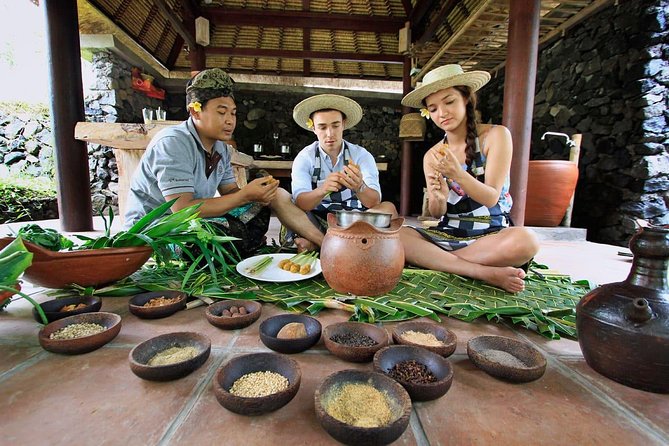
- The class is hands-on: You help prepare an entire Balinese meal, with instructors explaining the purpose of the ingredients and each step.
- A traditional home is part of the setting: The cooking takes place at Wayan’s home, rather than in a polished hotel kitchen.
- Lunch is included: You eat the food prepared during the class, including dishes such as fish cooked in banana leaf and minced chicken satay.
- Ubud transfers are included: Pickup and drop-off apply within the Ubud area, with an added charge for locations outside it.
- The group can reach 15 people: That is still manageable for an organized class, but it is not a private lesson.
Why this Ubud cooking class is worth your time
A cooking class can be a pleasant way to fill an afternoon. This one offers more than a recipe card and a plate of food because it connects the meal to the market, the ingredients, and a Balinese home.
I like experiences that help you understand what you have been eating during a trip. Balinese food can look simple on the plate, but its flavor depends on fresh produce, spices, pastes, herbs, and careful preparation. Here, you get to see those ingredients in their local setting, then use them yourself.
The class lasts about five hours, which gives enough room for transport, the market visit, cooking, and lunch without forcing every step into a rushed demonstration. It is a half-day commitment, so plan it as one of the main activities in your Ubud schedule rather than trying to squeeze it between several temple visits.
The class has a 4.9 rating from 117 reviews, with 96 percent recommending it. Those figures point to strong satisfaction, especially with the instructors, the setting, and the food. Still, the experience is best for people who want to participate. If you prefer a quick meal with little instruction, five hours may feel long.
More Cooking Classes in Ubud
- Ubud Cooking Class Bali with Balinese Chef
★ 5.0 · 1,609 reviews - PRIVATE Authentic Balinese Cooking Class in Ubud at Putu’s Home
★ 5.0 · 644 reviews - Balinese Ubud cooking school (9 Dish Cooking and Market Tour)
★ 5.0 · 540 reviews
Stop one: Ubud Traditional Art Market
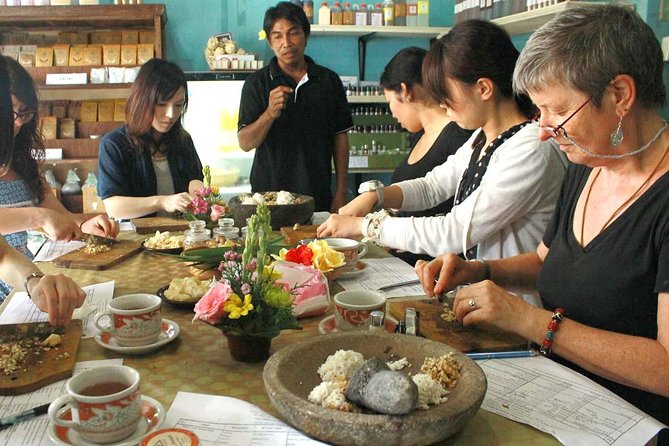
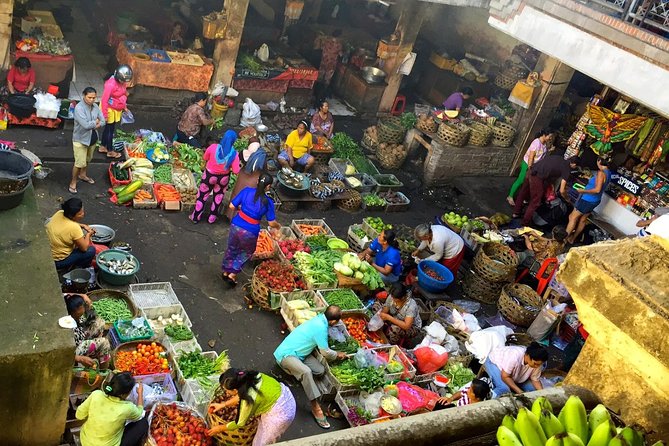
The morning session begins at the Ubud Traditional Art Market. This is not just a shopping stop added to fill time. It gives you a useful introduction to the raw materials that will later appear in your meal.
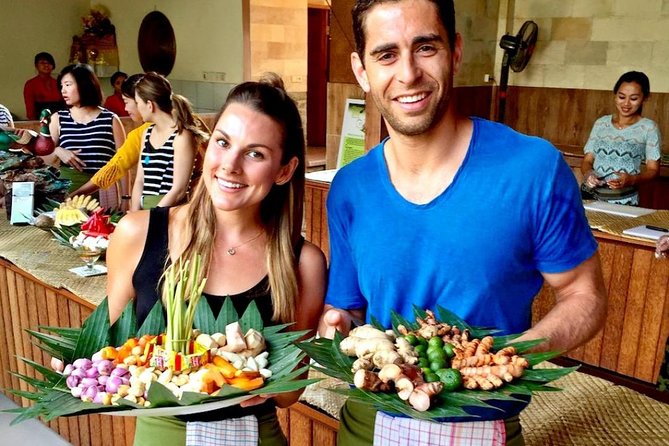
A guide explains local produce and spices, along with how they are used in Indonesian cooking. You might find fruits and ingredients that are unfamiliar, and the visit can help you recognize the flavors behind the dishes you eat in Bali. Some people have bought spices here that are difficult to find in the United States, making this a good moment to think about what you can take home.
The market visit is available only on the morning session. That detail matters. The afternoon class includes pickup from your Ubud hotel and transport to the cooking location, but it skips the market. If you want both parts, book the morning option.
I would also allow a little patience for the market portion. Markets are active working places, not museum displays. The value comes from seeing ordinary ingredients and hearing how they fit into Balinese cooking, not from expecting a carefully staged sightseeing tour.
Stop two: A Balinese home kitchen
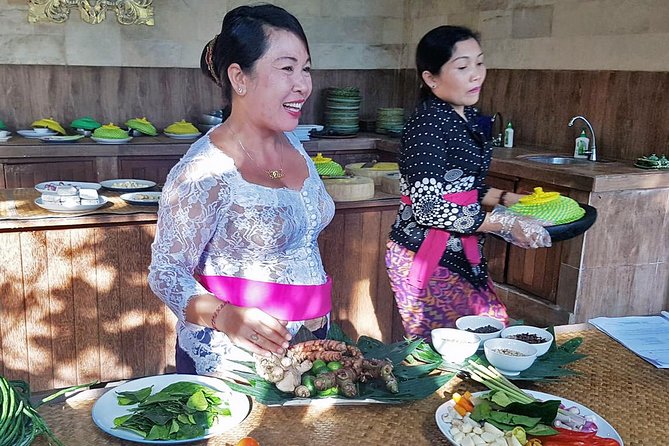
After the market, transport takes you to Paon Bali Cooking Class. The cooking takes place at a traditional Balinese home associated with Wayan, the chef and owner mentioned in the class experience.
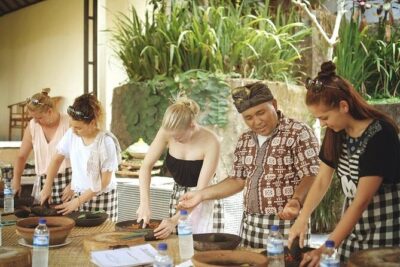
This setting is one of the strongest parts of the day. You are not working in a generic culinary studio that could be anywhere in the world. You are cooking in a home environment, with views of the forest noted by people who took the class. The surroundings give the lesson a sense of place without taking attention away from the food.
The class is organized, clean, and supported by several instructors. That matters when a group is working through several recipes at once. You can take part in the preparation while the staff keeps the process moving and explains what you are doing.
The instructors make the food approachable for home cooks. You do not need to arrive with professional skills. The class is designed around demonstrations, participation, and clear explanations of the ingredients and methods.
One especially useful detail is that recipes are provided. You may also have the option to receive them through WhatsApp, which is practical after a long trip when paper notes have a habit of disappearing into a suitcase.
What you actually cook and eat
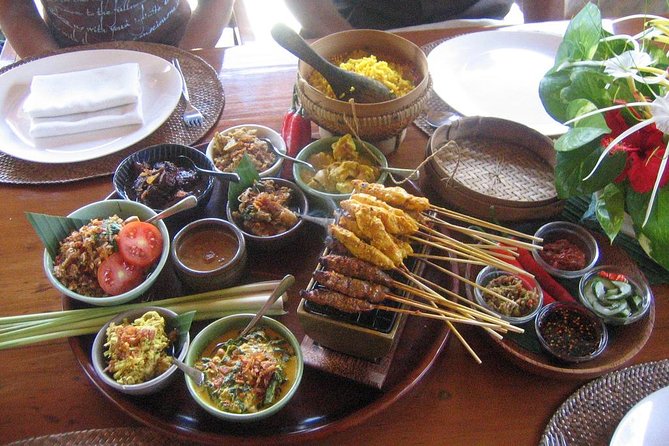
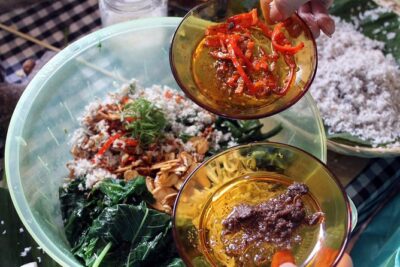
The menu includes dishes such as banana-leaf fish and minced chicken satay. These are not simply samples placed in front of you. You help prepare the food, then eat the results as lunch.
The hands-on format is a major advantage. Watching a chef pound, mix, wrap, or grill something can be entertaining, but taking part gives you a much better chance of repeating the dish at home. You learn how the ingredients are combined and why each one is used.
The food is also the clearest test of the class. The feedback is unusually consistent on this point: people praise the flavor and say the meal is among the highlights of their Bali visit. That does not mean every dish will match your taste. Balinese cooking can use strong herbs and spices, and your enjoyment will depend partly on what you already like to eat.
Still, the lesson gives you more control than a restaurant meal. You can ask questions, follow the stages, and understand what creates the final result. For anyone who has eaten Balinese food and wondered how to recreate it, that is real value.
Lunch is included, so the five-hour schedule also covers a substantial meal. You should arrive ready to cook and eat, rather than treating the class as a small tasting.
Still Ubud, at a slower pace:
- All-Inclusive Ubud Private Tour
★ 5.0 · 14,344 reviews - Best of Ubud Full-Day Tour with Jungle Swing
★ 5.0 · 8,571 reviews - Ubud: Monkey Forest, Jungle Swing, Rice Terrace, and Water Temple
★ 5.0 · 7,160 reviews - Best of Ubud 1-Day Private Tour
★ 5.0 · 4,451 reviews
How the small group affects the experience
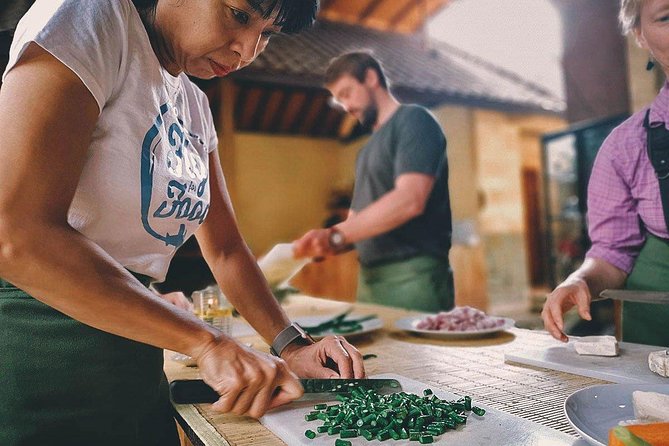
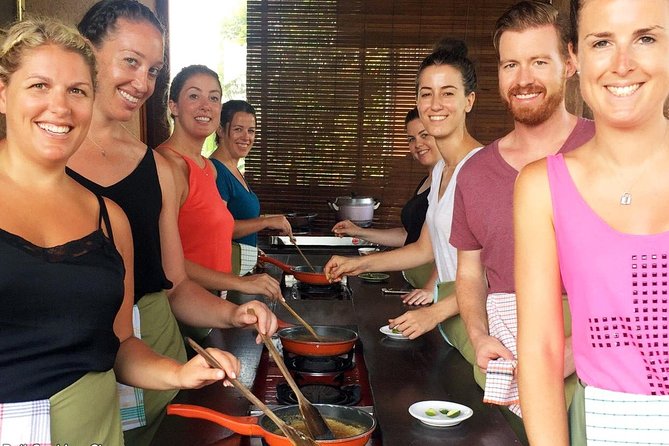
The maximum group size is 15 people. That is not an intimate private class, but it is small enough for a structured group activity.
The class attracts a mix of couples, families, solo participants, and people from different countries. That can add to the experience, especially during the shared meal. Several accounts describe the group atmosphere as friendly and easy to join.
If you are a solo visitor, this is a useful way to meet people without committing to a full-day group tour. If you are traveling as a couple, it gives you something active to do together. Families can also take part, and the experience has been used by adults with children and older family members.
There is a small trade-off. With up to 15 people, you may not receive the same amount of individual attention as you would in a private lesson. The support staff helps with this, but anyone hoping for a highly personal cooking tutorial should keep the group size in mind.
The class is also described as suitable for service animals and near public transportation. Even so, most people using the included transfer will find the hotel pickup simpler.
Morning or afternoon: choose the right session
The morning and afternoon options are not identical.
Choose the morning session if you want:
- The Ubud market visit
- A closer look at local produce and spices
- The full market-to-kitchen story
- The chance to shop for ingredients or spices
Choose the afternoon session if you prefer:
- A later start
- Direct pickup from your Ubud hotel
- Cooking and lunch without the market visit
The morning option is the better choice for a first visit to Bali if you want food and local life in one experience. The afternoon option may suit you if you have already visited markets or want a simpler schedule.
Because the activity takes about five hours, check the timing against your other plans. Do not book a temple visit, long transfer, or airport journey too close to the class. The included Ubud pickup helps, but traffic and hotel locations can still affect the day.
Hotel transfers and the Ubud boundary
Hotel transfer services are included within the Ubud area. If you are staying in Ubud, select the nearest hotel or available pickup point when booking. This is helpful if you have rented a scooter or are not staying at a large resort, since the information says to choose your nearest hotel in that situation.
Pickup and drop-off outside Ubud are available for an added charge. The price of $44 does not cover those extra transfers, so check your location before assuming the included service applies.
Transport adds value because it removes the need to arrange a separate ride to the cooking site. It also makes the class easier to fit into a day when you may not know the roads well.
Is $44 a fair price?
At $44 per person, this is not the cheapest meal you will find in Bali. You are not paying only for lunch. The price covers roughly five hours of instruction, the morning market visit when selected, cooking support, the meal you prepare, a certificate, and Ubud hotel transfers.
For me, the strongest value comes from the combination of food, instruction, and place. A restaurant can show you Balinese flavors, but it cannot teach you how to reproduce them. A short demonstration may teach one dish, while this class gives you a broader meal and a better understanding of the ingredients.
The value is weaker if you book only for a quick lunch or if you already know Balinese cooking well. The class takes a large part of your day, and the afternoon option does not include the market. Those are not problems, but they should match your reason for booking.
Group discounts may be available, which can make the experience more appealing for families or larger parties. Tips are not included, and individual travel insurance is also not included. Since the experience is non-refundable and cannot be changed after booking, make sure your date and pickup location are correct.
Who will enjoy Paon Bali most?
I would recommend this class to you if you enjoy food, want direct participation, and like learning how a local meal is made. It is especially good for:
- First-time visitors who want a cultural activity tied to everyday life
- Home cooks who want recipes they can repeat
- Couples looking for a shared activity
- Families who enjoy hands-on experiences
- Solo visitors who like meeting a small group
- Anyone who has already enjoyed Balinese food and wants to understand it better
It may not suit you if you dislike group activities, have a very tight schedule, or want a private chef lesson. The class can include up to 15 people, and the market is offered only in the morning.
The cooking is suitable for beginners because the instructors explain the stages and provide support. You should still be willing to handle ingredients and take part. This is not a show where you sit back while someone else does all the work.
Small details that make the day better
Book the morning session if the market is important to you. That is the single most useful tip for choosing between the two schedules.
Keep your recipes after the class. The option to have them sent through WhatsApp is particularly useful, but you should still make sure you receive the instructions you need before leaving.
If you are staying outside Ubud, ask about the extra transport charge before booking. The included transfer area is limited to Ubud.
Bring an appetite. Lunch is part of the experience, and you will have spent several hours preparing the food before sitting down to eat it.
Finally, leave room for conversation. The class is praised for its warm instructors and relaxed group atmosphere. Some of the pleasure comes from meeting other people at the cooking table, not just from the final dishes.
Should you book this cooking class?
Yes, if you want an active half-day that connects a local market, Balinese ingredients, home cooking, and a shared meal. The $44 price is fair for what is included, especially with Ubud transfers and lunch.
I would choose the morning session because the market visit gives the class more meaning. Pick the afternoon only if you prefer a later start or already have another market visit planned.
This is a strong choice for food-minded people, families, couples, and solo visitors. Skip it if you want a private lesson, a very short activity, or flexible cancellation. For everyone else, Paon Bali offers a useful souvenir that fits in your memory and, if you follow the recipes, in your own kitchen.
FAQ
How long does the Paon Bali cooking class last?
The experience lasts approximately five hours.
Does the class include a market visit?
Yes, but only the morning session includes a visit to the Ubud Traditional Art Market.
Is lunch included?
Yes. Lunch is included as part of the cooking class.
Are hotel transfers included?
Hotel transfer services are included for locations within the Ubud area. Pickup and drop-off outside Ubud require an additional charge.
How many people can join the class?
The maximum group size is 15 people.
Will I receive a cooking certificate?
Yes. A cooking class certificate is included.
Is the class suitable for service animals?
Yes. Service animals are allowed.
Can I cancel or change my booking?
No. The experience is non-refundable and cannot be changed for any reason after booking.
Just added around Ubud
- Half-Day Tour: Uluwatu Temple and Kecak Fire Dance Show★ 5.0 · 63 reviews
- 3 Days for the best of Ubud Private Tour★ 5.0 · 63 reviews
- Bali Amazing Cooking Class★ 5.0 · 63 reviews
- Private Mount Batur Sunset Trekking – All inclusive tour★ 5.0 · 63 reviews
- Private Full-Day Handara, Ulun Danu, Jatiluwih and Tanah Lot Tour★ 5.0 · 63 reviews
- Mount Batur Sunrise Trekking★ 5.0 · 65 reviews
- Trunyan Cemetery, Hot Spring, Penglipuran Village, and Waterfall Tour★ 5.0 · 65 reviews
- Bali Iconic Tour with Buffet Lunch and Attraction Tickets★ 5.0 · 66 reviews
Cooking Classes, compared.
PRIVATE Authentic Balinese Cooking Class in Ubud at Putu’s Home
Read our review →
Balinese Ubud cooking school (9 Dish Cooking and Market Tour)
Read our review →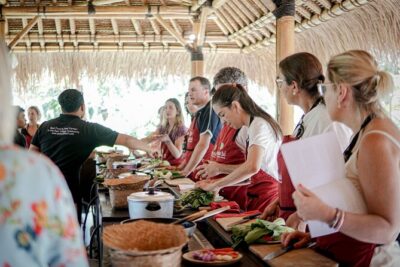
Learn to cook Indonesian food at Gili Cooking Classes Trawangan
Read our review →
Browse the lists this tour appears in