
Reviewed · COOKING CLASSES
Bali Cooking Class with Culture Experience
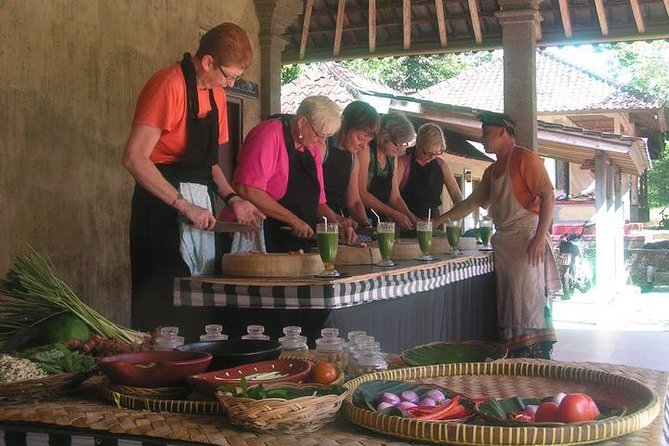
Start with the market, then cook lunch. In Ubud, this six-hour experience brings you into daily Balinese life through a morning market visit, a family compound, and a hands-on cooking class. I like the chance to shop for herbs and spices before cooking, and I like that the meal includes several traditional dishes rather than one simple recipe. The main consideration is the early start: you need to be ready at 7:30 a.m.
The class costs $62, including pickup from central Ubud hotels, the market visit, snacks, drinks, instruction, and the meal you prepare. The small group, limited to 12 people, should make it easier to follow the chef and ask questions. Just remember that the exact cooking menu is not specified in advance, so you may want to ask about it when booking.
In This Review
- Key points to know
- Why the market visit matters at 7:30 a.m.
- Arriving at the Balinese family compound
- What you receive before cooking begins
- Cooking a complete Balinese menu
- Lunch is the reward for the lesson
- Group size, transport, and pace
- What I like most about the experience
- The drawbacks to keep in mind
- Who should book this Ubud cooking class?
- Should you book it?
- FAQ
- Where does the Bali cooking class take place?
- What time does the experience start?
- How long does the experience last?
- Is hotel pickup available?
- How many people can join the class?
- Does the experience include a market visit?
- Is food provided during the experience?
- What do you cook during the class?
- Do you receive recipes to take home?
- Can you cancel for a full refund?
Key points to know
- The morning market comes first: You see and discuss the fresh herbs, spices, fruits, and vegetables used in the cooking class.
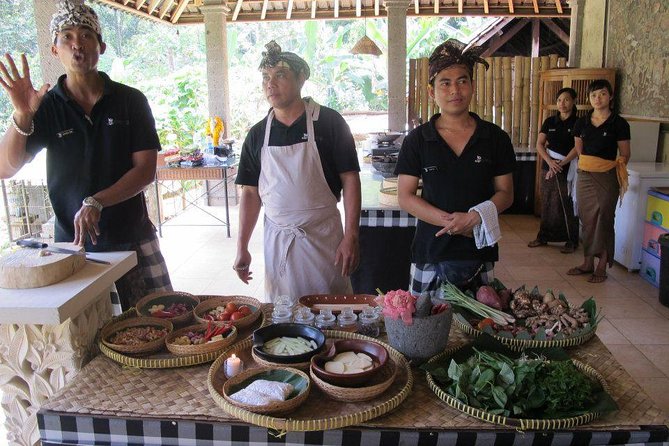
- Dewa welcomes you at the family home: Start with coffee, tea, mineral water, and fresh Pisang Goreng, or crispy banana fritters.
- You cook a full Balinese meal: The class covers an appetizer, several entrees, side dishes, and dessert.
- The setting is personal: Cooking takes place in a Balinese family compound and pavilion rather than a standard restaurant kitchen.
- The group is capped at 12: This keeps the class small enough for hands-on instruction without making a private booking.
- You leave with recipes: An illustrated booklet includes menus, directions, photos, tips, and space for your own notes.
Why the market visit matters at 7:30 a.m.
The day begins early, with a 7:30 a.m. start. That timing is not a minor detail. The first part of the experience takes place at a local morning market, where your Family Host buys the ingredients for the class and explains what you are seeing.
I like this order. You meet the food before you meet the cooking instructions. Instead of beginning with a prepared tray of anonymous ingredients, you get a look at the raw materials that shape Balinese cooking: fresh herbs, spices, fruit, and vegetables. Your host can explain how they are used, and you can connect those ingredients with the dishes you later prepare.
The market also gives the experience a stronger link to ordinary life in Bali. You are not simply learning a recipe designed for a cooking school. You are seeing where the food begins and how a household might shop for it. The provided details do not promise a long market tour or a set list of stalls, so think of this as a focused ingredient-shopping visit rather than a full market expedition.
That distinction helps set the right expectations. If you want hours of photography and independent browsing, this may feel brief. If you want practical context before cooking, the market is a smart start.
More Cooking Classes in Ubud
- Ubud Cooking Class Bali with Balinese Chef
★ 5.0 · 1,609 reviews - PRIVATE Authentic Balinese Cooking Class in Ubud at Putu’s Home
★ 5.0 · 644 reviews - Balinese Ubud cooking school (9 Dish Cooking and Market Tour)
★ 5.0 · 540 reviews
Arriving at the Balinese family compound
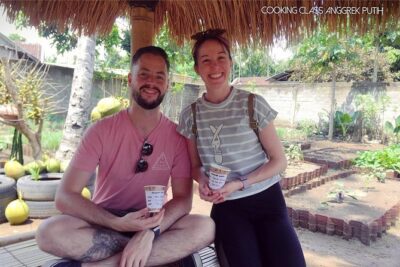
After the market, you go to the family home and meet Dewa. He welcomes you with a hot cup of coffee or tea, mineral water, and his fresh Pisang Goreng, a crispy banana fritter. This snack is a small touch, but it gives the morning a relaxed beginning before the cooking starts.
You also hear about Balinese family life, home shrines, and culture while the cooking pavilion is prepared. That conversation is one of the experience’s strongest features. It adds meaning to the food without turning the class into a formal lecture.
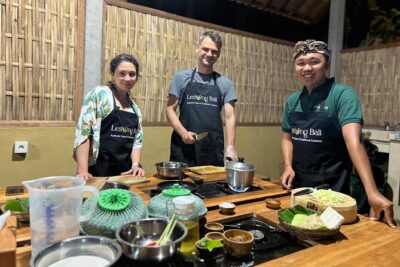
The setting matters here. Cooking in a Balinese home makes the class feel more personal than a lesson held in a hotel or a commercial kitchen. The compound is described as beautiful, and the cooking pavilion provides a dedicated place to work. You get the comfort of a prepared teaching space while still learning in a family setting.
The cultural part should be useful for anyone who wants more than a meal. You can ask about how food fits into family life, how home shrines are part of the household, and how the host’s daily world connects with the dishes on the table. The exact length and format of this talk are not given, so the experience will depend in part on the questions you bring.
What you receive before cooking begins
Before the lesson starts, you receive an illustrated recipe booklet. It includes the menu, recipes, directions, photos, cooking tips, and space for personal notes.
I value this more than a souvenir that simply gathers dust. Balinese food can involve unfamiliar herbs and spice combinations, and it is easy to forget the order of preparation once you return home. A written guide gives you something to consult when you try the dishes again.
The booklet also changes the class from a one-day activity into a skill you can carry home. You can write down substitutions, notes about texture, or reminders about how much spice you prefer. The supplied details do not state whether ingredients are measured in metric or US units, so check the booklet during the class if you plan to cook from it at home.
You should also pay attention to the chef’s demonstrations, not just the printed recipe. A booklet can tell you what to add, but watching the preparation can help you understand how the food should look and feel at each stage.
Cooking a complete Balinese menu
The class covers a complete meal rather than a single dish. You prepare an appetizer, a variety of traditional entrees, accompanying side dishes, and dessert.
That menu structure is a real advantage. You learn how Balinese food works as a meal, with different dishes sharing ingredients and flavors. You also get more chances to practice. One recipe might teach chopping, another may focus on seasoning, and dessert gives you a different kind of preparation to finish the session.
The class is led by a professional chef, with the family host helping explain the food and setting. The description emphasizes that you should be able to repeat the dishes at home. That is important because some cooking classes are entertaining but leave you with little confidence once the lesson ends. Here, the recipe booklet and the multi-dish format give you a better chance of recreating the meal.
The exact menu is not supplied, so I would not book this expecting one particular dish. If you have food allergies, dietary restrictions, or strong preferences, ask the provider before confirming. The available information does not specify vegetarian, vegan, halal, or allergy-adapted options.
The meal is also prepared and eaten as part of the class, so you are not merely watching a demonstration. You get to taste the results of your own work. That makes the lesson more memorable, and it gives you a direct way to judge the seasoning and texture.
Still Ubud, at a slower pace:
- All-Inclusive Ubud Private Tour
★ 5.0 · 14,344 reviews - Best of Ubud Full-Day Tour with Jungle Swing
★ 5.0 · 8,571 reviews - Ubud: Monkey Forest, Jungle Swing, Rice Terrace, and Water Temple
★ 5.0 · 7,160 reviews - Best of Ubud 1-Day Private Tour
★ 5.0 · 4,451 reviews
Lunch is the reward for the lesson
After the cooking, you sit down to eat what you have made. The menu includes the appetizer, entrees, side dishes, and dessert, with dessert specifically described as the final part of the meal.
This is where the $62 price begins to make sense. You are paying for several connected parts: transportation from a central Ubud hotel, the market visit, snacks and drinks, chef instruction, the use of the cooking pavilion, ingredients, and a substantial lunch. The price is not the lowest way to eat in Bali, but it is reasonable for a six-hour activity that combines food, culture, and a meal.
I would judge the value by asking what kind of day you want. If you only want inexpensive local food, you can certainly eat for less. If you want a structured morning that teaches you how the food is made and gives you recipes to use later, the package offers more than a restaurant meal.
The lunch also gives the class a clear finish. You do not leave halfway through the process or wonder what happened to the food you prepared. You get to enjoy the complete menu while the cooking is still fresh in your mind.
A cultural ritual of gratitude may also be part of the closing, as one account describes a ritual after the meal. Since this is not listed as a guaranteed step in the schedule, treat it as something that may occur rather than a promised feature. It reflects the respectful tone of the experience, but the exact form can vary.
Group size, transport, and pace
The class accepts a maximum of 12 people. That is small enough to feel manageable, though it is not the same as a private lesson. You may share workstations, explanations, and conversation with other participants.
A group of this size can suit solo visitors and couples who want company without joining a large coach group. It may also work well for families, provided everyone is comfortable with the early start and the hands-on pace. The information does not give a minimum age, so families should ask before booking for young children.
Round-trip transfers are offered from central Ubud hotels. This is useful because the morning begins before many people want to arrange their own transport. Pickup details may depend on your hotel location, so confirm that your accommodation falls within the central Ubud area.
The experience is near public transportation, but the offered pickup is the simpler choice if you are staying in the covered area. The total duration is about six hours, so keep the rest of your day flexible. A morning market, cultural conversation, cooking lesson, and lunch can fill most of the day.
What I like most about the experience
The strongest feature is the connection between place and plate. You see the ingredients at the market, hear about Balinese home life, prepare the food in a family compound, and eat the finished dishes in the same general setting.
I also like the warmth of the welcome. Dewa’s coffee, tea, mineral water, and banana fritters are not major costs, but they make the arrival feel hospitable rather than hurried. The fresh Pisang Goreng is a particularly good introduction to the morning.
The organization receives strong praise, and the description supports that impression. The cooking pavilion is prepared before the lesson, the booklet is ready, and the food shopping happens before you begin cooking. That planning matters when you are handling several dishes in one session.
The experience also appears to balance cooking with culture. You are not forced to choose between a food lesson and a cultural visit. You get both, though neither is presented as a long specialist tour.
The drawbacks to keep in mind
The 7:30 a.m. start will not suit everyone. If you are recovering from a late arrival, jet lag, or a night out in Ubud, the market portion may feel demanding. Plan an early night before the class.
The menu is not stated, which makes it difficult to decide in advance if the food will match your interests or dietary needs. Contact Lobong Culinary Experience before booking if that matters to you.
The group limit of 12 is sensible, but it still means you may not receive constant one-to-one attention. A private lesson would offer more control, while this class offers better value for a shared cultural experience.
Finally, the class lasts about six hours. That is a benefit if you want a full morning and afternoon activity, but it may be too long if you prefer a quick cooking demonstration.
Who should book this Ubud cooking class?
I would recommend it to you if food is one of the main ways you understand a place. The market visit gives you useful context, and the family setting adds a personal side that a standard restaurant meal cannot provide.
It also suits people who want to cook Balinese dishes again at home. The recipe booklet, photos, directions, tips, and note space are practical extras, not just decoration.
Couples, solo visitors, and small groups should find the maximum of 12 comfortable. The experience is also a good choice if you are staying in central Ubud and want pickup handled for you.
I would think twice if you dislike early mornings, want a short activity, or need a guaranteed special menu. The class is built around a set cooking experience, and the details provided do not promise dietary changes or a particular list of dishes.
The experience has a 5 out of 5 rating based on 78 reviews, with 100 percent recommending it. That matches the features that matter most here: a warm family welcome, careful organization, fresh ingredients, a beautiful Balinese home, and a full meal you prepare yourself.
Should you book it?
Book this class if you want an active Ubud morning with food at its center. The best reason to go is not simply the lunch. It is the full sequence: market ingredients, family culture, chef-led cooking, and recipes you can use later.
At $62, the value is strongest for you if you will take part rather than sit back. Set your alarm, confirm the pickup area and menu, and arrive ready to cook. If that sounds like your kind of Bali day, Lobong Culinary Experience is an easy choice.
FAQ
Where does the Bali cooking class take place?
The experience takes place in Ubud, with the cooking lesson held at a Balinese family home and cooking pavilion.
What time does the experience start?
The stated start time is 7:30 a.m.
How long does the experience last?
It lasts approximately six hours.
Is hotel pickup available?
Yes. Round-trip pickup is offered from central Ubud hotels.
How many people can join the class?
The activity has a maximum group size of 12 people.
Does the experience include a market visit?
Yes. You visit a local morning market, where the Family Host purchases and explains herbs, spices, fruits, and vegetables used in the class.
Is food provided during the experience?
Yes. You receive coffee, tea, or mineral water and fresh Pisang Goreng, followed by the lunch you prepare during the class.
What do you cook during the class?
You prepare a full menu that includes an appetizer, several traditional entrees, side dishes, and dessert. The exact dishes are not specified.
Do you receive recipes to take home?
Yes. You receive an illustrated booklet with the menu, recipes, directions, photos, tips, and space for personal notes.
Can you cancel for a full refund?
Yes, if you cancel at least 24 hours before the experience start time. Cancellations made less than 24 hours before the start time are not refunded.
Just added around Ubud
- Bali Amazing Cooking Class★ 5.0 · 63 reviews
- Private Mount Batur Sunset Trekking – All inclusive tour★ 5.0 · 63 reviews
- Private Full-Day Handara, Ulun Danu, Jatiluwih and Tanah Lot Tour★ 5.0 · 63 reviews
- Half-Day Tour: Uluwatu Temple and Kecak Fire Dance Show★ 5.0 · 63 reviews
- 3 Days for the best of Ubud Private Tour★ 5.0 · 63 reviews
- Ubud ATV Quad Bike and Snorkeling at Blue Lagoon Beach★ 5.0 · 64 reviews
- Full Day Private Guided Tour to Bali★ 5.0 · 65 reviews
- Balinese Cooking Class with Traditional Market Tour★ 5.0 · 66 reviews
Cooking Classes, compared.
PRIVATE Authentic Balinese Cooking Class in Ubud at Putu’s Home
Read our review →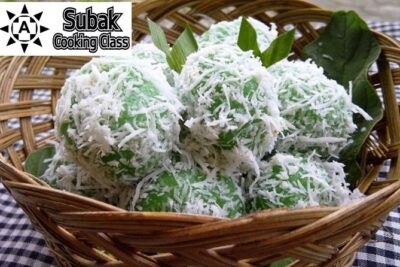
Balinese Ubud cooking school (9 Dish Cooking and Market Tour)
Read our review →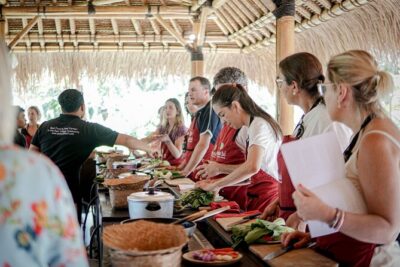
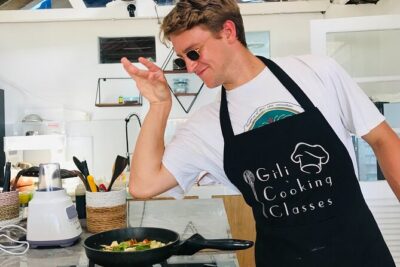
Learn to cook Indonesian food at Gili Cooking Classes Trawangan
Read our review →
Browse the lists this tour appears in