
Reviewed · HIKING & TREKKING
3 days 2 night trekking Rinjani to Summit and lake
Sunrise from Mount Rinjani is earned, not handed over. This three-day trek from Senaru takes you across Lombok’s volcanic terrain, up to the summit, down to the crater lake and hot springs, then over to Senaru Crater Rim. I like the small maximum group of six, and I like that guides and porters handle the cooking, camp equipment, and route support. The main drawback is simple: this is a hard trek with an early summit start, steep ground, rough footing, and very long walking days.
I also like the mix of scenery and local contact. You meet the team in Senaru, receive a briefing, and spend time with Sasak guides and porters while moving through Rinjani National Park. The price is $245 per person, but you must add the entrance fee, transport to Senaru, and accommodation before the trek, so check the full cost before booking.
In This Review
- Key points at a glance
- Why this Rinjani route is worth considering
- Arrival in Senaru and the pre-trek briefing
- Day one: Sembalun village to the first crater rim
- The 2:30 am summit push
- From the summit to the crater lake and hot springs
- Day three: Senaru Crater Rim to the gate
- Food, water, porters, and camp support
- What the $245 price really covers
- How difficult is the trek?
- Weather, safety, and what to pack
- Who should book this Rinjani trek?
- Should you book it?
- FAQ
- How long is the Rinjani trekking experience?
- Where does the trek begin?
- Where does the trek end?
- What time does the summit climb begin?
- Is the Rinjani entrance fee included?
- Is accommodation before the trek included?
- What equipment is provided?
- How many people can join the group?
Key points at a glance
- The summit starts at 2:30 am: You walk for about three hours in darkness to reach the summit near sunrise.
- Two crater rims frame the route: You camp first at Sembalun Crater Rim and later at Senaru Crater Rim.
- The crater lake and hot springs are included: Day two combines the summit with a descent to the lake before climbing again.
- Porters carry the heavy camp load: Food, water, tents, sleeping bags, mattresses, and a toilet tent are included.
- The group is limited to six people: This gives the guide more room to manage different walking speeds.
- Good fitness is essential: The schedule includes steep climbs, a summit push, and up to five hours of walking on the final day.
Why this Rinjani route is worth considering
Mount Rinjani is not a quick viewpoint walk. The route asks you to work for its best moments, then rewards you with changing scenery throughout the three days. You start in Sembalun village, cross open volcanic slopes, sleep on the crater rim, climb before dawn, descend to the crater lake, and finish through the Senaru side of the park.
That variety is the chief appeal. You are not simply walking up and down the same trail. The route gives you a full picture of Rinjani, from high ridges to the lake below and the hot spring area near the crater.
I also value the human side of the trip. The English-speaking local guide leads the route, while porters carry food and camping equipment and prepare meals. Past participants have especially praised guides named Fahri, Ipan, and Irpan, also referred to as Ivan in one account. The strongest praise goes to their care, humor, organization, and attention during difficult sections.
The company receives a published rating of 4.9 from 14 ratings, with 100 percent recommending the experience. That is a small sample, so I would not treat it as a guarantee. Still, the repeated praise for food, porters, and guide support is useful when comparing trekking companies.
More walks and hikes around Lombok and Gili:
- 2D1N Senaru Crater Rim Trekking
★ 5.0 · 178 reviews - Rinjani trekking 2D 1N RIM
★ 5.0 · 94 reviews - Rinjani Trekking 3D2N Summit
★ 4.5 · 85 reviews
Arrival in Senaru and the pre-trek briefing
The meeting point is Rinjani Trek Adventure on Jalan Pariwisata in Dusun Magling, Senaru. On the arrival day, the team meets you at the office or your accommodation in Senaru village for a briefing about the trek.
This briefing matters. The route has early starts, long climbs, and changing conditions. Use the time to confirm the three-day schedule, ask what you should carry, and make sure you understand which costs are already covered.
The package does not include transport to Senaru. The listed price is IDR 500,000 per person. Accommodation before the trek is also separate at IDR 250,000 per person. You should confirm exactly what that accommodation includes and whether you need it, especially if you have already arranged a place in Senaru.
The stated start time is 7:00 am, but the arrival-day briefing and the first trekking day are separate parts of the plan. Ask the company to confirm your pickup and briefing times in writing, since the exact arrangement can depend on where you stay.
Day one: Sembalun village to the first crater rim
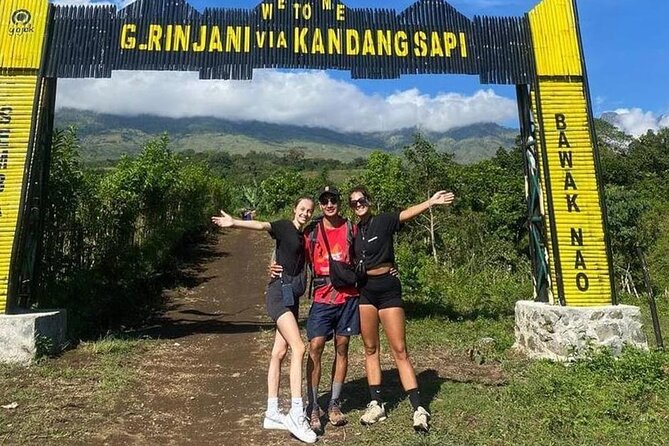
Day one begins with a drive of about 45 minutes from Senaru to Sembalun village. The team registers you at the Rinjani office before driving to the Sembalun gate, where you begin walking.
The registration step is part of entering Rinjani National Park. The entrance fee is not included and is listed at IDR 600,000 per person. Add this to your budget rather than treating the advertised tour price as the final amount.
The first walking section takes about two hours to Pos 1. You then rest for around 15 minutes before continuing for approximately 45 minutes to Pos 2. Lunch is served at Pos 2, giving you a useful break before the afternoon climb.
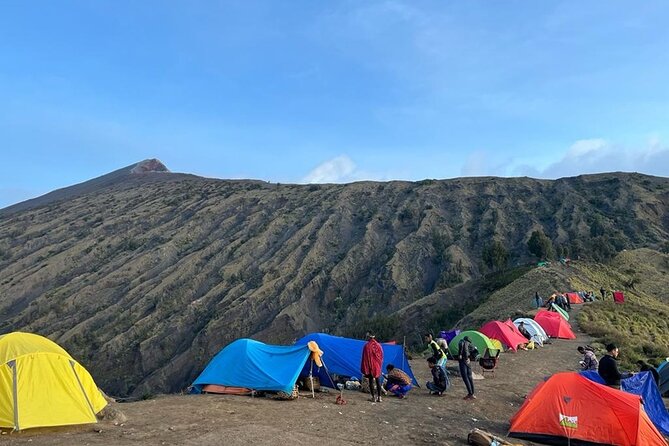
After lunch, you walk about one hour to Pos 3. From there, you continue toward Sembalun Crater Rim, your camp for the first night. The timing can vary with pace and trail conditions, but this is already a full day before the main summit effort has begun.
The attraction of Sembalun is the broad volcanic setting and the sense of gaining height gradually. The drawback is exposure to a long uphill approach before you reach camp. You need to pace yourself. Starting too fast can make the next morning much harder.
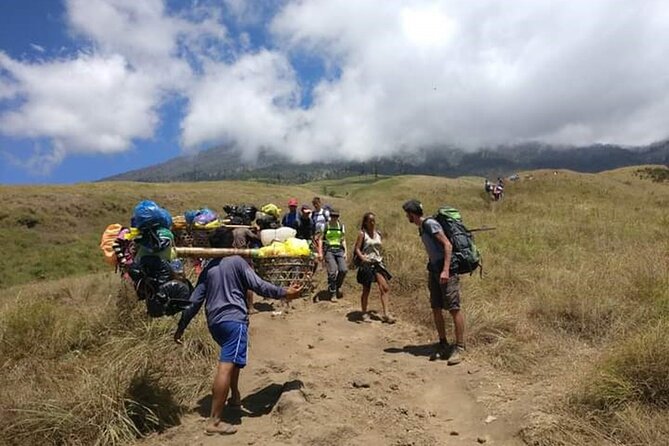
The camping equipment is provided: tent, sleeping bag, mattress, and toilet tent. Food, water, fruit, and soft drinks are also included. Porters carry the camping and cooking equipment, which is a major practical benefit, but you should still expect to carry your personal day pack.
The 2:30 am summit push
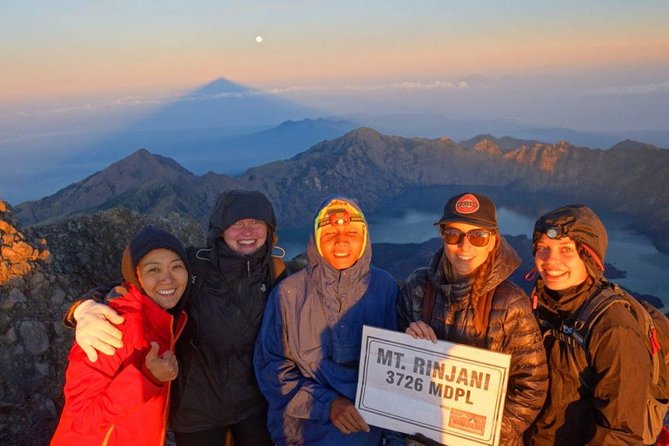
Day two is the hardest and most demanding part of the route. The team starts at about 2:30 am so you can aim for sunrise at the summit. The climb takes roughly three hours, though your pace and conditions will affect the timing.
You will walk in darkness, using a headlamp or other light source. One account describes losing the trail briefly in the dark and feeling unsure about continuing. That is a useful warning, not a reason to panic. Stay with your guide and group, keep your light working, and do not rush simply because the summit time is approaching.
The upper section is physically demanding. The supplied information specifically asks for a strong level of fitness, and the experience fits that warning. A published account also advises bringing trekking poles, which can help with balance and control on steep or loose ground.
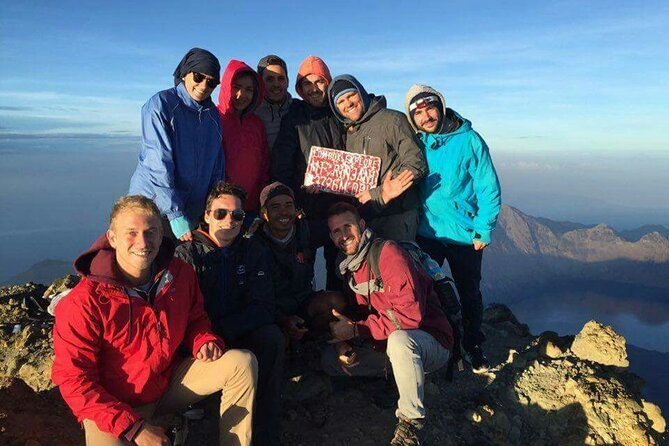
The summit sunrise is the central prize. From high on Rinjani, you can take in the volcanic surroundings and the crater lake below. Weather matters greatly. Storms can make the summit push cold, wet, and harder to manage, and the company may change or cancel the experience if conditions are poor.
Do not measure success only by reaching the highest point. If conditions become unsafe, following the guide’s decision is the sensible choice. The route is still rewarding even when clouds or weather block the sunrise.
A few more Lombok and Gili trips worth comparing
- Learn to cook Indonesian food at Gili Cooking Classes Trawangan
★ 5.0 · 352 reviews - Tetebatu Walking Tour – Rice Terraces, Waterfall & Monkey Forest
★ 5.0 · 349 reviews - Gili Island Snorkeling Trip – Gili Trawangan, Gili Meno, & Gili Air, From Lombok
★ 5.0 · 330 reviews - Snorkeling with turtle and statue in Gilis
★ 4.5 · 301 reviews
From the summit to the crater lake and hot springs
After spending time at the summit, you descend for about two hours. This downhill section can be rough on tired legs, especially after the early wake-up and steep climb.
The route then continues down to the crater lake and hot springs. This is one of the most appealing features of the itinerary because it changes the mood of the day. You move from a dark, demanding summit climb to a lower volcanic setting with water, rock, and a chance to rest near the hot springs.
The lake is not a quick roadside stop. Reaching it requires a substantial descent, and the day is not finished when you arrive. After the lake and hot spring area, you climb again toward the second campsite at Senaru Crater Rim.
That final ascent is the part you should picture honestly before booking. Day two combines a three-hour summit climb, a two-hour descent, the route to the lake, and another climb to camp. It is a long day with little room for casual pacing.
Still, this is where the route earns its three-day format. A shorter summit trip might skip the lake or rush the return. Here, you see more of Rinjani’s major features in one continuous trek.
Day three: Senaru Crater Rim to the gate
The final morning begins at about 6:00 am. You can watch sunrise from Senaru Crater Rim before starting the descent to Senaru Gate.
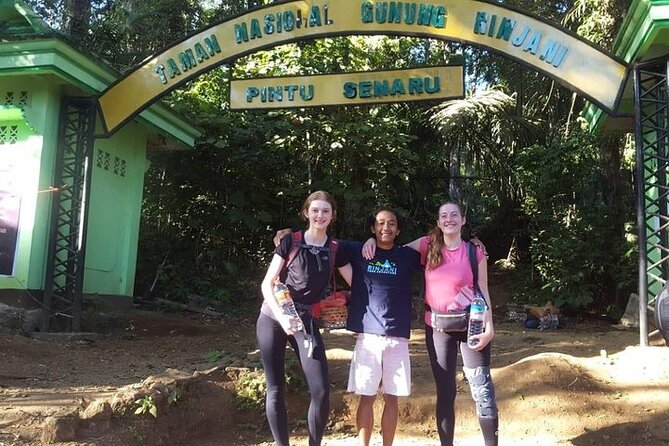
The walk down takes around five hours, including lunch on the way. Under normal conditions, you are expected to finish at about 1:00 pm. The service ends back at the meeting point in Senaru.
Five hours downhill can be surprisingly tiring. Descending stresses the knees and demands steady foot placement, especially after two demanding days. Trekking poles are again useful, and comfortable footwear matters more than style.
The Senaru finish gives you a different view of the mountain than the Sembalun approach. It also keeps the trip from becoming a return walk along the same route. Once you reach the gate, you are done with the organized trek, so arrange your onward transport and any post-trek accommodation in advance.
Food, water, porters, and camp support
The package includes food and water during the trek, along with fruit and soft drinks. The food has earned some of the strongest praise, with several accounts describing the porters as excellent cooks and the meals as a pleasant surprise.
That is important on a trek like this. A hot meal at camp is not a minor extra when you have climbed for hours. The porters also carry the cooking supplies and camping equipment, reducing the load on your back.
You should not confuse porter support with a completely effortless walk. You still need personal water access, clothing for changing conditions, and anything you need during the day. The supplied details do not specify a personal luggage limit or a packing list, so ask the company what you may hand to the porters and what must remain with you.
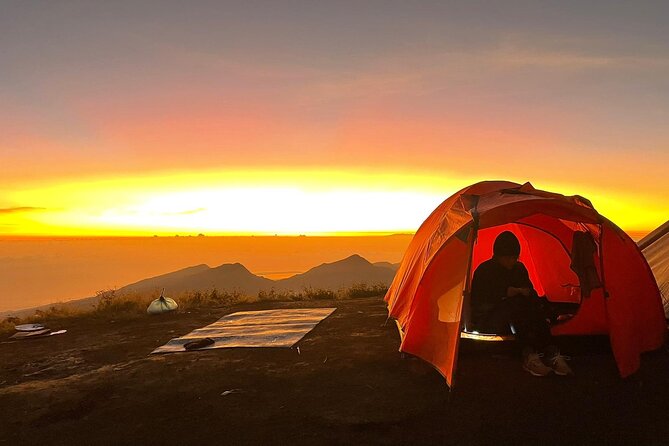
The toilet tent is included. Expectations should remain practical rather than luxurious. This is mountain camping, not a hotel night.
What the $245 price really covers
At $245 per person, the package includes a local English-speaking guide, experienced porters, food, water, fruit, soft drinks, tents, sleeping bags, mattresses, and a toilet tent. It also covers the guiding and support needed for the three-day route.
The listed extras are:
- Transport to Senaru: IDR 500,000 per person
- Accommodation before trekking: IDR 250,000 per person
- Rinjani National Park entrance fee: IDR 600,000 per person
That adds IDR 1,350,000 per person if all three listed extras apply. The entrance fee is a required budget item, while transport and accommodation depend on your arrangements, so confirm them before paying.
The price looks reasonable for a small-group, fully supported mountain trek, especially because porters carry the shared equipment and prepare meals. Its value depends on what you want. If you want a private, flexible mountain experience with local staff, this package has a strong case. If you are comparing only the headline price, the additional fees may make the final cost higher than expected.
The group limit of six is another value point. A smaller group can make it easier for the guide to monitor the pace and provide help during the summit push. It also keeps the experience more personal than a large departure.
How difficult is the trek?
The company requires strong physical fitness, and I would take that seriously. The route includes:
- About four hours of walking on day one, not counting breaks
- A 2:30 am start and roughly three-hour summit climb on day two
- About two hours descending from the summit
- A descent to the lake and hot springs
- A further climb to Senaru Crater Rim
- About five hours descending on day three
The trail difficulty is not just about distance. Darkness, steep ground, fatigue, weather, and repeated climbs all add pressure. One account called the trip rough and tiring but also deeply memorable. Another described continuing through a storm with strong support from guide Ipan and the porters.
I would recommend regular hill walking and good stamina before signing up. The route is not suited to someone seeking a relaxed nature outing. If you are unsure, ask the company to explain the steepest sections and the expected pace before booking.
Weather, safety, and what to pack
The experience requires good weather. If poor weather causes cancellation, the company offers another date or a full refund. You can also cancel for a full refund up to 24 hours before the start time, but cancellations or changes made later are not accepted.
Weather can change the character of the trek quickly. A clear sunrise may become a cold, wet climb, and the summit route is harder when visibility is poor. Follow the guide’s instructions and accept that a safe change of plan is better than forcing the schedule.
Useful items include:
- Sturdy trekking shoes
- Warm layers for the early summit start
- Rain protection
- A headlamp for the 2:30 am climb
- Trekking poles
- Personal toiletries and medication
- A small day pack for items you need while walking
These recommendations follow directly from the early start, long descents, and advice given by people who completed the route. The operator should provide a final packing list during your briefing.
Who should book this Rinjani trek?
I would choose this trek if you want the summit, crater lake, hot springs, and two different crater rims in one organized trip. It suits hikers who value local guides, porter support, cooked meals, and a small group.
It is also a good match if you want more than a summit photo. The Sasak connection, village transfers, local staff, and time in the national park give the trip a stronger local feel than a simple mountain transfer.
I would hesitate if you dislike night walking, camping, steep descents, or uncertain weather. The second day is especially demanding, and the early alarm leaves little time to recover before the next climb.
Should you book it?
Book this Rinjani trek if you are fit, prepared for basic camping, and willing to work for the scenery. The strongest reasons are the complete route, small group size, porter support, and repeated praise for guides such as Fahri, Ipan, and Irpan.
Before booking, confirm the total cost, pre-trek accommodation, transport to Senaru, what you carry personally, and the weather procedure. If you accept the hard schedule and arrive properly equipped, this is a well-supported way to experience Rinjani’s summit, crater lake, hot springs, and crater rims in three days.
FAQ
How long is the Rinjani trekking experience?
The experience lasts three days and two nights.
Where does the trek begin?
The walking route begins at the Sembalun gate after registration at the Rinjani office and transport from Senaru.
Where does the trek end?
The activity ends at the meeting point in Senaru after you walk down to Senaru Gate.
What time does the summit climb begin?
The summit climb begins at about 2:30 am on day two.
Is the Rinjani entrance fee included?
No. The entrance fee is listed separately at IDR 600,000 per person.
Is accommodation before the trek included?
No. Accommodation before trekking is listed separately at IDR 250,000 per person.
What equipment is provided?
The package includes a tent, sleeping bag, mattress, and toilet tent. Food, water, fruit, and soft drinks are also included.
How many people can join the group?
The activity has a maximum of six travelers.
Just added around Lombok and Gili
- Full-Day Private Trip to South Lombok★ 5.0 · 15 reviews
- Trekking Rinjani 1 Day Trek Senaru Crater Rim★ 5.0 · 3 reviews
- Waterfall Tour And Sasak Traditional Tour★ 5.0 · 3 reviews
- MODERATE HIKING: 2D/1N Crater Rim Senaru | Rinjani Samalas Tour★ 5.0 · 8 reviews
- Trekking Rinjani Mountain Summit 2 Days 1 Night – Em Adventure★ 5.0 · 42 reviews
- Trekking Rinjani Volcano To Crater Rim Senaru 2D-1N Private – Syam Trekker★ 5.0 · 45 reviews
- Fantastic trip to Sindang Gile & Tiu Kelep Waterfall★ 4.5 · 3 reviews
- Panorama Walking Tour and Culture, West Lombok★ 5.0 · 6 reviews
Hiking & Trekking, compared.
Mount Batur Sunrise Hike and Natural Hot Spring Option
Read our review →
Mount Batur Sunrise Trekking Private All Inclusive
Read our review →
Mount Batur Sunrise Trekking Private Tour with Breakfast and Hotel Transfer
Read our review →
Mount Batur Sunrise Trekking (Private Tour and Breakfast at Restaurant)
Read our review →
Private Tour Mount Batur Sunrise Trekking and Natural Hot Spring
Read our review →
Private Tour : Mount Batur Sunrise Trekking With Private Guide
Read our review →Browse the lists this tour appears in