
Reviewed · HIKING & TREKKING
Rinjani trekking 2D 1N RIM
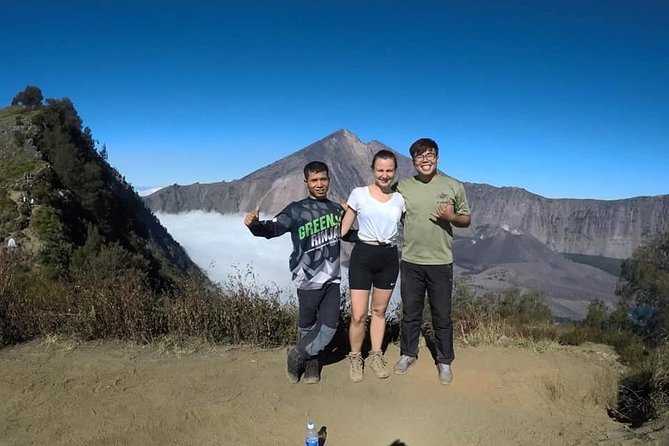
The best views come after the hardest steps. This private Mt. Rinjani trek from Senaru gives you a night beside the crater, sunset views toward the Gilis and Bali’s Mt. Agung, and a well-supported route with food, camping gear, guides, porters, and transfers included. I especially like the private format, since you can set a pace that fits your group, and I like the generous meals and steady supply of drinks and snacks. The main caution is simple: this is called a relatively gentle Rinjani route, but it still means two demanding days on steep, uneven ground.
Green Rinjani charges about $205 per person, depending on the booking details. That is a fair price for the transport, guide, porters, camping setup, meals, and drinks, though you still need to bring proper shoes, warm clothing, a daypack, and your own headlamp or torch.
In This Review
- Key Points At A Glance
- Why This Rinjani Trek Is Worth Considering
- Starting At Senaru Village At 7:00 AM
- Pos 2 And The Long Forest Climb
- Leaving The Forest For Open Views
- Reaching The Senaru Crater Rim At 2,641 Meters
- Sunrise, Lake Views, And The Descent
- Guides, Porters, And The Human Side Of The Trip
- What The $205 Price Really Covers
- What To Pack For Two Days On Rinjani
- Who Should Book This Route?
- Should You Book Green Rinjani?
- FAQ
- How long is the Rinjani trek?
- Where does the trek start?
- What time does the tour start?
- How high is the crater rim?
- Is the summit of Mt. Rinjani included?
- What camping equipment is included?
- Do I need to bring a headlamp?
- Is a porter for personal luggage included?
Key Points At A Glance
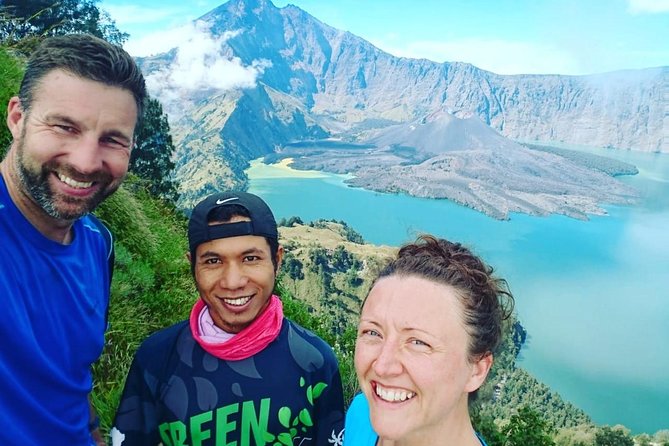
- Senaru route to 2,641 meters: You walk through coffee plants, bamboo, tropical forest, and open savanna before reaching the crater rim.
- Sunset over the Gilis and Bali: The rim offers wide views of the three Gili islands and Mt. Agung, weather permitting.
- Camping beside the crater: Tents, sleeping bags, mats, pillows, a table, chairs, and a toilet tent are included.
- Private pace: Your group does not share the hike with other booking parties, so breaks and walking speed can be adjusted.
- Food is a major strength: Breakfast, lunch, dinner, fruit, biscuits, snacks, coffee, tea, bottled water, and soft drinks are included.
- Bring your own light and luggage plan: A headlamp is not included, and carrying your own main bag will make the trek harder.
Why This Rinjani Trek Is Worth Considering
Mt. Rinjani rises high above Lombok, with a crater lake and a summit that reaches 3,726 meters. This trip does not attempt the summit or descend to Segara Anak Lake. Instead, it takes the Senaru trail to the crater rim, giving you one of the mountain’s best viewpoints without adding the longer summit route.
That makes this a useful middle option. You still get the mountain, the crater, the lake, the sunset, and a night outdoors, but you avoid the summit push that begins before dawn and requires much more effort. Do not mistake that for an easy walk. The route climbs from about 601 meters at Senaru village to 2,641 meters at the rim, then drops all the way back down the next day.
I like the private setup because mountain walks are personal. One person may need frequent water breaks, while another wants to keep moving. With a private guide, the group can stop at a sensible point instead of trying to match strangers. The package also removes much of the usual mountain hassle. You do not need to arrange a tent, sleeping bag, camp furniture, meals, or transport separately.
Still, check the fine print before booking. The advertised price includes local guide and porter support, but an extra porter for your own luggage costs $22 per day. Your headlamp, trekking shoes, jacket, long trousers, and daily pack are also your responsibility.
More walks and hikes around Lombok and Gili:
- 2D1N Senaru Crater Rim Trekking
★ 5.0 · 178 reviews - Rinjani Trekking 3D2N Summit
★ 4.5 · 85 reviews - 3D/2N Rinjani trekking summit,lake and hot springs.
★ 5.0 · 85 reviews
Starting At Senaru Village At 7:00 AM
The stated meeting time is 7:00 am, with the trek itself beginning around 7:30 to 8:00 am in the cool morning. Registration takes place at the Rinjani Trekking Centre post in Senaru village, at roughly 601 meters above sea level.
That early start matters. The first hours are cooler, and you gain useful walking time before the sun becomes strong. Transfers are included, and the private car takes you back to the meeting point at the end before continuing to your next destination. Green Rinjani has also arranged airport pickup and onward transport for some bookings, which is helpful if you are moving around Lombok without your own vehicle.
The first half hour is more open than the forest section that follows. You pass coffee trees, bamboo, and other plants grown by local people in Senaru. This gives the start of the walk a rural feel rather than dropping you straight into a demanding mountain track.
After about 30 minutes, the route enters tropical forest. The trees provide shade, which is welcome in Lombok’s heat, though the air can feel humid. You may hear or see black and brown monkeys along the route. Keep small bags close, since monkeys are known to snatch unattended items near Pos 3.
Pos 2 And The Long Forest Climb
After about three hours of walking, you reach Pos 2, also called Montong Satas, at around 1,500 meters. This is a practical rest point, not a grand viewpoint, but it breaks up the first serious climb.
The guide and porters prepare soft drinks, crackers, and fresh fruit such as banana and pineapple. That kind of support matters more than it may sound. You can keep your daypack light, drink regularly, and replace some energy without stopping to unpack your own food.
From Pos 2, you continue through the forest for about two hours toward Pos 3. The shade remains useful, but the climb continues and the trail can feel repetitive. In June, July, and August, you might see local strawberries growing beside the route.
At Pos 3, known as Mondokan Lokak, the elevation is about 2,000 meters. This is where lunch is prepared, followed by more fruit, biscuits, and a longer rest of roughly an hour and a half. The monkeys here are more than a pleasant photo opportunity. Keep your small backpack zipped and within reach.
This part of the route is a good test of your fitness. You are not yet at the most exposed section, but you have already spent several hours climbing. If you usually walk only on flat ground, the steady uphill grade will feel serious.
Leaving The Forest For Open Views
After Pos 3, you walk for about 25 minutes before leaving the tropical forest. The change is immediate. Trees give way to open savanna and hillside views, with much less shade.
This is the point where sun protection becomes important. Use sunscreen, wear a hat, and keep water accessible. The route can feel hotter even though the air is cooler at higher altitude, simply because you are walking in the open.
The trail then becomes steeper, especially around the section known as Cemara Lima. The views begin to expand back toward Senaru village, with roughly 40 percent of the village visible from the hillside according to the route description. That number is less important than the feeling of finally seeing how far you have climbed.
The last push to Pelawangan 1, the Senaru Crater Rim, takes about an hour. The trail is stony and steep in places, so good trekking shoes are not optional equipment in spirit, even though they are not included in the package. Sandals may be useful around camp, but they are not a substitute for firm footwear on the trail.
A few more Lombok and Gili trips worth comparing
- Learn to cook Indonesian food at Gili Cooking Classes Trawangan
★ 5.0 · 352 reviews - Tetebatu Walking Tour – Rice Terraces, Waterfall & Monkey Forest
★ 5.0 · 349 reviews - Gili Island Snorkeling Trip – Gili Trawangan, Gili Meno, & Gili Air, From Lombok
★ 5.0 · 330 reviews - Snorkeling with turtle and statue in Gilis
★ 4.5 · 301 reviews
Reaching The Senaru Crater Rim At 2,641 Meters
The crater rim is the reward for the day. At 2,641 meters, you can look across the volcanic crater toward Segara Anak Lake, see the summit of Rinjani at 3,726 meters, and watch smoke rising from the newer volcanic cone in the middle of the lake.
The exact view depends on cloud, wind, and light. On a clear evening, the three Gilis appear below and Mt. Agung in Bali rises across the water. Sunset is the main event, so arriving with enough time to settle in matters.
Your guide and porters set up the overnight camp. The equipment supplied includes a tent, sleeping bag, camping pillow, sleeping mat, camping table and chairs, and a toilet tent. That is a far more comfortable arrangement than carrying a complete camp on your back, especially after a full day of climbing.
Dinner is prepared at camp. The package also includes bottled water, coffee or tea, soft drinks, snacks, breakfast, lunch, and dinner. Past groups have especially appreciated the quantity of food, with guides and porters preparing full meals rather than leaving you to survive on packaged snacks.
The night can be cold and windy at the rim. Bring a warm trekking jacket and windproof layer even if Lombok felt hot at sea level. Sleeping under the stars is possible when the sky is clear, but weather conditions can change quickly at altitude.
Sunrise, Lake Views, And The Descent
The second morning begins with breakfast and sunrise near the crater rim. You can take photographs of the lake, the crater, and the surrounding peaks before starting the return walk.
There is no long summit attempt on this itinerary. That is a benefit for anyone who wants a strong Rinjani experience without adding another major climb. It also means you should not book this route expecting to reach the highest point of the volcano.
The descent to Senaru village takes about five to six hours. Going downhill is usually quicker, but it can be rough on knees and ankles. Loose stones and steep sections demand careful footing, so trekking poles are worth considering even though they are optional.
You should reach the Rinjani Trekking Centre around 12:30 to 1:00 pm. From there, your private car transfers you onward. This timing gives you a useful afternoon, though you may be tired enough to prefer a quiet meal and a long shower.
Guides, Porters, And The Human Side Of The Trip
The strongest part of this trip is the level of care built into the walking days. Green Rinjani assigns a local guide and porters, and the private format allows the guide to watch your pace and condition more closely.
Several guide names have received specific praise for calm, attentive service. Dana is noted for being supportive and for speaking clear English. Adi is described as patient and careful with group pace. Yun worked with porters Jamal and Jaka, whose carrying and camp work were especially appreciated. Ubang was praised for keeping the group safe and making the experience more enjoyable, while Sri was noted for checking that the group was comfortable and safe.
Those details matter because a Rinjani trek is not only about scenery. Your guide helps with pacing, rests, route decisions, and basic mountain safety. The porters carry equipment, prepare food, and set up camp, allowing you to walk with a smaller daypack.
I do recommend asking how much luggage the included porters will carry. The package lists an additional porter for personal luggage at $22 per day, so do not assume your suitcase or large backpack will go up the mountain at no extra cost.
What The $205 Price Really Covers
At about $205, this is not simply a guided walk. The price covers the core services that can make a two-day mountain trip expensive and awkward to arrange independently:
- Private guide and porter support
- Transport and pickup
- Camping tent and sleeping equipment
- Sleeping mat and camping pillow
- Camp table, chairs, and toilet tent
- Breakfast, lunch, dinner, fruit, snacks, and drinks
- Overnight camping accommodation
- Return transfer after the trek
I consider that solid value if you need transport and camping equipment. Food is also a real saving. The route description includes fresh fruit, biscuits, crackers, soft drinks, coffee, tea, bottled water, and cooked meals, so you are not paying for a bare-bones walk.
The price does not cover your flight, clothing, shoes, headlamp, personal toiletries, or tips. The extra porter charge can also change the final cost. Bring a small daypack for essentials and ask in advance what can be carried by the included porter team.
Some arrangements also include pickup from the airport and a comfortable room before the trek. Confirm that point for your own booking, since the main package information focuses on the overnight mountain camp rather than a guaranteed pre-trek hotel stay.
What To Pack For Two Days On Rinjani
Pack light, but do not cut corners on warmth or light. Your essential list should include:
- Headlamp or hand torch, with spare batteries
- Trekking shoes with a firm grip
- Long trekking trousers
- Windproof jacket and warm layer
- Hat, sunglasses, and sun lotion
- Insect repellent
- Small towel and basic toiletries
- Two or three T-shirts
- A couple of pairs of shorts
- Small daypack
- Water bottle or personal hydration container
- Muscle balm or spray if you use one
Trekking poles are optional but useful on the steep climb and long descent. Sandals can help around camp. A swimsuit and binoculars are listed as optional, though neither is needed for the basic itinerary.
You should not bring a large suitcase on the trail. Arrange your luggage storage or ask the operator about carrying options before departure. The included camping setup means you can travel with less, but only if you plan your daypack carefully.
Who Should Book This Route?
I would choose this trip if you want Rinjani’s crater views and a night on the mountain, but you do not need to reach the summit or lake. It suits people with moderate physical fitness who can handle several hours of uphill walking on the first day and a long downhill return on the second.
It also suits couples, families with older children, and small private groups that prefer their own pace. The child rate applies only when a child shares with two paying adults, so check the age and room arrangements before booking.
I would think twice if you dislike steep paths, humid forest walking, cold nights, or basic camping. I would also avoid treating this as a casual sightseeing tour. The food and porter support make it easier, but they do not remove the physical work.
Cancellation is free up to 24 hours before the local start time for a full refund. Changes or cancellations made less than 24 hours before the start are not accepted or refunded, so keep your plans firm once you are inside that window.
Should You Book Green Rinjani?
Book this trek if you want a well-supported crater rim trip rather than a summit expedition. The private pace, capable guide and porter team, plentiful food, complete camp equipment, and included transfers give the trip strong practical value.
I would not book it expecting an easy walk. The route is shorter and less demanding than a summit itinerary, but the climb to 2,641 meters and the five to six hour descent still require preparation. Bring proper shoes, a headlamp, warm clothing, and a small pack, then let the guide and porters handle the mountain logistics.
For a two-day introduction to Rinjani, this is a sensible choice. Dana, Adi, Yun, Ubang, and Sri are names worth requesting if available, and the care shown by the porter teams can make the difference between a hard trip and a rewarding one.
FAQ
How long is the Rinjani trek?
The experience lasts approximately two days and one night, with one night camping at the Senaru Crater Rim.
Where does the trek start?
The trek starts at the Rinjani Trekking Centre in Senaru village, Lombok, at about 601 meters above sea level.
What time does the tour start?
The stated start time is 7:00 am. The walking itinerary generally begins between 7:30 and 8:00 am.
How high is the crater rim?
The Senaru Crater Rim, also called Pelawangan 1, is at about 2,641 meters.
Is the summit of Mt. Rinjani included?
No. This itinerary goes to the Senaru Crater Rim and back. It does not include the 3,726-meter summit climb.
What camping equipment is included?
The package includes a tent, sleeping bag, camping pillow, sleeping mat, camping table and chairs, and a toilet tent.
Do I need to bring a headlamp?
Yes. A headlamp or hand torch is not included, so you should bring one with spare batteries.
Is a porter for personal luggage included?
An extra porter for your own luggage is listed at $22 per day. Bring a small daypack and confirm luggage arrangements before the trek.
Just added around Lombok and Gili
- Full-Day Private Trip to South Lombok★ 5.0 · 15 reviews
- Trekking Rinjani 1 Day Trek Senaru Crater Rim★ 5.0 · 3 reviews
- Waterfall Tour And Sasak Traditional Tour★ 5.0 · 3 reviews
- MODERATE HIKING: 2D/1N Crater Rim Senaru | Rinjani Samalas Tour★ 5.0 · 8 reviews
- Trekking Rinjani Mountain Summit 2 Days 1 Night – Em Adventure★ 5.0 · 42 reviews
- Trekking Rinjani Volcano To Crater Rim Senaru 2D-1N Private – Syam Trekker★ 5.0 · 45 reviews
- Fantastic trip to Sindang Gile & Tiu Kelep Waterfall★ 4.5 · 3 reviews
- Panorama Walking Tour and Culture, West Lombok★ 5.0 · 6 reviews
Hiking & Trekking, compared.
Mount Batur Sunrise Hike and Natural Hot Spring Option
Read our review →
Mount Batur Sunrise Trekking Private All Inclusive
Read our review →
Mount Batur Sunrise Trekking Private Tour with Breakfast and Hotel Transfer
Read our review →
Mount Batur Sunrise Trekking (Private Tour and Breakfast at Restaurant)
Read our review →
Private Tour Mount Batur Sunrise Trekking and Natural Hot Spring
Read our review →
Private Tour : Mount Batur Sunrise Trekking With Private Guide
Read our review →Browse the lists this tour appears in