
Reviewed · WORKSHOPS
Ubud Bali Silver Jewelry Class
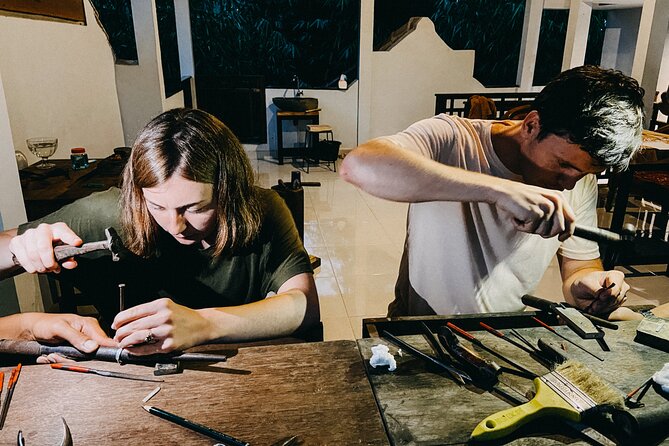
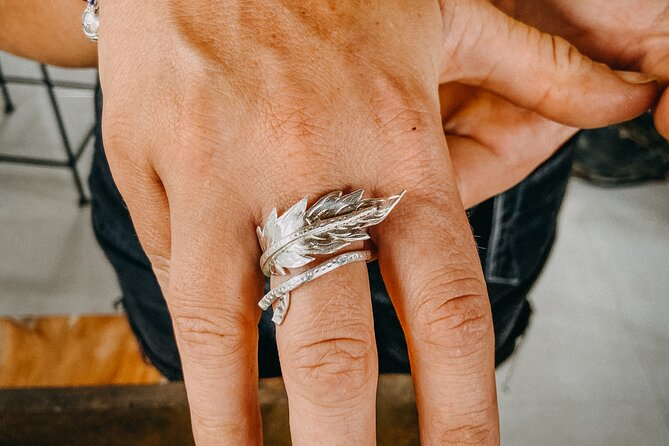
Make something you can wear home. This two-hour Ubud silver class gives you a real piece of jewelry, not just a quick demonstration. You learn the basic process, shape the silver, clean it, and finish a design with help from an experienced local teacher.
I like the personal scale, with no more than eight people, and I like that the class welcomes beginners. The chance to work with teachers such as Bima, Komang, and Diah adds a warm local touch. The main caution is cost control: your $50 booking covers one design using up to four grams of silver, while extra silver and gemstones cost more.
In This Review
- Key points to know before booking
- Making Silver Jewelry Near Ubud
- Your First Design Choice
- Shaping, Burning, Cutting, and Cleaning
- The Teachers Make the Difference
- What Four Grams of Silver Really Means
- A Small Class With a Social Feel
- Getting There and Fitting It Into Your Day
- Who Will Get the Most From This Class
- Is the $50 Price Fair?
- Should You Book the Ubud Silver Jewelry Class?
- FAQ
- How long does the Ubud silver jewelry class last?
- What jewelry can I make?
- How much silver is included?
- Can I add a gemstone?
- Where does the class meet?
- What is the cancellation policy?
Key points to know before booking
- You make and keep one piece: Choose a ring, bracelet, earrings, or a listed lion design.
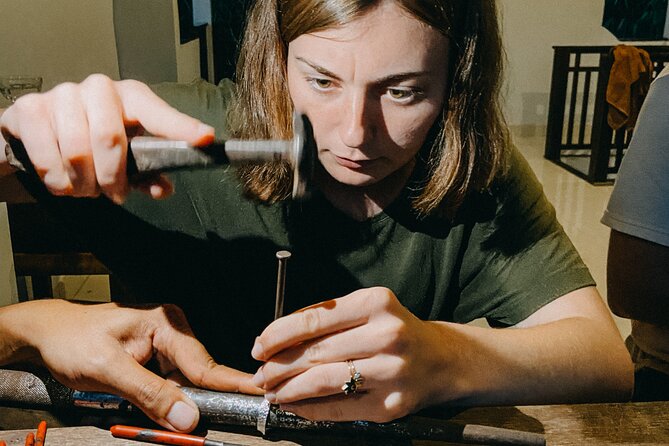
- The class is beginner-friendly: Your teacher guides you through burning, cutting, cleaning, and finishing the silver.
- The group is capped at eight: This allows more help than a large craft workshop.
- Extra silver costs more: Silver beyond four grams is charged at IDR 75,000 per gram.
- Gemstones are optional but not included: Stones cost IDR 100,000 to IDR 500,000.
- The setting feels personal: The class takes place at Ubud MK2 Silver Class near Tegallalang, with some sessions held in a welcoming home setting.
Making Silver Jewelry Near Ubud
This class offers a pleasant change from sightseeing by car, temple visits, and market browsing. For around two hours, you work with your hands and leave with an object tied to your time in Bali.
The meeting point is Ubud MK2 Silver Class on Jalan Raya Tegallalang, in Sapat, Tegallalang, Gianyar. That puts the class outside central Ubud, so check your transport plan carefully. You can select a class time from several daily options, and transfers from Ubud may be available if you choose that option during booking.
The setting is part workshop and part personal welcome. One review describes arriving at a home for the activity and being offered indoor shoes. Another praises the clean, open venue and the cool breeze. Those small details matter because silver work can feel messy and technical, and a relaxed room makes it easier to focus.
The class is limited to eight people. That is small enough for the instructor to move between workstations and correct your technique. A group of seven has been described as receiving help at every step, though the experience will still depend on how quickly each person works and how much guidance others need.
A few more Ubud trips worth comparing
- All-Inclusive Ubud Private Tour
★ 5.0 · 14,344 reviews - Best of Ubud Full-Day Tour with Jungle Swing
★ 5.0 · 8,571 reviews - Ubud: Monkey Forest, Jungle Swing, Rice Terrace, and Water Temple
★ 5.0 · 7,160 reviews
Your First Design Choice
You begin by deciding what to make. The listed options are a ring, bracelet, lion, or earrings. The word lion may refer to a particular design choice offered by the workshop, so ask the teacher to show you the available examples before you commit.
You may also use the jewelry examples on site for ideas. This helps if you arrive without a firm plan. Rings are likely to be the simplest choice for a first attempt, while earrings or a bracelet may require more attention to matching, size, and balance.
I recommend choosing a design that suits the amount of silver included. A slim ring can fit comfortably within the four-gram allowance. A larger ring, broad bracelet, or detailed piece may require more metal, which adds to the final bill.
You cannot bring your own silver or gemstones into the class. The workshop supplies the material, and you choose any additions from what is available there. Bring some Indonesian cash if you might want extra silver or a stone.
Shaping, Burning, Cutting, and Cleaning
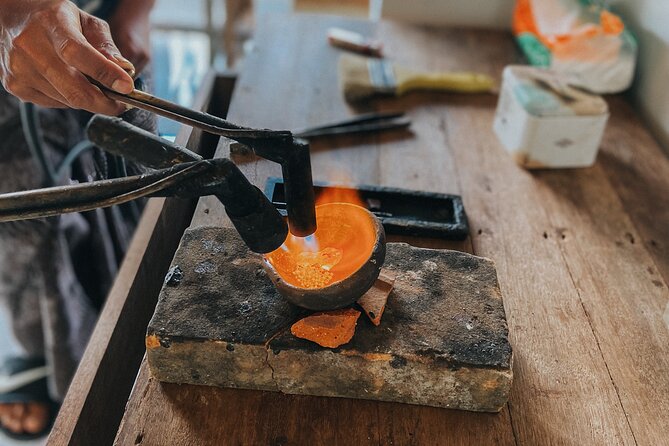
The teacher shows you the basic method before you begin. The work includes burning, cutting, cleaning, and finishing the silver. You are not simply watching a craftsperson make the item for you. The point is to take part in each main stage, with help when your hands or tools need correcting.
The burning stage may feel more serious than the finished jewelry suggests. Silver has to be worked carefully, and a beginner may need time to get comfortable with the tools and heat. The instructor demonstrates the process, then helps you repeat it.
Cutting and shaping call for patience. A ring that looks simple in a display case may take careful work to make round, smooth, and wearable. One useful thing to remember is that the teacher may make the process look easier than it feels. That is normal. Let the instructor guide you rather than rushing to copy a quick movement.
Cleaning is where the piece begins to look like jewelry instead of raw material. You remove rough edges and marks, then work toward a smoother finish. The final stage gives you a chance to see how small corrections change the shape and feel of the item.
The exact design and finish depend on your choice and skill. Your teacher is there to help, but you still take part in the work. That balance makes the finished item more meaningful than a ready-made souvenir.
The Teachers Make the Difference
The strongest feature here is the human help. The teachers are described as patient, friendly, and willing to explain each stage. Bima, Komang, and Diah have been singled out for their warmth and guidance, while the wider teaching team is presented as experienced and supportive.
That matters for first-timers. Silver work involves unfamiliar tools and several steps that are easy to misunderstand when explained only once. A patient instructor can show you how to hold the material, where to cut, and when to stop refining a piece.
The class also seems suited to couples and small groups. Two people can make matching rings, separate designs, or pieces with a shared story. One couple made two rings, while another pair added stones to their work for an extra charge.
You should not expect a fully independent workshop where you are left alone for long stretches. This is a taught class, and the instructor’s involvement is part of the value. If you want complete freedom to use any material or create a complex custom design, this may feel more limited.
Still Ubud, at a slower pace:
- Best of Ubud 1-Day Private Tour
★ 5.0 · 4,451 reviews - Bali: Ubud Palace Legong Dance Show Ticket
★ 4.4 · 3,979 reviews - Uluwatu Sunset, Kecak Dance, and Dinner Jimbaran Beach
★ 5.0 · 3,681 reviews - Tanah Lot and North Bali Tour: Scenic Journey
★ 5.0 · 3,620 reviews
What Four Grams of Silver Really Means
The $50 price includes one item per person and silver use up to four grams. You cannot combine or share silver allowances with another person, so each participant has an individual portion.
Four grams can be enough for a small ring or another light design. It may not be enough for a heavy bracelet, a large ring, or a design with thick decorative elements. Silver beyond the allowance costs IDR 75,000 per gram.
This is the detail most likely to affect the final price. Before work begins, ask how much silver your chosen design is likely to need. You can then decide if you prefer a simpler piece or want to pay for more material.
Gemstones are separate. Listed stone prices range from IDR 100,000 to IDR 500,000. A French-language account of the experience gives a useful example: one person added about 1.5 grams for a signet-style ring, while another made two silver rings with pearls for an additional 34 euros. Prices and exchange rates change, but the example shows how quickly the design can move beyond the base fee.
Bring cash if you are considering a stone or extra silver. The workshop does not include those additions in the booking price.
A Small Class With a Social Feel
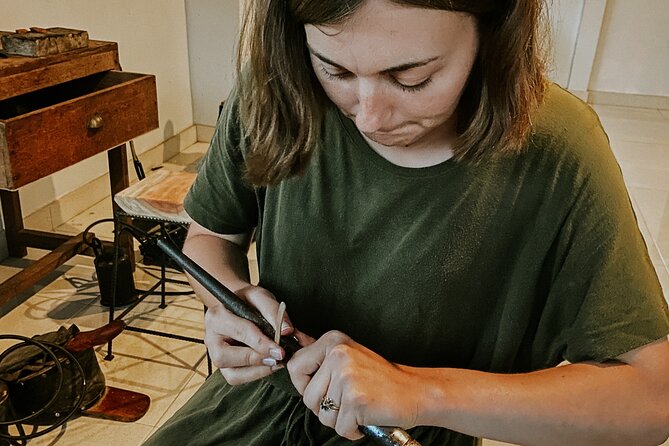
The maximum group size is eight, which is a sensible limit for hands-on instruction. You get the social energy of a shared activity without the scale of a crowded demonstration.
This works well for friends, couples, and families who want a souvenir made together. It also suits solo participants who enjoy meeting people through a practical activity. The class is not built around a long lecture, so the two-hour length should feel active rather than drawn out.
Coffee, tea, and bottled water are included. These are modest extras, but they help during a class involving heat, tools, and concentration.
The setting may feel more informal than a polished tourist attraction. That is part of the appeal for people who prefer contact with a local family business. It also means you should arrive ready for a working environment rather than a luxury studio.
Indoor shoes may be provided at the home setting. Wear clothing you can move in and do not bring anything delicate that you would worry about near workshop materials. The supplied information does not specify a dress code, so practical clothing is the sensible choice.
Getting There and Fitting It Into Your Day
The class meets at Jalan Raya Tegallalang No. Br, Sapat, Kecamatan Tegallalang, Kabupaten Gianyar, Bali 80561. This is the address you should give your driver or use when checking a ride from Ubud.
The class lasts approximately two hours and ends back at the meeting point. Several start times are offered daily, which helps you fit the activity around meals, sightseeing, or another Ubud-area visit.
One useful pairing is a visit to Taro village, followed by the silver class. The class has also been added after a traditional Taro village experience. If you arrange two activities on the same day, leave enough time between them for traffic and the distance between locations.
Transfers from Ubud can be selected for a more convenient outing. Confirm exactly what is included with your chosen booking option, since transport arrangements can affect the overall value.
A mobile ticket is provided, and confirmation arrives when you book. Cancellation is free if you cancel at least 24 hours before the start time. Within 24 hours, the payment is not refunded, and changes are not accepted.
Who Will Get the Most From This Class
I would recommend this activity to you if you want a souvenir with a personal story. You are not just buying a Balinese-style item from a shop. You are shaping the metal yourself, with a teacher helping you through the parts that require care.
It is especially good for:
- Couples who want matching or connected designs
- Families with older children or adults interested in craft work
- Friends looking for a shared Ubud activity
- Solo visitors who prefer a small class
- Anyone who likes learning a practical skill while on holiday
You may want to skip it if you dislike close instruction, workshop tasks, or the possibility of extra charges. You also need to accept that your finished piece may look handmade rather than perfectly uniform.
Most people can participate, but the supplied information does not give detailed accessibility guidance. If you have specific mobility or hand-use needs, contact the provider before booking and ask about the workstation and tools.
Is the $50 Price Fair?
At $50 per person, the class is not the cheapest way to buy silver jewelry in Bali. The value comes from the instruction, the materials, the small group, and the chance to take home your own work.
The base price is easiest to judge if you plan to make a modest ring or light item without a gemstone. If you choose extra silver and an expensive stone, the total can rise quickly. That does not make the class poor value, but you should decide your spending limit before you start.
I like that the material rules are clear. You know that one person makes one item, silver portions cannot be shared, and outside materials are not allowed. Ask about likely weight and stone cost early, then you can enjoy the class without worrying about the final bill.
The experience has a 5.0 rating from 163 ratings and a 99 percent recommendation rate. Those figures fit the repeated praise for patient teachers, beautiful finished jewelry, friendly instruction, and the welcoming venue.
Should You Book the Ubud Silver Jewelry Class?
Book this class if you want a hands-on activity and a wearable reminder of Bali. The strongest reasons are the small group, the patient instruction, and the fact that you take home a piece you helped create.
Choose a simple design if you want to stay close to the $50 price. Bring cash if you may want extra silver or a gemstone, and ask about the added cost before work begins.
I would make this a good two-hour choice for a couple, a small group of friends, or anyone who has already seen plenty of temples and wants something more active. It is not a bargain jewelry purchase, and it is not a free-form silversmithing course. It is a friendly, guided introduction to Balinese silver work, with a personal souvenir at the end.
FAQ
How long does the Ubud silver jewelry class last?
The class lasts approximately two hours and ends back at the meeting point.
What jewelry can I make?
You can make a ring, bracelet, earrings, or a listed lion design. One person can make one item design using the included allowance.
How much silver is included?
The included silver allowance is up to four grams per person. Silver beyond four grams costs IDR 75,000 per gram.
Can I add a gemstone?
Yes. Gemstones are optional and cost extra, with listed stone prices from IDR 100,000 to IDR 500,000. Bring cash if you want to buy one.
Where does the class meet?
The meeting point is Ubud MK2 Silver Class, Jalan Raya Tegallalang No. Br, Sapat, Kecamatan Tegallalang, Kabupaten Gianyar, Bali 80561, Indonesia.
What is the cancellation policy?
You receive a full refund if you cancel at least 24 hours before the experience start time. Cancellations or changes made within 24 hours are not accepted and are not refunded.
Just added around Ubud
- 3 Days for the best of Ubud Private Tour★ 5.0 · 63 reviews
- Bali Amazing Cooking Class★ 5.0 · 63 reviews
- Private Mount Batur Sunset Trekking – All inclusive tour★ 5.0 · 63 reviews
- Private Full-Day Handara, Ulun Danu, Jatiluwih and Tanah Lot Tour★ 5.0 · 63 reviews
- Half-Day Tour: Uluwatu Temple and Kecak Fire Dance Show★ 5.0 · 63 reviews
- Trunyan Cemetery, Hot Spring, Penglipuran Village, and Waterfall Tour★ 5.0 · 65 reviews
- Bali Iconic Tour with Buffet Lunch and Attraction Tickets★ 5.0 · 66 reviews
- Ubud ATV Quad Bike and Snorkeling at Blue Lagoon Beach★ 5.0 · 64 reviews
Workshops, compared.

PRIVATE Authentic Balinese Cooking Class in Ubud at Putu’s Home
Read our review →

Learn to cook Indonesian food at Gili Cooking Classes Trawangan
Read our review →
Browse the lists this tour appears in