
Reviewed · HISTORICAL TOURS
Taste & Explore Bali: Denpasar Street Food & Historic Sites
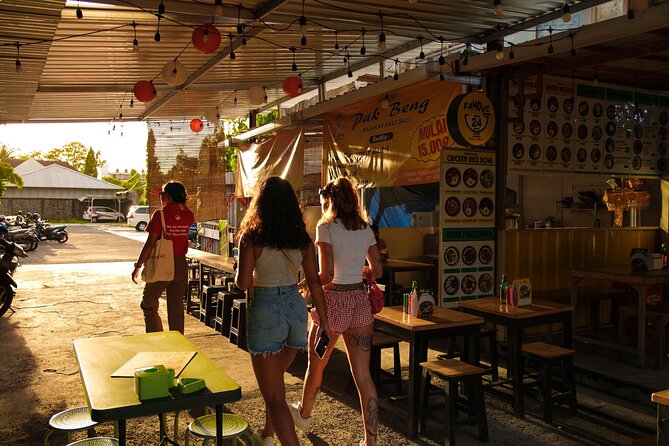
Denpasar tastes better after dark. This three-hour tour combines local food with central Bali’s temples, monuments, markets, and old streets, giving you a useful look at a side of the island many beach-based visitors miss. You begin at Pura Agung Jagatnatha at 4:00 pm and finish at Nadhi Heritage after sampling several everyday and ceremonial dishes.
I especially like the small group limit of 12, which gives the guide room to explain unfamiliar foods and help you order. I also like the mix of Babi Guling, Bakso, Jaje Bali snacks, and Indonesian Arabica coffee, since the menu tells you something about local customs rather than offering one generic tasting plate. The main drawback is dietary flexibility: this experience cannot accommodate vegetarian, vegan, or gluten-free requirements.
The tour also earns points for its local focus. Food is prepared and purchased locally, and your tastings support roughly four to six small food stalls and businesses. Guides including Putra, Irfan, Lena, and Srix have been praised for their warmth, cultural explanations, and easy conversation, though your guide will depend on the date.
In This Review
- Key points to know before booking
- Why this Denpasar tour is different from a beach-area food stop
- Starting at Pura Agung Jagatnatha
- Puputan Square and the four-faced Catur Muka statue
- Walking along Jalan Gajah Mada
- Badung Market and Jaje Bali sweets
- Ending with coffee at Nadhi Heritage
- What the $45 price gets you
- Group size, walking, and timing
- Dietary limits and practical food advice
- The guiding makes or breaks the evening
- Who should book this Denpasar food walk?
- Should you book it?
- FAQ
- How long does the Taste & Explore Bali tour last?
- What time does the tour start?
- Where does the tour begin?
- Where does the tour end?
- What foods are included?
- Is coffee included?
- Can vegetarians or vegans join?
- How many people can join the tour?
Key points to know before booking
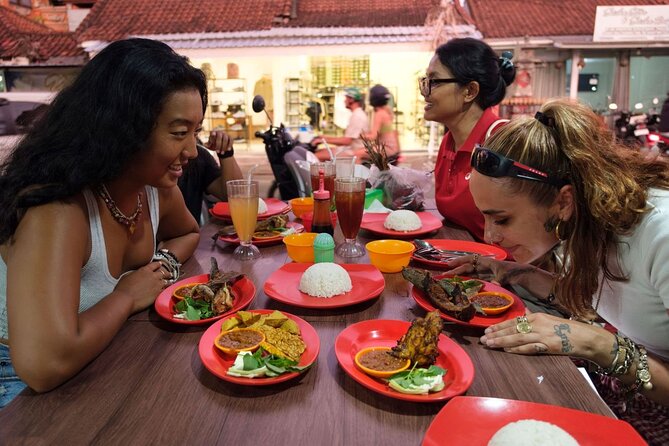
- Babi Guling is the signature tasting: This ceremonial-style roast pork is not simply a standard restaurant dish, so it gives the food portion a strong cultural angle.
- You explore central Denpasar on foot: The route links Pura Agung Jagatnatha, Puputan Square, Catur Muka, Jalan Gajah Mada, Badung Market, and Nadhi Heritage.
- The experience begins at 4:00 pm: You get cooler walking conditions than in the midday heat, with the market portion arriving as the afternoon shifts toward evening.
- The group never exceeds 12 people: That matters when you need help identifying snacks, soups, fruit, or unfamiliar ingredients.
- The tour supports local sellers: Your spending reaches several independent food stalls rather than only one large operator.
- It is best for adults and older children: Children under six are not permitted, and there are no separate kids’ meals.
Why this Denpasar tour is different from a beach-area food stop
Seminyak is the booking location, but the actual experience takes place in central Denpasar. That distinction matters. You are not simply walking between polished cafés or tourist restaurants. You are visiting places tied to worship, government, colonial-era architecture, daily shopping, and local eating habits.
The route also gives the food some context. Babi Guling is traditionally associated with ceremonies, so tasting it here offers more than a quick introduction to roast pork. Bakso, by contrast, is a familiar Indonesian comfort food, usually served as meatballs in soup. Put together, these dishes show two different sides of Indonesian eating: food linked to ritual and food linked to ordinary daily life.
I also appreciate the community angle. The tour takes you to four to six local stalls and food businesses, where vendors sell for a living and use ingredients grown or bought locally. That does not turn the experience into a charity project, but it does make your food budget more direct and personal.
More Food and Drink Tours in Seminyak and Kuta
- Bali Private Food Walking Tour With Locals: The 10 Tastings
★ 5.0 · 243 reviews - Bali Bites Food Tour with 15+ Tastings
★ 5.0 · 114 reviews - Chef Bagus Balinese Indonesian Food Cooking Class
★ 5.0 · 89 reviews
Starting at Pura Agung Jagatnatha
The meeting point is Pura Agung Jagatnatha, at Jalan Surapati No. 7 in Denpasar. This is Bali’s central Hindu temple, and the first stop lasts about 15 minutes.
You begin with a peaceful religious site rather than a plate of food. That is a smart choice. It gives you a sense of the beliefs and public life that shape Balinese culture before you start asking what is on your plate. Admission is included, and no separate ticket is required.
The short visit means you should not expect a full temple ceremony or an extended architectural tour. Instead, use the time to listen carefully to the guide’s explanation and observe the setting. The temple’s location in the center of Denpasar also makes it a practical starting point for the walking route.
Dress and behavior should be respectful at a Hindu temple. The supplied details do not specify a formal dress code, so bring the same modest approach you would use at other religious sites in Bali. If you plan to take photos, follow your guide’s instructions.
Puputan Square and the four-faced Catur Muka statue
The next part brings you to Puputan Square, a symbolic place connected with Bali’s resistance to colonial rule in 1906. The square also marks Denpasar’s symbolic 0 kilometer point, giving it civic importance as well as historical meaning.
This is where the tour moves beyond food sightseeing. The story of resistance helps explain why public monuments and open squares matter in Bali. You will hear about the 1906 struggle against colonial forces, then continue toward Patung Catur Muka, the four-faced god statue.
The Catur Muka stop lasts about 15 minutes. It is a good photo point, with colonial-era landmarks nearby and the statue acting as one of Denpasar’s most recognizable markers. The time is brief, so this is more of a focused orientation than a museum-style history lesson.
I like this part because it keeps the tour from becoming a string of tastings. You get a basic map of Denpasar’s political and cultural past before entering its food streets. If you prefer a tour built around long historical explanations, the short stops may feel limited. For most people, though, the pace should keep the evening moving.
Walking along Jalan Gajah Mada
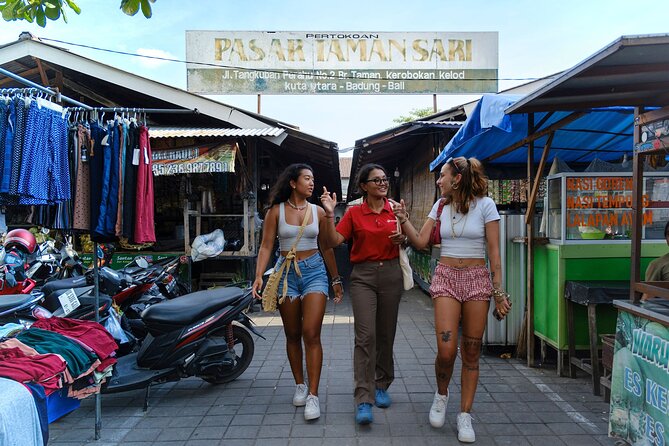
Jalan Gajah Mada is the bridge between the monuments and the food. The route takes you through heritage streets, colonial buildings, and local shops, with about 30 minutes devoted to this section.
This is a useful place to let your guide interpret what you are seeing. A street can look like a simple route from one snack stop to the next, but the colonial buildings and older commercial area show how central Denpasar developed as a city. You are seeing an urban side of Bali that is easy to miss if your holiday stays near the coast.
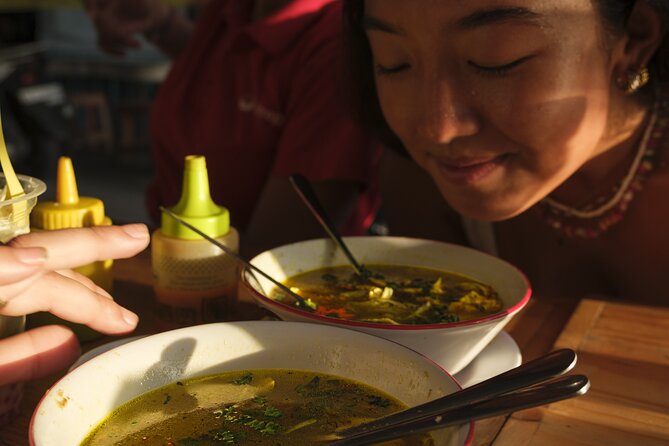
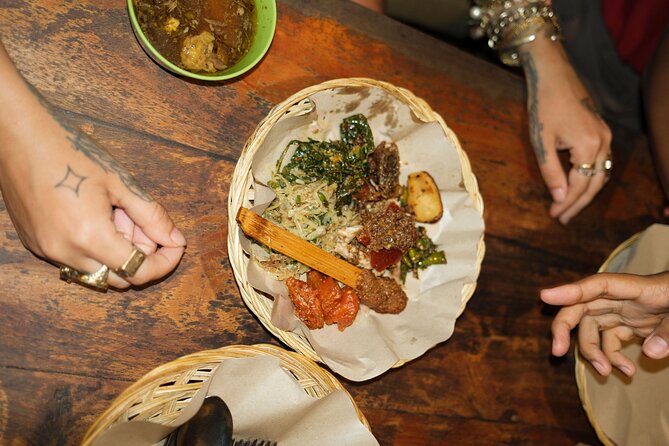
Food begins to take center stage here. You will try Babi Guling and Bakso, two of the tour’s main dishes. Babi Guling is the more distinctive tasting because it is tied to Balinese ceremonies and prepared as roast suckling pig on a rotisserie. Bakso is more familiar as a widely loved Indonesian meatball soup.
The exact serving size and preparation can vary by venue, so do not think of this as a fixed restaurant meal. The value is in trying local favorites where they are sold and hearing how they fit into Indonesian food culture. Additional food and drinks are not included, so you may want to bring some Indonesian rupiah for anything beyond the planned tastings.
Still Seminyak and Kuta, at a slower pace:
- Bali Full-Day Traditional Village Sightseeing Trip All Inclusive
★ 5.0 · 3,069 reviews - Nusa Penida day trip: boat, 4 snorkeling, Manta rays & Land tour
★ 5.0 · 2,033 reviews - Experts Bali Driver : Best Bali Private Driver for Tour in Bali
★ 5.0 · 1,339 reviews - Bali Nusa Penida West Private All-Inclusive Tour
★ 5.0 · 1,277 reviews
Badung Market and Jaje Bali sweets
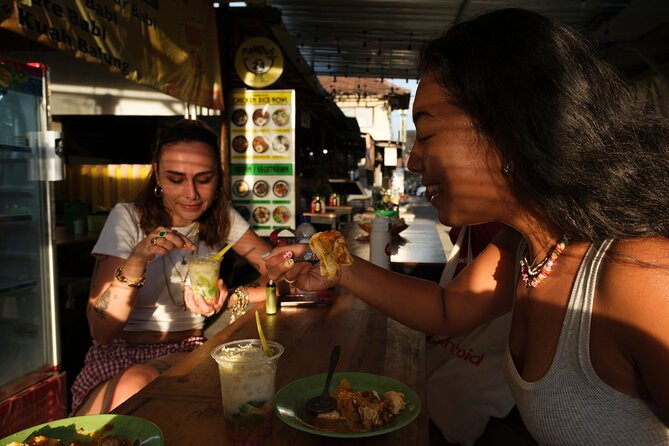
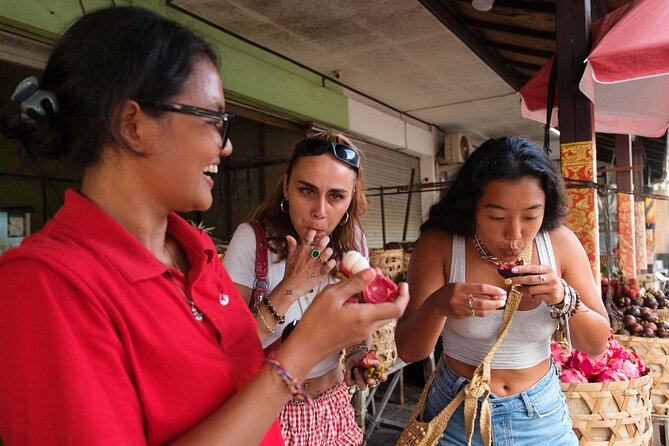
Badung Market is the main food stop, with about 30 minutes set aside for traditional Jaje Bali snacks and other street food. This is likely to be the most sensory part of the route, with stalls, ingredients, prepared dishes, and shoppers all competing for your attention.
Jaje Bali refers to traditional Balinese sweets, often colorful and made with rice flour and coconut. You may find the textures and flavors unfamiliar if your idea of dessert is based on cakes or ice cream. That is part of the point. Let the guide identify each item before you try it, and ask about the ingredients if you are unsure.
The market setting also makes the experience more interactive than a plated tasting. One guide, Irfan, was praised for helping with choices such as local cakes, soup, and unfamiliar fruit. That kind of assistance is useful here, since a market can offer more options than you would feel comfortable choosing on your own.
The 30-minute limit keeps the stop manageable, but it also means you will not explore every corner of Badung Market. If you love shopping, you may wish you had more free time. The tour is designed for guided tasting, not an open-ended market visit.
Ending with coffee at Nadhi Heritage
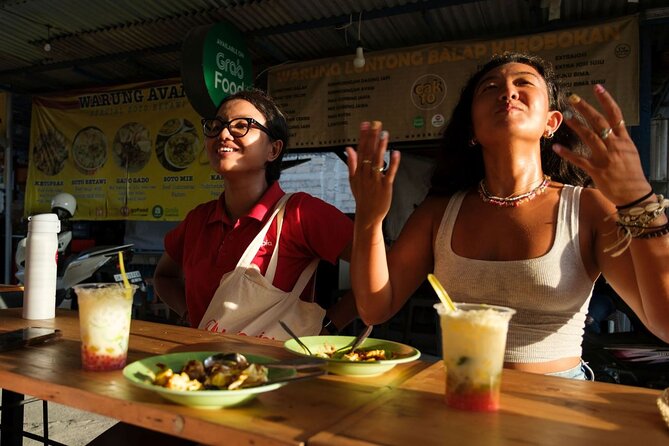
The final stop is Nadhi Heritage at Jalan Gajah Mada No. 122. You spend about 30 minutes at this heritage coffee shop, choosing authentic Indonesian Arabica coffee hot or iced.
Ending with coffee is a practical decision. After walking and eating several dishes, you get a quieter place to sit, talk, and ask final questions. The coffee also adds another part of Indonesian food culture to the evening without piling on another full meal.
The tour ends at Nadhi Heritage rather than returning you to the temple. That makes the experience easier to combine with dinner plans in central Denpasar, but you will need to arrange your own way back to Seminyak or elsewhere. The route is near public transportation, and one account of the experience included a short taxi ride at the end, so confirm the return plan with your guide if you are not familiar with Denpasar.
What the $45 price gets you
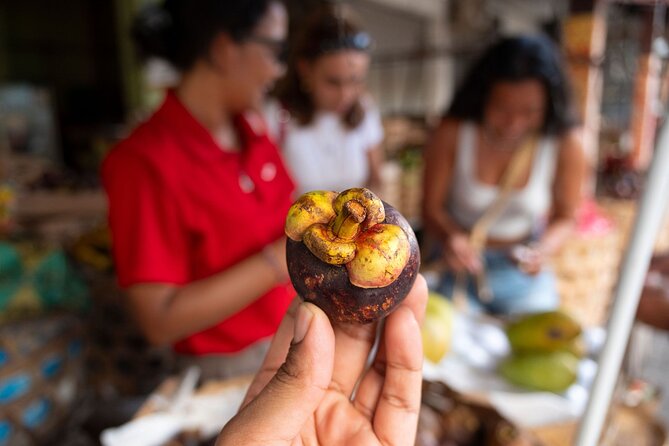
At $45 per person, this is not the cheapest way to buy food in Bali. You could purchase individual snacks and soup for less. The price makes more sense when you count the guide, the historical stops, the food explanations, the organized route, and the chance to visit several places without having to identify them yourself.
The group size is important to the calculation. With a maximum of 12 people, you are not paying for a large coach-style outing. A smaller group makes it easier to ask about ingredients, customs, and preparation. It also helps the guide manage market stops, where a large crowd would quickly become awkward.
The tour supports several local stalls, which gives the cost a more direct local benefit than a single meal at a resort restaurant. Still, remember that extra food, extra drinks, and gratuities are not included. If you have a strong appetite, plan on spending a little more.
I see the best value here for a first visit to Denpasar. You receive a short introduction to the city, a set of local tastings, and a guide to help you make sense of what you are seeing. If you already know central Denpasar well and only want a large meal, the price may feel high.
Group size, walking, and timing
The tour lasts about three hours and begins at 4:00 pm. Expect a mix of walking, standing, eating, and brief sightseeing stops. The route is centered on Denpasar, so comfortable shoes will help, especially around market areas and older streets.
The late afternoon start is helpful in Bali’s heat. You will still want water, but the timing should be more comfortable than a midday city walk. The market portion should also feel more active as the day moves toward evening, though the exact pace and atmosphere can change.
Most people can participate, but the food is local and there are no kids’ meals. Children under six are not allowed, and older children should be comfortable trying unfamiliar food and walking between stops. This is a better fit for adults, older children, couples, solo visitors, and small groups of friends.
The mobile ticket is convenient, and confirmation is provided when you book. The start point is Pura Agung Jagatnatha, while the end point is Nadhi Heritage on Jalan Gajah Mada. Do not assume you will finish back where you started.
Dietary limits and practical food advice
This tour cannot cater to vegetarian, vegan, or gluten allergies and intolerances. That is not a minor footnote, because several of the main tastings are meat-based and the experience depends on authentic local venues with limited ability to adjust dishes.
If you eat meat and are open to unfamiliar textures, the menu should be a strong point. Babi Guling offers a ceremonial Balinese specialty, Bakso provides a familiar soup format with Indonesian flavor, and Jaje Bali adds sweet rice-flour and coconut-based snacks.
You should tell the guide about any less serious preferences at the start, but do not book this as a flexible food tour. The operator specifically says it cannot meet the dietary needs listed above. Gratuities are also not included, so carry some cash if you want to thank your guide.
The guiding makes or breaks the evening
A food tour depends heavily on the person leading it. The best moments here come from explanations that connect a dish to customs, local shopping, and daily life. Putra was praised for careful attention, while Lena was described as easy to talk to and helpful from the simple meeting point onward.
Srix was praised for explaining local customs while pointing out sights along the route. Irfan helped with fruit, cakes, and soup, including advice on how to choose unfamiliar items. These details suggest that a good guide does more than recite facts. The guide helps you decide what to try and gives you confidence at the market.
Guides can vary, of course, and no food tour can guarantee the same personality every evening. Still, the small group gives the guide a reasonable chance to respond to your questions. Ask about ingredients, religious connections, and how each food is normally eaten. You will get more from the tour if you treat it as a conversation rather than a simple tasting schedule.
Who should book this Denpasar food walk?
I would recommend it to you if you want to see urban Bali, eat at local stalls, and learn why certain dishes matter. It is especially useful if you are staying in Seminyak but have not yet visited central Denpasar.
You should also book if Babi Guling is high on your list and you want context with the meal. The temple, Puputan Square, Catur Muka, and colonial streets give the food a larger cultural frame.
I would skip it if you need vegetarian, vegan, or gluten-free food. I would also skip it if you dislike walking, prefer a long sit-down dinner, or want plenty of free time at the market. The route is structured and the stops are fairly short.
Should you book it?
Book this tour if you want a compact introduction to Denpasar’s food and civic culture, not just a list of dishes. At $45, the value comes from the guide, the small group, the local businesses, and the way the stops connect temples, resistance history, city streets, and food.
The strongest reason to go is the combination of Babi Guling, market snacks, and local explanation. The strongest reason to hesitate is the strict dietary limit and the fact that extra food and drinks cost more. For curious eaters who can meet at the temple and arrange their own return from Nadhi Heritage, this is a thoughtful three-hour addition to a Seminyak stay.
FAQ
How long does the Taste & Explore Bali tour last?
The experience lasts approximately three hours.
What time does the tour start?
The tour starts at 4:00 pm.
Where does the tour begin?
It begins at Pura Agung Jagatnatha Temple, Jalan Surapati No. 7, Dangin Puri, Denpasar.
Where does the tour end?
The tour ends at Nadhi Heritage, Jalan Gajah Mada No. 122, Denpasar.
What foods are included?
You will taste Babi Guling, Bakso, traditional Jaje Bali snacks, other local street food, and Indonesian Arabica coffee.
Is coffee included?
Yes. The experience includes authentic Indonesian Arabica coffee, served hot or iced.
Can vegetarians or vegans join?
The tour cannot accommodate vegetarian or vegan diets. It also cannot cater to gluten allergies or intolerances.
How many people can join the tour?
The maximum group size is 12 people. Children under six are not permitted.
More Historical Tours in Seminyak and Kuta
- Bali Unesco World Heritage Sites Tour (Private & All-Inclusive)
★ 5.0 · 91 reviews - Tanah Lot & UNESCO Heritage Small Group Tour
★ 4.5 · 21 reviews - Exquisite UNESCO World Heritage Sites in Bali
★ 5.0 · 9 reviews - Full-day Ubud Private tour : Cultural Heritage
★ 5.0 · 5 reviews
Just added around Seminyak and Kuta
- Bali-Nusa Penida. East Part. Private car. All-inclusive★ 4.5 · 15 reviews
- Ubud Private Tour : Ubud Temple and Authentic of Ubud★ 5.0 · 18 reviews
- Bali Swing Hot Spring And Waterfall Private Guided Tour★ 5.0 · 50 reviews
- Ubud Monkey Forest Sanctuary Tours and Cretya★ 5.0 · 3 reviews
- Ubud Tours and Cretya Day Club Pool★ 5.0 · 3 reviews
- Bali Adventure Tour: Hidden Canyon, Tegenungan Waterfall, Goa Gajah temple★ 5.0 · 48 reviews
- Penglipuran Village Waterfall Swing Private Guided Tour★ 5.0 · 13 reviews
- Bali Sightseeing Car Hire with English-speaking Guide and Driver★ 5.0 · 24 reviews
Historical Tours, compared.

Jakarta Heritage of Old Batavia Private City Tour (Historical)
Read our review →
Bali Unesco World Heritage Sites Tour (Private & All-Inclusive)
Read our review →

Browse the lists this tour appears in