
Reviewed · WALKING TOURS
Queen of the East (Old Batavia) Walking Tour
Old Batavia is best read on foot. This private three-hour walk connects Jakarta’s Maritime Museum, Sunda Kelapa Harbour, old city walls, Kota Intan Bridge, Toko Merah, and Fatahillah Museum in one tidy route. I like the personal guide and the fact that entrance fees, water, a pocket map, and a batik cloth fan are included. The main concern is the pacing: one section involves a long walk with little to see, and the Maritime Museum may not appeal to everyone.
You begin at the Maritime Museum and finish in Jakarta’s Old Town, so this is not a loop back to your hotel. I also like the chance to see Old Batavia in context, from VOC warehouses and harbor trade to colonial streets and the old city center. Bring an umbrella, though, since the tour runs in sun or rain and Jakarta can be warm and humid.
In This Review
- Key points to know before booking
- What this Old Batavia walk is really about
- Starting at the Maritime Museum and Sunda Kelapa
- Following the old city wall near the Eastern Warehouse
- Crossing Kota Intan Bridge, nearly 400 years old
- Walking through Dutch colonial streets and past Toko Merah
- Fatahillah Museum and the underground dungeon
- How much value do you get for $67.66?
- Practical planning for heat, rain, and walking
- Who will enjoy this private Jakarta tour?
- Should you book the Queen of the East walk?
- FAQ
- How long is the Queen of the East walking tour?
- Where does the tour begin?
- Where does the tour finish?
- Is this a private tour?
- What is included in the price?
- Does the tour operate on Mondays?
- What should I bring and wear?
Key points to know before booking
- A private route for one to 15 people: You receive a guide for only your own group, useful if you want questions answered at your own pace.
- About 4 to 4.5 kilometers on foot: Comfortable shoes matter, and the heat can make this feel longer than the distance suggests.
- The tour links harbor history with Old Town sights: You see Sunda Kelapa, VOC-era buildings, Kota Intan Bridge, Toko Merah, and Fatahillah Museum.
- Museum admission is included: The price covers the listed entrance fees, along with mineral water, a pocket map, and a batik fan.
- The best views come early: The Maritime Museum area offers a panorama of Sunda Kelapa Harbour from the old control post.
- Monday is excluded: Jakarta’s museums are closed that day, so this experience does not operate on Mondays.
What this Old Batavia walk is really about
Old Batavia was the Dutch East India Company’s main base in Asia, and the route helps you see how that commercial center worked. Rather than treating Jakarta’s past as a string of unrelated buildings, the walk links warehouses, harbor access, defensive walls, colonial planning, and civic power.
That connection is the tour’s greatest value. You are not simply checking off a museum and a bridge. You are walking along part of the old route used to move spices, supplies, and people through Batavia.
The experience lasts about three hours and is fully private. That makes a difference in a place where questions can range from architecture to colonial rule to modern Jakarta. If you are alone, the price is $67.66 per person. For a larger private group, the cost may make more sense, especially since the tour allows between one and 15 people and group discounts are available.
The walk is not a soft stroll through a compact plaza. The full distance is listed as 4 to 4.5 kilometers, much of it outdoors. Jakarta’s weather is warm and humid throughout the year, and rain is possible, especially from October through April. Wear light, comfortable clothing and shoes with good support.
More walking tours in Jakarta:
- Jakarta Walking Tour with Public Transportation Visiting Sites
★ 5.0 · 14 reviews - The Secret Society of Batavia – Walking Tour
★ 5.0 · 4 reviews - Jakarta Private Custom Walking Tour with A Guide
★ 5.0 · 3 reviews
Starting at the Maritime Museum and Sunda Kelapa
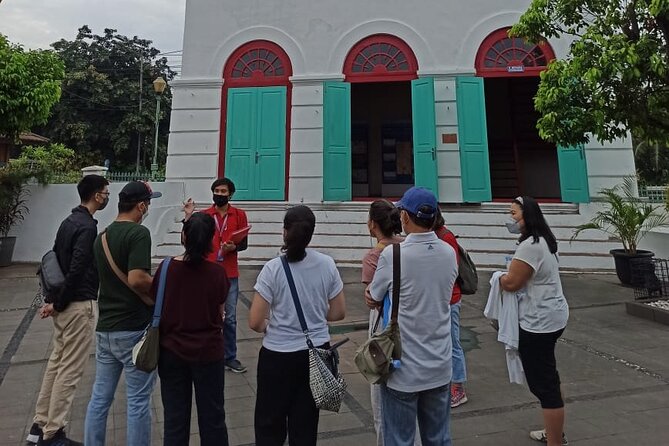
The meeting point is the Maritime Museum, also called Museum Bahari, on Jalan Pakin in North Jakarta. This is where you meet the English-speaking guide and begin with the old VOC spice warehouse.
The building matters as much as the collection inside. The warehouse reflects Batavia’s role as a shipping and storage center, when goods arrived through Sunda Kelapa and were handled by the Dutch East India Company. This gives the tour a useful starting point: before you look at grand museums and colonial facades, you see the practical side of empire.
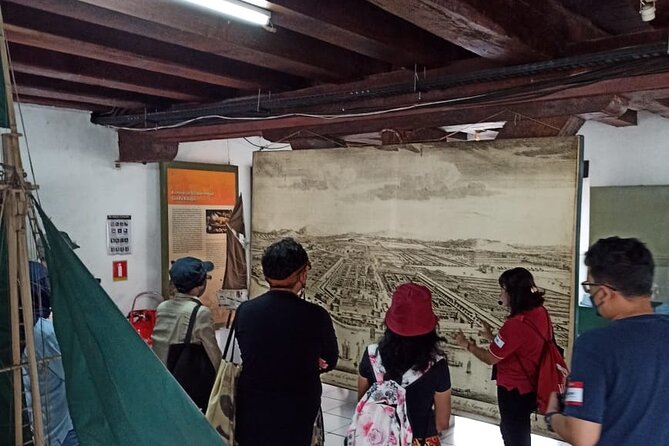
The scheduled visit lasts about 50 minutes, with admission included. You should expect to spend time learning about the warehouse and its connection to maritime trade. The tour also includes a look from the old control post, where you can enjoy a broad view of Sunda Kelapa Harbour.
That harbor panorama is one of the strongest parts of the route. It gives you a visual sense of why this location mattered. The waterway was not a decorative backdrop. It was the working entrance to Batavia, tied to the movement of spices and company supplies.
Still, I would set your expectations correctly. A detailed stop in a maritime museum will appeal most if you enjoy ships, trade, warehouses, and colonial-era logistics. If you prefer lively street scenes or grand architecture, the museum portion may feel too long. One practical critique of the experience is that this stop could be shortened for some groups, leaving more time for the stronger Old Town sights later.
Following the old city wall near the Eastern Warehouse
After the Maritime Museum, the route moves toward a surviving section of Batavia’s old city wall near the Eastern Warehouse. This stop takes about 15 minutes and has no separate admission fee.
It is a brief stop, but it helps explain the shape of the old city. Walls are easy to overlook when you are focused on attractive facades, yet they show that Batavia was planned as a defended company town. The warehouse and wall together reveal how storage, security, and trade were connected.
You will not spend a long time here, and that is probably appropriate. The remaining wall is not presented as a huge monument. Its value comes from seeing an actual fragment in place, rather than only hearing that Batavia once had defenses.
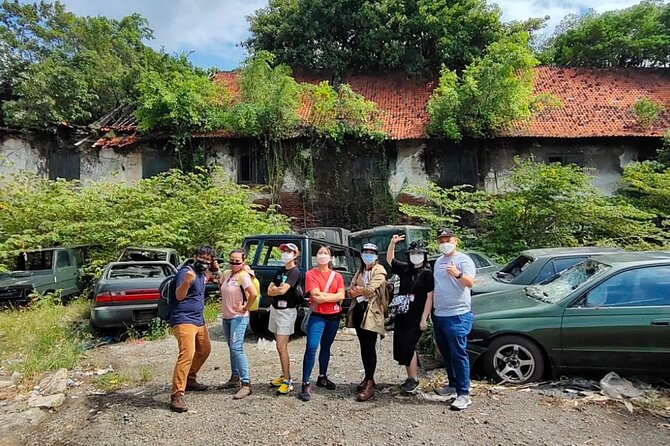
The transition from the harbor area toward Old Town is also where the walking can feel less rewarding. The route covers ground, but not every stretch has a major sight or a strong story attached to it. I would ask your guide to keep the explanation going during this section, since the walk is more useful when it is tied to the old urban plan.
Crossing Kota Intan Bridge, nearly 400 years old
The next listed stop is Kota Intan Bridge, a historic wooden drawbridge that is nearly 400 years old. The visit takes around 15 minutes and admission is included.
This is one of the route’s most distinctive features. You are seeing a piece of old infrastructure rather than another museum room. The bridge helps you picture how waterways shaped movement through Batavia, when canals and crossings were part of everyday city life.
The short stop also makes it a good place for photographs. Bring your camera or phone, but remember that this is a historic structure, not a modern attraction designed for a long visit. The interest lies in its age, construction, and setting within the old city route.
The bridge is a particularly good fit for anyone who enjoys urban history. You can look at it as a simple crossing, or as evidence of how colonial Batavia was engineered around water, transport, and control. A guide adds value here because the physical structure alone cannot explain its full role.
A few more Jakarta trips worth comparing
- Jakarta: Volcano, Tea/Rice Fields, Hot Spring, Local Food
★ 4.9 · 515 reviews - Active Volcano, Rice Field, Hot Spring, Fruit market, Tea Plantation with Lunch
★ 5.0 · 513 reviews - Private Full-Day Guided Tour: Explore Jakarta’s Top Highlights
★ 5.0 · 338 reviews - Jakarta Half-Day Guided Tour with a Private Fun Local Host
★ 5.0 · 292 reviews
Walking through Dutch colonial streets and past Toko Merah
Between Kota Intan Bridge and the museums, you walk through the Dutch colonial street plan and architecture of Old Batavia. This section covers the 17th and 18th centuries and includes a view of Toko Merah, the old Governor General’s mansion.
This is where the walk starts to feel most like a history lesson in the open air. You can compare the warehouses and defensive remains with buildings connected to political authority. The route moves from the commercial machinery of the VOC toward the people and institutions that governed Batavia.
Toko Merah is an important visual marker because it represents the grander side of colonial power. The name means Red Shop, but the key point for you is its former connection to the Governor General. It helps show how the same city contained working warehouses, fortifications, canals, residences, and official buildings within one planned system.
This part is also the best reason to choose a walking tour instead of relying only on a museum visit. You can see how the buildings relate to one another. The experience is not just about what each site is, but where it sits in the old city and what that placement tells you.
The route may feel uneven at times. Some sections offer a strong building or story, while others involve simply getting from one stop to the next. A private guide is helpful here because the group can pause for photographs or questions without worrying about keeping up with strangers.
Fatahillah Museum and the underground dungeon
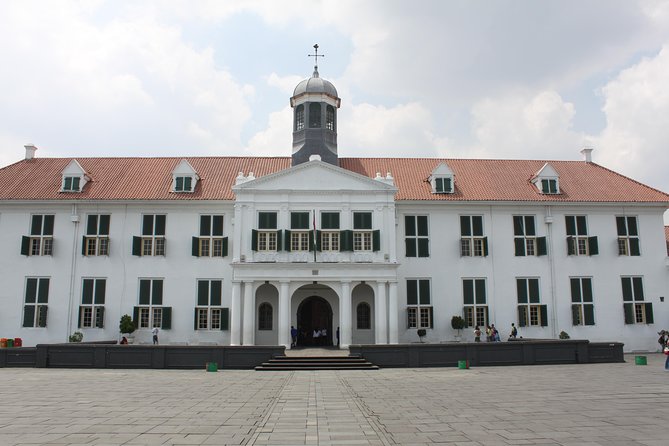
The final major stop is Jakarta History Museum, also called Fatahillah Museum, in Taman Fatahillah. The visit lasts about 40 minutes and includes admission.
The museum occupies the grand Fatahillah building and contains antiques from the 17th through 19th centuries. That date range fits neatly with the rest of the tour, taking you back to the period when Batavia was developing as a Dutch colonial center.
You should pay attention to how this stop rounds out the earlier sights. At the Maritime Museum, you see trade and shipping. At the wall and bridge, you see defense and movement. At Fatahillah Museum, you see objects and spaces tied to the city’s civic and colonial past.
The underground dungeon is one of the more memorable parts of the visit, though it may not suit everyone. It adds a darker note to the history of the building and reminds you that colonial institutions were not only offices and grand facades. If you prefer a lighter sightseeing experience, this section may feel stark.
The museum is also the end point at Taman Fatahillah, Jakarta’s historic Old Town square. Since the tour ends here rather than returning you to the Maritime Museum, you can plan your next move from this part of the city. Hotel pickup and drop-off are not included, so you need to arrange your own transport to the starting point and onward from the finish.
How much value do you get for $67.66?
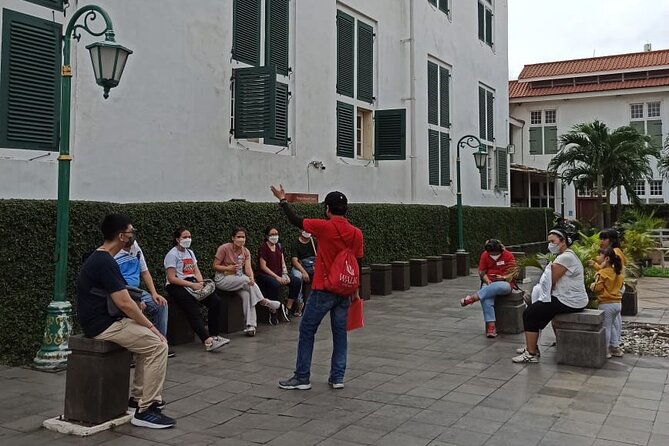
At $67.66 per person, this is not Jakarta’s cheapest way to see Old Town. The price makes more sense if you value a private guide, included admissions, and a route that joins several historic areas in one outing.
You are paying for more than the three hours of walking. The tour covers the English-speaking guide, entrance fees, mineral water, a pocket map, and a batik cloth fan. You also avoid building your own route between North Jakarta’s harbor area and the Old Town museums.
For a solo participant, the cost is a bigger decision. For a family or small private group, the price can be easier to justify because the same guide serves your party, up to the stated maximum of 15 people. Adult and children ages 3 to 12 share the same fare, so families should calculate the total before booking.
The value depends heavily on what you want from a guide. If you only need directions and photographs, you may find the price high. If you want the colonial sites explained in relation to shipping, defense, architecture, and urban planning, the private format is more useful.
The experience has a 4.4 rating from seven published evaluations, which suggests a generally positive but not flawless outing. The clearest weakness is the balance of time. The harbor and Fatahillah Museum are strong stops, while the Maritime Museum and the longer connecting walk may not hold every person’s interest.
Practical planning for heat, rain, and walking
You should arrive at the Maritime Museum, not the final museum. The starting address is Museum Bahari on Jalan Pakin, while the tour ends at Jakarta History Museum in Taman Fatahillah.
Public transportation is nearby, but hotel pickup and drop-off are not part of the experience. Plan extra time to reach the first meeting point, especially if you are staying outside North Jakarta.
Bring an umbrella. The tour operates in sunny or rainy conditions, and the October through April rainy season makes rain protection especially sensible. A light rain can be manageable, but wet pavement and humidity can make the 4 to 4.5 kilometer route more tiring.
I would also carry a small bottle of extra water, even though mineral water is included. Wear comfortable shoes and clothes suited to warm weather. There is no need to dress formally for the museums, and practical clothing will make the outdoor sections easier.
The tour does not operate on Mondays because the museums are closed. Children must be accompanied by an adult, and the experience is described as suitable for most people who can manage the walking distance.
The booking terms are strict: the experience is non-refundable and cannot be changed after booking. Confirmation is normally provided at booking, but reservations made within five days of the tour may receive confirmation within 48 hours, subject to availability. Travel insurance is not included, and guide tips are optional extras.
Who will enjoy this private Jakarta tour?
I would recommend this experience to you if you want an organized introduction to Old Batavia and prefer a guide who can connect separate sights into one story. It is especially useful for first-time visitors to Jakarta who want to understand why the harbor, warehouses, walls, bridges, and museums all matter.
History-minded visitors will get the most from it. You will see maritime trade, VOC storage, colonial city planning, old defenses, a historic bridge, a former Governor General’s mansion, and a museum filled with 17th to 19th century objects.
Families may also appreciate the private format, since you can set the pace within the fixed route. Just remember that children ages 3 to 12 pay the same fare as adults and that the full walk can feel long in Jakarta’s heat.
I would hesitate if you dislike museums, need a short and gentle walk, or want constant visual excitement. The route includes a less rewarding stretch between major sights, and the Maritime Museum may take time away from the more impressive Old Town architecture.
Should you book the Queen of the East walk?
Book it if you want a structured, private history walk that begins at Sunda Kelapa Harbour and ends in Kota Tua. The combination of included admissions, an English-speaking guide, Old Batavia’s remaining structures, and a private group makes the $67.66 price reasonable for people who value context and convenience.
Before booking, accept two trade-offs: you will walk 4 to 4.5 kilometers in warm, humid weather, and not every section has a major sight. If your priority is the harbor, colonial architecture, Kota Intan Bridge, and Fatahillah Museum, this tour gives you all four in one morning or afternoon. If you want only the most photogenic parts, ask whether the longer transfer walk can be shortened, perhaps by trishaw, so more time goes to the strongest stops.
FAQ
How long is the Queen of the East walking tour?
The tour lasts about three hours and covers approximately 4 to 4.5 kilometers on foot.
Where does the tour begin?
It begins at the Maritime Museum, also known as Museum Bahari, on Jalan Pakin in North Jakarta.
Where does the tour finish?
The tour ends at Jakarta History Museum in Taman Fatahillah, in Jakarta’s Old Town.
Is this a private tour?
Yes. Only your group participates, with a minimum of one person and a maximum of 15 people.
What is included in the price?
The price includes an English-speaking guide, mineral water, a pocket map, a batik cloth fan, entrance fees, and the private tour.
Does the tour operate on Mondays?
No. The tour does not operate on Mondays because the museums are closed.
What should I bring and wear?
Bring an umbrella, particularly during the October through April rainy season, and wear comfortable clothing and shoes suited to warm, humid weather.
Just added around Jakarta
- Volcano and Domas Crater of Hot Stony Bubble from Jakarta Lunch★ 5.0 · 23 reviews
- Situ Gunung Waterfall & Suspension Bridge Sukabumi start Jakarta★ 4.5 · 13 reviews
- The Secret Society of Batavia – Walking Tour★ 5.0 · 4 reviews
- Soekarno Hatta International Airport by Plaza Premium Lounge★ 4.0 · 46 reviews
- Private Tour: Half Day Jakarta Old City Tour★ 4.0 · 4 reviews
- Jakarta Scooter Lessons and Motorcycle Lessons★ 5.0 · 9 reviews
- Jakarta Indonesian Culture in half Day★ 5.0 · 50 reviews
- DAY TRIP TO BANDUNG CITY From Jakarta★ 5.0 · 9 reviews
Walking Tours, compared.
Tetebatu Walking Tour – Rice Terraces, Waterfall & Monkey Forest
Read our review →
Small-Group Walking and Food Tour by Night in Yogyakarta
Read our review →
Bali Private Food Walking Tour With Locals: The 10 Tastings
Read our review →
Sidemen Trekking: A Walk from a Different Perspective
Read our review →
Ubud yoga, rice terrace walk and floating Breakfast tour
Read our review →
Ubud Countryside Tour: Campuhan Ridge Walk and Rice Terrace
Read our review →Browse the lists this tour appears in