
Reviewed · WORKSHOPS
Private Traditional Bali Silver Jewelry Making Class
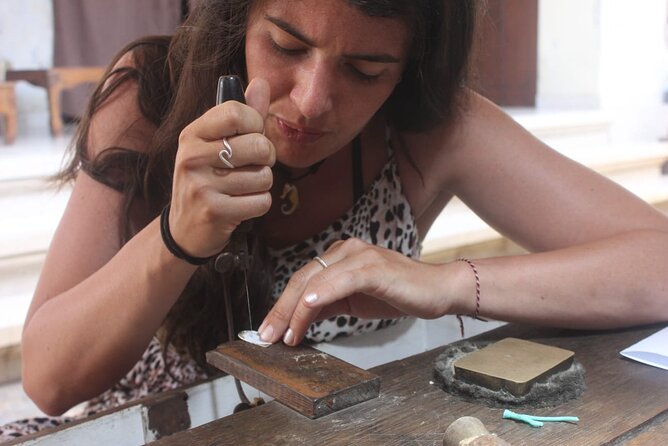
Make something you can actually wear home. This three-hour private silver class in Celuk, outside Ubud, gives you direct practice with sawing, stamping, hammering, soldering, sanding, and polishing. I like the one-on-one teaching, which lets your tutor adjust the pace and help rescue a design before it becomes too complicated. I also like the chance to create a personal ring or other piece instead of buying another ready-made souvenir.
The main point to check is the silver allowance. The tour description refers to 10 grams, while the included details list 5 grams of silver, with extra material charged at IDR 50,000 per gram. Confirm the allowance when you book, especially if you want a larger design or several pieces.
In This Review
- Key points before you book
- Why Celuk makes the class worthwhile
- Arriving at the Rajata Silver Class
- Choosing a design that can be finished
- The first cuts: tools, safety, and silver
- Soldering, sanding, and polishing
- The personal touch of a family workshop
- What the private format adds
- Price, silver limits, and what you receive
- Who should take this class
- Timing, cancellations, and practical planning
- Is this silver class worth booking?
- FAQ
- Where does the silver jewelry class take place?
- How long does the class last?
- Is this a private activity?
- How much silver is included?
- Can I create my own design?
- Is hotel pickup included?
- What is the cancellation policy?
Key points before you book
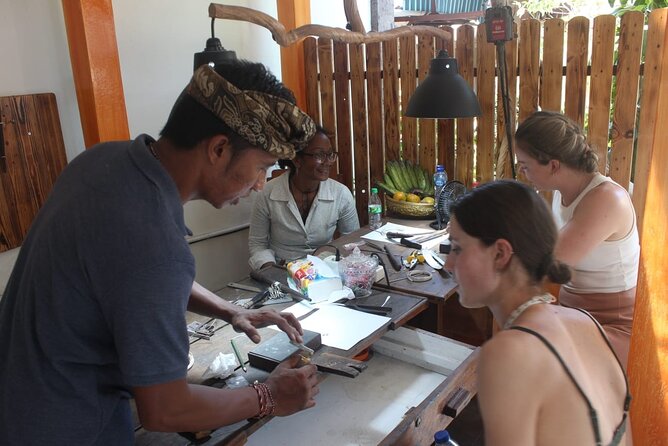
- Work directly with a private tutor: Your group receives personal instruction rather than joining a large workshop.
- Make a piece from your own idea: You can bring a design, choose from samples, or let the tutor guide you toward something workable.
- Learn real metalworking steps: The class covers sawing, stamping, hammering, soldering, sanding, polishing, tool use, and safety.
- Visit Celuk, Bali’s silver center: The class takes place in a village known for its silversmiths, rather than in central Ubud.
- Expect a family-run setting: Several experiences describe a warm welcome, cold drinks, helpful guidance, and an informal home workshop atmosphere.
- Allow for extra silver costs: The stated base amount is either 5 grams or 10 grams, depending on which tour detail applies, so ask before starting.
Why Celuk makes the class worthwhile
Ubud is full of cooking lessons, dance shows, craft shops, and wellness sessions. A silver class offers something more lasting: you spend a few hours learning how a small piece of metal becomes a wearable object.
Celuk, in Sukawati, Gianyar Regency, is the right setting for this kind of activity. It is known as a center for silver craftsmen in Bali. You are not simply purchasing a polished item from a shop shelf. You are working in the area where silver craft is part of local family life and business.
That difference matters. A silver ring made by your own hands carries a personal story. You may remember the first crooked cut, the nervous moment before soldering, or the final polish far longer than you remember the price tag on a souvenir.
The activity is also a good change of pace from sightseeing. After temples, markets, traffic, and long walks, three hours at a workbench gives you one clear task. You can focus on the shape in front of you and let the rest of Bali wait.
A few more Ubud trips worth comparing
- All-Inclusive Ubud Private Tour
★ 5.0 · 14,344 reviews - Best of Ubud Full-Day Tour with Jungle Swing
★ 5.0 · 8,571 reviews - Ubud: Monkey Forest, Jungle Swing, Rice Terrace, and Water Temple
★ 5.0 · 7,160 reviews
Arriving at the Rajata Silver Class
The meeting point is Rajata Silver Class in Celuk, Sukawati, Gianyar Regency. The activity begins and ends there, so you should plan your own way to the workshop unless you arrange paid hotel transport.
The location is outside Ubud, which makes this easier to combine with a wider day around southern or central Bali than with a quick walk from an Ubud hotel. Hotel pickup is available for an additional charge, with listed rates of IDR 450,000 per car from Sanur or central Ubud, IDR 500,000 from Seminyak, Kuta, or Legian, and IDR 550,000 from Canggu, Nusa Dua, or Jimbaran. Pickup from Uluwatu is listed at IDR 600,000 per car.
Those rates are for the car, not per person, according to the supplied details. If you are sharing the ride with your own group, the cost may be reasonable. If you are alone, reaching the workshop independently may offer better value.
On arrival, you may be welcomed with a cold drink or bottled water and a snack. The setting is described as a family-run silver workshop, and the personal welcome is part of the appeal. This is not presented as a formal museum demonstration. It is a practical class in a working local setting.
Choosing a design that can be finished
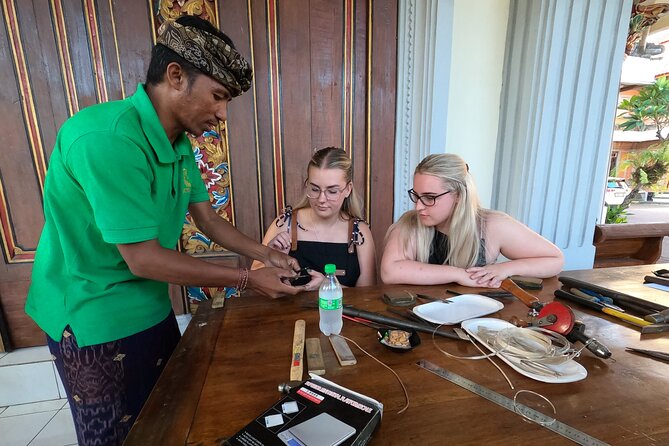
The first important decision is your design. You can bring an idea, select something from workshop samples, or create a simpler version with help from your tutor.
This is where the private format earns its keep. A design that looks simple in a photograph may be hard to cut, bend, join, or polish within three hours. Your tutor can explain what will work with the available silver and what is likely to take too long.
You may want to bring a rough sketch or a few reference images on your phone. The design does not need to be artistic. A basic outline, initials, a name, or a small symbol gives you a useful starting point.
Several accounts of the class describe tutors helping participants simplify their ideas before work begins. That is good teaching, not a limitation. A clean ring with a small etched detail is more satisfying than an ambitious piece left unfinished.
You can also use workshop samples for inspiration. This is useful if you want to make jewelry but have no clear plan. Ask about the size and weight of the finished item before committing to a pattern, particularly if you are using the smaller 5-gram allowance.
The first cuts: tools, safety, and silver
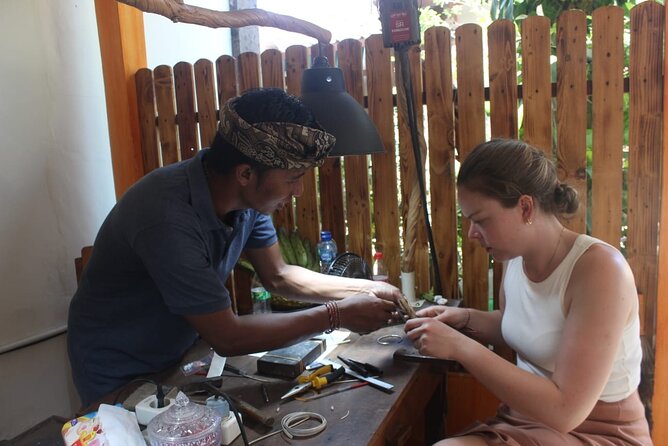
The class introduces the tools and explains how to use them safely. You learn the basic handling of the silver before moving into the main construction steps.
Sawing is often the first stage where the craft feels real. You work through the metal rather than simply decorating a finished object. Your tutor can help with pressure, direction, and the shape of the cut, which is valuable if you have never handled jewelry tools.
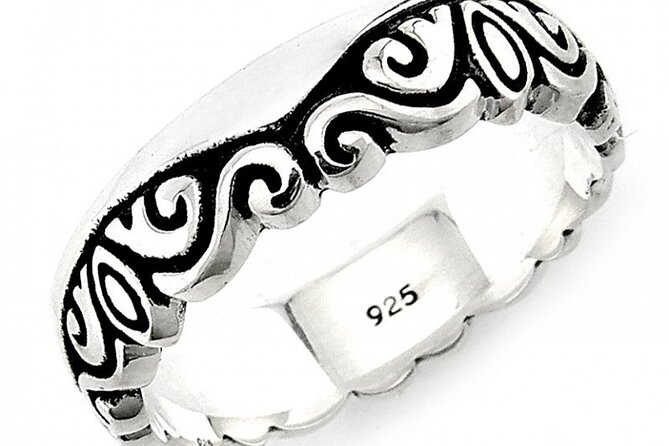
The class also includes stamping and hammering. These techniques can add texture, marks, or shape to the silver. Initials are one personal option, and one completed ring described in the experience included etched initials.
The amount of silver deserves a careful note here. The overview says 0.35 ounce, or 10 grams, while the included section says 5 grams. The extra charge is IDR 50,000 per gram. Before you begin, ask the tutor to confirm exactly how much is included and how much your chosen design requires.
If you want a small ring, simple earrings, or a modest pendant, the allowance may be enough. If your plan includes two substantial rings or a broad, heavy piece, budget for additional silver.
Still Ubud, at a slower pace:
- Best of Ubud 1-Day Private Tour
★ 5.0 · 4,451 reviews - Bali: Ubud Palace Legong Dance Show Ticket
★ 4.4 · 3,979 reviews - Uluwatu Sunset, Kecak Dance, and Dinner Jimbaran Beach
★ 5.0 · 3,681 reviews - Tanah Lot and North Bali Tour: Scenic Journey
★ 5.0 · 3,620 reviews
Soldering, sanding, and polishing
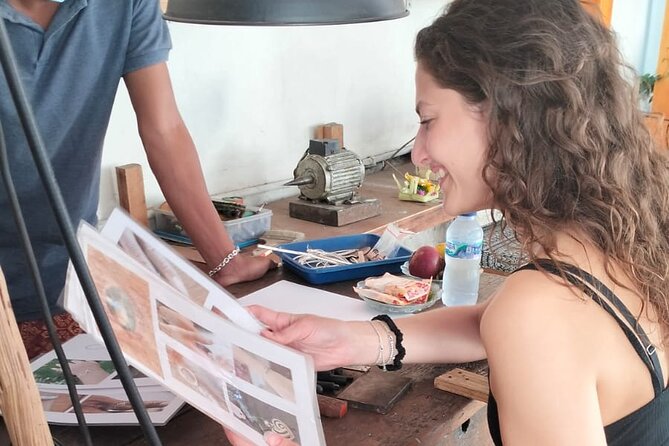
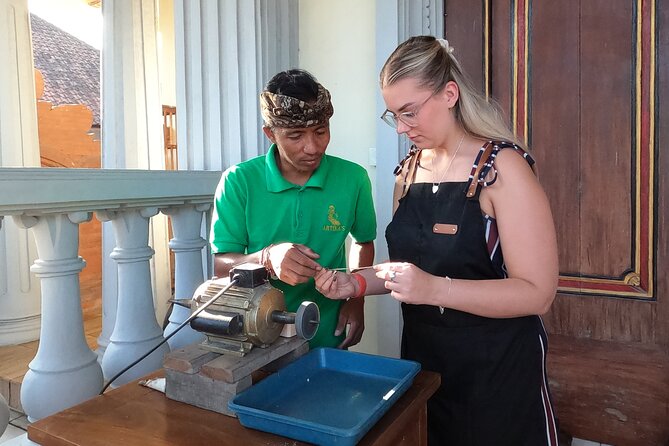
The class moves from shaping to joining and finishing. You practice soldering, then smooth the surface through sanding and polishing.
Soldering is likely to be the part where close instruction matters most. It requires care and timing, and your tutor guides you through the process rather than leaving you to guess. You remain involved, but the tutor can step in when a technical correction is needed.
That balance is worth understanding. You are not handed a finished souvenir after watching someone else work. At the same time, this is not a test of professional silversmithing. The tutor’s role is to help you produce a finished piece safely and within the time available.
Sanding can change the character of the piece. It removes rough edges and helps prepare the silver for its final finish. Polishing then gives the jewelry a cleaner, brighter appearance.
The final result may show small signs of handmade work. That is part of the charm, but you should keep your expectations sensible. You are learning a traditional craft in about three hours, not producing a museum-quality object after years of training.
The strongest part of the activity is the process. You learn why each stage matters, and you can see the piece improve as you move from raw silver to something wearable.
The personal touch of a family workshop
The workshop’s family setting is a major reason this class feels different from a standard craft lesson. The class is described as taking place in a private setting connected with a local family, and the welcome may include family members and even a kitten.
Ari and Arik are names connected with the teaching experience. One account describes Arik patiently guiding the maker through a ring design, including the etching of initials. Another praises Ari and his family for helping at each stage. The information provided uses both names, so you may wish to confirm your tutor’s name when arranging the class.
The family connection also gives the session a more personal tone. You are not only learning tool handling. You get a small window into a craft practiced by local silversmithing families across generations.
That does not mean the class provides a formal lecture on Balinese culture or a full history of Celuk. Its value is more direct. You sit with a local craft instructor, use the same basic methods, and gain a better sense of the patience and precision behind handmade silver jewelry.
What the private format adds
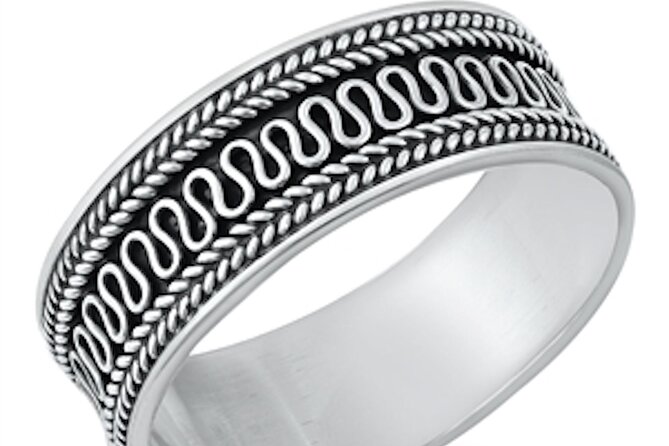
The class is private, meaning only your group participates. That is useful for several reasons.
First, the tutor can focus on your hands, your design, and your questions. If you need extra help with sawing or want to try a more detailed stamp, you do not have to compete for attention.
Second, your group can work at a shared pace. A parent and child, a couple, or a small group of friends can compare designs and help make the session social without adding strangers to the table.
Third, private instruction helps with confidence. Beginners may hesitate to make the first cut when other people are watching. A personal tutor can correct the technique quietly and keep the work moving.
The private format does not guarantee that every design can be completed. Time, silver weight, and the complexity of the piece still matter. But it gives you a better chance of producing something finished and personal.
Price, silver limits, and what you receive
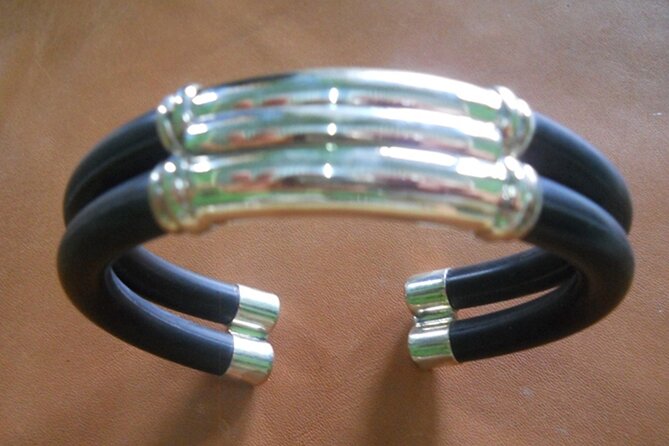
The listed price is $48 per person. For a three-hour private lesson that includes instruction, tools, refreshments, and silver, I consider that a fair price if you value the making process as much as the finished item.
The value is stronger for people who want a keepsake with a story. A shop-bought silver ring may be cheaper, larger, or more polished. This class gives you the chance to make design choices and take part in every major stage.
Included items are:
- Silver, listed as 5 grams in the inclusions and 10 grams in the overview
- Use of all tools and equipment
- A private silver class guide
- A soft drink or bottled water
- Snacks
Personal expenses are not included. Hotel transfers are also extra. The additional silver fee is IDR 50,000 per gram.
Ask three questions before you start: How many grams are included? How much will my design use? What will the finished piece be if I need more silver? Clear answers will prevent an awkward surprise at the end.
Who should take this class
I would recommend it most strongly to anyone who likes hands-on activities and wants a personal souvenir. It suits couples, families, friends, and solo participants who prefer a private lesson.
It is also a good choice if you have a design in mind. Bring initials, a simple symbol, or a basic ring idea and let the tutor explain how to adapt it.
The class works for beginners. You do not need prior jewelry experience, and the instruction covers basic tools, techniques, and safety. A person who already watches jewelry-making videos may still find the practical guidance useful because handling metal is different from watching a screen.
This may be less suitable if you want a passive activity, a luxury studio, or a guaranteed complex piece. The workshop is a local family setting, not a high-end design school. You should also allow extra time if your design is detailed or you intend to use more than the included silver.
Timing, cancellations, and practical planning
The class lasts about three hours. Since it is a focused workshop, avoid scheduling a tight connection immediately afterward. You may need extra time to finish your piece or to deal with traffic between Celuk and Ubud.
Most people can participate, and confirmation is provided when you book. The activity requires good weather. If poor weather causes cancellation, you are offered another date or a full refund.
You can cancel for a full refund up to 24 hours before the start time. Cancellations or changes made within 24 hours are not accepted, and the payment is not refunded. The cut-off follows Bali local time.
Because the activity is booked about 24 days ahead on average, popular dates may fill early. Booking ahead makes sense if you are building a fixed Ubud schedule, but check the silver allowance and pickup cost before paying.
Is this silver class worth booking?
Yes, if you want to make something rather than simply buy something. The private instruction, family-run setting, and chance to etch a personal detail make this one of the more memorable craft activities around Ubud.
I especially like the practical balance: you learn real techniques, but you also leave with a finished piece. Just keep the project modest, confirm whether your booking includes 5 or 10 grams, and budget for extra silver if needed.
Choose this class if you enjoy patient handwork, personal souvenirs, and a local setting in Celuk. Skip it if you prefer a quick shopping stop or want complete control over a complex professional design. For most beginners, $48 is a reasonable price for three hours of instruction and a keepsake you helped create from the first cut to the final polish.
FAQ
Where does the silver jewelry class take place?
The class takes place at Rajata Silver Class in Celuk, Sukawati, Gianyar Regency, Bali. It is outside Ubud, in an area known for its silver craftsmen.
How long does the class last?
The class lasts approximately three hours.
Is this a private activity?
Yes. Only your group participates in the private class.
How much silver is included?
The included details state 5 grams of silver, while the tour overview states 10 grams, or 0.35 ounce. Confirm the exact allowance with the provider before beginning. Additional silver is charged at IDR 50,000 per gram.
Can I create my own design?
Yes. You can bring your own idea, use workshop samples for inspiration, or create a design with guidance from the tutor.
Is hotel pickup included?
No. Hotel transfer is available for an additional charge. Listed prices vary by location, including central Ubud, Sanur, Canggu, Seminyak, Kuta, Legian, Nusa Dua, Jimbaran, and Uluwatu.
What is the cancellation policy?
You can cancel at least 24 hours before the start time for a full refund. Cancellations or changes within 24 hours are not refunded or accepted. If poor weather cancels the activity, you can choose another date or receive a full refund.
Just added around Ubud
- 3 Days for the best of Ubud Private Tour★ 5.0 · 63 reviews
- Bali Amazing Cooking Class★ 5.0 · 63 reviews
- Private Mount Batur Sunset Trekking – All inclusive tour★ 5.0 · 63 reviews
- Private Full-Day Handara, Ulun Danu, Jatiluwih and Tanah Lot Tour★ 5.0 · 63 reviews
- Half-Day Tour: Uluwatu Temple and Kecak Fire Dance Show★ 5.0 · 63 reviews
- Mount Batur Sunrise Trekking★ 5.0 · 65 reviews
- Trunyan Cemetery, Hot Spring, Penglipuran Village, and Waterfall Tour★ 5.0 · 65 reviews
- Bali Iconic Tour with Buffet Lunch and Attraction Tickets★ 5.0 · 66 reviews
Workshops, compared.


PRIVATE Authentic Balinese Cooking Class in Ubud at Putu’s Home
Read our review →

Learn to cook Indonesian food at Gili Cooking Classes Trawangan
Read our review →
Browse the lists this tour appears in