
Reviewed · WORKSHOPS
Half Day – Malang Batik Class
Make art you can pack home. This five-hour Malang workshop takes you into a local artisan house, where you learn the full batik process rather than simply watching it. I like the hands-on format, from sketching a Malang-style pattern to applying wax with a traditional canting tool. I also like the chance to work alongside local women artisans and see how batik supports creative home-based work.
At $35 per person, the class offers good value if you want a cultural activity with transport included. The main point to check is food: the tour details say meals and drinks are not included, although one family account says lunch was provided. Confirm that before booking if lunch matters to you.
In This Review
- Key points at a glance
- Why this Malang class is worth your morning
- From hotel pickup to the artisan house
- Drawing a Malang pattern before the wax
- Using the canting and organic wax
- Watching the pattern appear through dye
- Meeting the women behind the workshop
- A private class with room for different ages
- What the $35 price really covers
- What could disappoint you
- Who should book the Malang batik class
- Booking, timing, and cancellation details
- Should you book this class?
- FAQ
- How long does the Malang batik class last?
- What time does the experience start?
- Is hotel pickup and drop-off included?
- Is this a private activity?
- What will I learn during the class?
- Can children participate?
- Can I cancel for a full refund?
Key points at a glance
- A complete batik process: You draw, wax, and dye your own piece instead of only observing a demonstration.
- Traditional canting work: You use the small Indonesian tool that carries hot wax onto the fabric.
- Organic color materials: The class uses organic ingredients to create earthy colors.
- Local artisan setting: The workshop takes place in a local house, not a large commercial studio.
- Private transport included: Hotel pickup and drop-off make the morning easier, especially in Malang.
- Good for families and beginners: Children can take part when accompanied by an adult, and instructors help with the tricky steps.
Why this Malang class is worth your morning
Batik is more than a decorative cloth. It is a careful process in which wax controls where dye can reach the fabric. The finished design comes from repeating three basic stages: drawing, waxing, and coloring.
This class lets you follow those stages in order. That matters because you leave with a better understanding of why batik takes time and why small imperfections are part of handmade work.
I like the way the activity connects a well-known Indonesian art form with everyday local production. You are not placed in a polished showroom and handed a pre-made souvenir. You work in an artisan home and spend time with women who make batik as part of their creative work.
The workshop is also linked with Yagazu, a local NGO connected to an organic batik cooperative. If supporting small-scale, community-based work is important to you, that local connection adds meaning to the class.
A few more Malang trips worth comparing
- 1 Day Amazing Bromo Sunrise tour from Malang Surabaya 7 spots
★ 5.0 · 879 reviews - 3Days – Tumpaksewu Bromo Ijen Adventure via Malang or Surabaya
★ 5.0 · 405 reviews - 2Days – Bromo Sunrise Ijen Adventure via Malang
★ 5.0 · 152 reviews
From hotel pickup to the artisan house
The advertised start time is 8:00 am, and hotel pickup and drop-off are included. You will receive a mobile ticket, and the activity is private, so only your own group takes part.
That setup gives you a simpler morning than arranging transport to a workshop yourself. It is especially useful if you are unfamiliar with Malang or staying somewhere without an easy taxi connection.
The five-hour length includes the teaching and making process, along with time for the fabric to be treated and prepared. You should not expect a quick craft demonstration. The class is paced around your own piece, so the total time can feel pleasantly relaxed rather than rushed.
Pickup times can sometimes be adjusted. One last-minute booking was accommodated with a later pickup, but I would not treat that as guaranteed. Arrange any timing change in advance, and remember that the advertised start is 8:00 am.
Drawing a Malang pattern before the wax
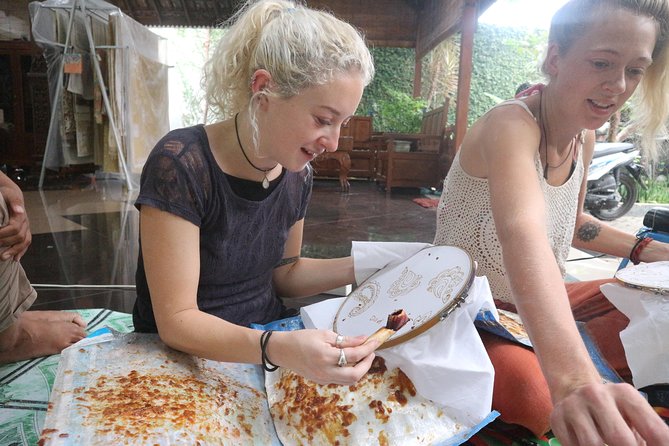
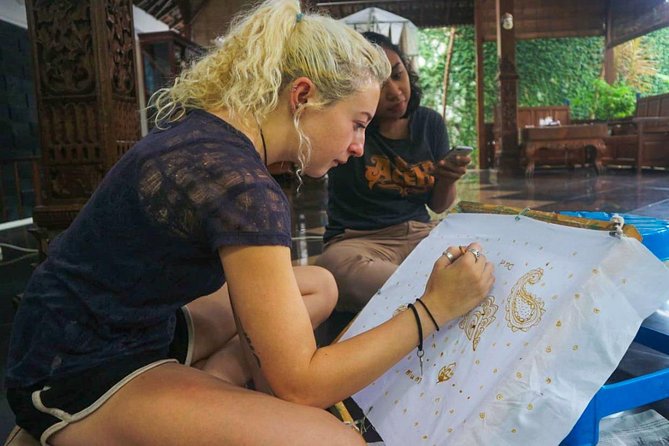
Your work begins with the design. You can select from prepared patterns, combine elements, or try freehand drawing. A tracing table helps if you are not confident with a pencil.
That is an important detail for beginners. You do not need to arrive with drawing skills or a finished idea. The available patterns give you a starting point, while the option to combine designs lets you make something more personal.
The class focuses on typical Malang art patterns, so your finished cloth can carry a local visual connection rather than looking like a generic craft project. The drawing stage is also where you decide how ambitious to be. A smaller, simpler pattern will be easier to wax neatly. A more detailed design may look striking, but it requires patience.
I would take a few minutes here. The wax stage cannot easily correct a rushed sketch. If you are making the class part of a larger day, you may be tempted to hurry, but the drawing determines how manageable the next step will be.
Using the canting and organic wax
After the design comes the most distinctive part of the class: applying wax to the fabric. You use a traditional canting, a small tool that carries liquid wax and lets you trace the pattern by hand.
This is where the class becomes a real practical lesson. The wax must cover the lines well enough to block the dye, but the process is controlled by hand. Your lines may not be perfectly even, especially at first. That is normal for a first batik attempt.
The instructors guide you through the technique and help when the tool feels awkward. This support is one of the strongest reasons the class works for beginners. You are not expected to master the canting immediately.
Hot wax also means you need to pay attention. Children can participate, but they must be accompanied by an adult. I would stay close during this stage and follow the instructor’s directions carefully.
The use of organic wax and dye ingredients gives the activity an extra environmental and local-production angle. The colors are described as earthy, so do not expect a palette of bright synthetic shades. The softer tones suit the handmade quality of the piece.
Still Malang, at a slower pace:
- 1 Day – Bromo Afternoon Siesta Tour start MALANG or SURABAYA // 11:00 – 18:00
★ 5.0 · 114 reviews - Mount Bromo Sunrise Private Trip
★ 5.0 · 106 reviews - 3D2N – Mount Bromo, Tumpak Sewu, Kawah Ijen Crater start from Malang or Surabaya
★ 5.0 · 104 reviews - 1 Day – ULTIMATE TOUR Tumpak Sewu Waterfall and Goa Tetes cave // 07:30 – 17:30
★ 5.0 · 95 reviews
Watching the pattern appear through dye
Once the wax lines are in place, you move to coloring. Organic ingredients are used to apply dye and create the cloth’s earthy tones.
This stage shows the logic of batik clearly. Areas protected by wax resist the color, while the uncovered fabric absorbs it. What looked like a simple pencil sketch begins to take on the character of finished batik.
You may find that the final color is not exactly what you expected. That is part of working with organic materials and hand-applied dye. The process is less predictable than printing a pattern in a factory, but the result has more of a personal mark.
The cloth is then dried, and the wax is melted off. This final treatment reveals the pattern more clearly and makes the piece easier to take with you. Several accounts describe receiving fabric prepared for onward travel, which is useful if Malang is only one stop on your trip.
Allow room in your luggage for the finished cloth. It is a practical souvenir because it is light, personal, and connected to something you made yourself.
Meeting the women behind the workshop
The setting is a local artisan house, and the teaching is carried out by local women artisans. That changes the tone of the activity. You are not only learning a technique; you are seeing how creative work can fit into home life and provide an income.
The instructors are described as helpful and experienced, with step-by-step explanations. That matters because batik has several unfamiliar tools and stages. A good teacher can prevent the wax from becoming frustrating.
The local women involved in the program also make the class more personal than a standard souvenir stop. You can ask questions about the process and see the care that goes into a cloth made by hand.
Communication and teaching styles may vary in a small local workshop. You should expect practical demonstrations and guidance rather than a formal museum lecture. For most people, that is a strength. The class is about doing the work, not sitting through a long presentation.
A private class with room for different ages
Because this is a private activity, your group does not share the class with strangers. That makes it easier to work at your own pace and ask for help when you need it.
Families can take part, provided children are accompanied by an adult. Two eight-year-old children reportedly completed the class successfully, so the activity can suit younger participants who enjoy careful creative work.
Still, batik is not a completely carefree finger-painting session. Drawing takes concentration, waxing involves heat, and coloring requires patience. Very young children may need an adult to handle or closely supervise some parts.
The activity also suits couples, siblings, friends, and solo participants who prefer a calm morning. You can be artistic, but you do not need to be. The tracing patterns and instructor support take away much of the pressure.
What the $35 price really covers
At $35 per person, this class is priced above a simple craft demonstration but includes more than just instruction. The fee covers all activities, bottled water, a driver or guide, and hotel pickup and drop-off.
That makes the value depend partly on your transport needs. If you would otherwise pay for a private ride to and from a workshop, the included transfers make the price more attractive. You are also paying for materials, instruction, and the time needed to complete your own fabric.
The strongest value comes from the finished item and the process behind it. A shop-bought batik cloth may be easier, but it will not give you the memory of drawing the design, handling the canting, and watching the dye reveal the pattern.
Food and drinks are listed as excluded unless specified. One family account says lunch was included, so there is a small inconsistency in the available information. I would ask the operator directly before the day begins. If lunch is not included, bring money or make your own plan for food afterward.
What could disappoint you
The workshop is a good choice for a relaxed cultural activity, but it is not ideal if you want a fast, highly polished production. Five hours is a substantial portion of the day, and much of it involves careful handwork.
The final design may also show beginner mistakes. Wax lines can vary, and organic dyes may create earthy colors rather than precise shades. That is not a flaw in the class, but you should choose it because you want to make something, not because you expect factory-perfect fabric.
The local-house setting may feel simple. If you prefer a large studio with display cases, fixed demonstrations, and a retail area, this may feel less formal. I see the modest setting as part of its appeal, but it will not suit every style of sightseeing.
Finally, confirm your meal arrangements and pickup time. The operator has shown flexibility with timing, but the published start remains 8:00 am, and late changes may not be accepted.
Who should book the Malang batik class
I would recommend this for you if you want a cultural activity that keeps your hands busy. It works particularly well for:
- Families with children who can follow instructions
- Couples looking for a shared creative activity
- Visitors who want a handmade Indonesian souvenir
- People interested in women-led local work
- Beginners who feel unsure about drawing or crafts
- Anyone with a free half-day in Malang
I would be less enthusiastic if you have only a short time in the city or dislike slow, detail-based activities. You should also think twice if you want to visit several sights during the same morning, since the class takes about five hours including its broader schedule.
Booking, timing, and cancellation details
Confirmation is provided at the time of booking, and the tour accepts mobile tickets. Pickup and drop-off are included, but you should provide accurate hotel information and clarify any requested timing change.
The activity is private, and most people can participate. Children must be accompanied by an adult.
Free cancellation is available when you cancel at least 24 hours before the local start time. Cancellations made less than 24 hours in advance are not refunded, and changes inside that period are not accepted.
Should you book this class?
Book it if you want to understand batik by making it yourself. The combination of a local home setting, women artisans, traditional canting work, organic dye, and hotel transport gives the activity a useful balance of culture and convenience.
At $35, it is a fair choice for a five-hour private class, especially when you value the finished fabric and included transfers. Just confirm the lunch question, allow enough time for careful work, and expect an individual handmade result rather than a perfect commercial product.
For a quiet, creative morning in Malang, I would put this high on your list.
FAQ
How long does the Malang batik class last?
The class lasts approximately five hours.
What time does the experience start?
The listed start time is 8:00 am.
Is hotel pickup and drop-off included?
Yes. Hotel pickup and drop-off are included, along with a driver or guide.
Is this a private activity?
Yes. Only your own group participates in the activity.
What will I learn during the class?
You will learn to draw a pattern, apply wax to the fabric with a traditional canting, and color the fabric using organic ingredients.
Can children participate?
Yes. Children can participate, but they must be accompanied by an adult.
Can I cancel for a full refund?
Yes, if you cancel at least 24 hours before the experience start time. Cancellations made less than 24 hours in advance are not refunded.
Just added around Malang
- Tumpak Sewu Waterfalls★ 5.0 · 6 reviews
- 4-Day Tour: Mt Bromo & Ijen, Tumpak Sewu & Madakaripura falls★ 5.0 · 3 reviews
- Waterfalls Tour★ 5.0 · 39 reviews
- Private Tour in Tumpak Sewu Waterfalls from Malang or Surabaya★ 5.0 · 39 reviews
- Mount Bromo & Ijen 2D1N Start from Malang & Surabaya Sharing Tour★ 5.0 · 5 reviews
- Tumpak Sewu Waterfall & Tetes Cave: A Trip from Malang & Surabaya★ 5.0 · 50 reviews
- 3D2N Ultimate Tumpak Sewu, Bromo & Ijen Adventure Tour★ 5.0 · 10 reviews
- Mount Bromo Sunset Escape – Depart from Surabaya or Malang★ 5.0 · 6 reviews
Workshops, compared.

PRIVATE Authentic Balinese Cooking Class in Ubud at Putu’s Home
Read our review →

Learn to cook Indonesian food at Gili Cooking Classes Trawangan
Read our review →
Browse the lists this tour appears in