
Reviewed · CITY TOURS
Denpasar City Food Tour (Day Tour)
Denpasar serves Bali on a plate. This three-hour walking food tour takes you beyond the resort strip and into the capital’s everyday food life, with ten Indonesian and Balinese dishes included. I like the focus on independent local places, and I like that food comes with stories about Denpasar’s markets, parks, temples, and old shops. The main concern is reliability: one booking reported that the guide did not appear and did not answer messages, so confirm the meeting details before you go.
I also like the small maximum of ten people, which should make it easier to hear the host and ask questions. At $100, the price is not cheap for a three-hour outing, but it includes all food, nonalcoholic drinks, coffee or tea, snacks, bottled water, and lunch. You should arrive hungry, since the morning meal is part of the value here.
In This Review
- What makes this Denpasar food walk worth considering
- Why Denpasar makes a better food setting than the resort strip
- Starting with Bali coffee at Bhineka Djaja
- Pasar Badung: the strongest stop for local food context
- Puputan Square and the city’s public memory
- Pura Jagatnatha and Denpasar’s cultural center
- Satay, soup, and the important pork question
- The old cake shop and Indonesian sweets
- Ending with nasi campur or babi guling
- What $100 gets you in three hours
- The guide can make or break the outing
- Who should book this Denpasar food tour?
- FAQ
- Where does the Denpasar food tour start?
- What time does the tour begin?
- Where does the tour end?
- How long does the tour last?
- How many foods will I try?
- Is lunch included?
- Is there a halal option?
- Is transportation included?
- Should you book it?
What makes this Denpasar food walk worth considering
- Ten local foods in three hours: You sample coffee, curry, salads, snacks, satay, soup or curry, cakes, and a full rice meal.
- Pasar Badung at the center: You visit Bali’s first traditional market and try food in a place used by local residents, not a restaurant built for sightseeing.
- A useful halal choice: You can choose beef soup or goat satay and goat curry instead of pork dishes.
- Food tied to city history: Puputan Badung Park and Pura Jagatnatha give the meal stops a cultural setting.
- A proper local-food finish: The final dish is nasi campur or babi guling, two filling ways to end the walk.
- A compact small-group format: The group is capped at ten, though you arrange your own transport to the start and finish.
Why Denpasar makes a better food setting than the resort strip
Many people arrive at Bali’s airport and assume they are already in Denpasar. They are not. The airport is outside the city, about 10 kilometers away, and Denpasar has a different feel from Seminyak, Kuta, or the southern beach areas.
That difference matters. Denpasar is a working city and a major place for local life, shopping, worship, and food. You are not simply moving between restaurants aimed at international visitors. The route is built around places with local use and long-running traditions.
I like that this tour treats food as a way to understand the city. A curry at a market, a snack eaten near a public square, and a rice plate at the end tell you more about daily Bali than another polished restaurant meal might. You also get a short look at central Denpasar’s heritage sites, so the walk has more shape than a string of tastings.
The tradeoff is comfort. A local market and city streets can feel less tidy, quiet, or predictable than a resort dining room. You should choose this tour for the food and setting, not for air-conditioned ease.
More City Tours in Seminyak and Kuta
- Highlights & Hidden Gems of Bali: Private City Tour
★ 4.5 · 19 reviews - Private Half-Day Tour: Denpasar City Trip
★ 4.5 · 10 reviews - Bali Full Day-Tour: Denpasar City and Uluwatu Sunset Tour
★ 5.0 · 8 reviews
Starting with Bali coffee at Bhineka Djaja
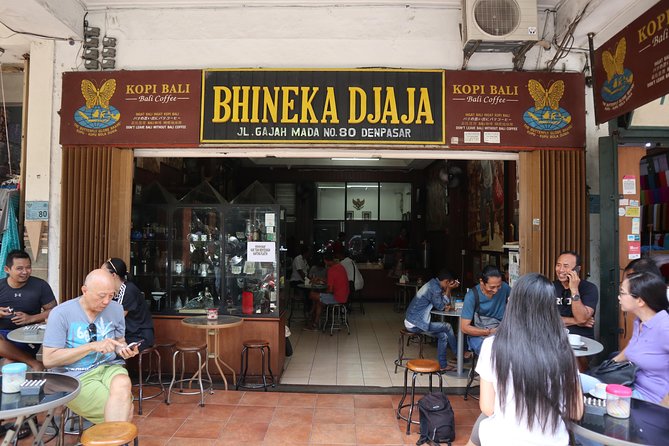
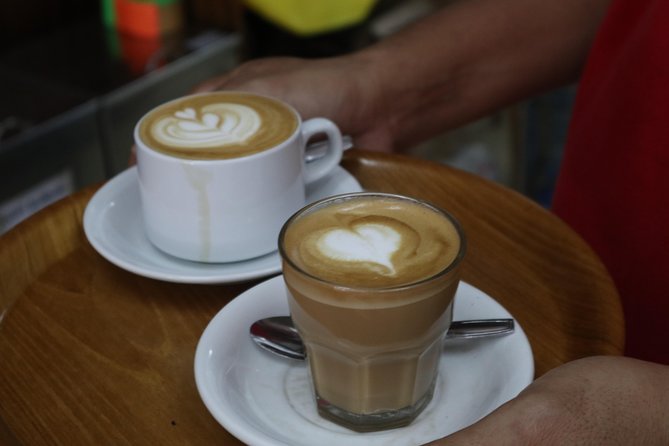
The meeting point is Bhineka Djaja, also known as Kopi Bali, at Jl. Gajah Mada No. 80 in northern Denpasar. The start time is 10:00 a.m., and this coffee shop is presented as the first coffee shop in Bali.
That gives the tour a fitting opening. Coffee is not just a quick drink here. It introduces you to one of Indonesia’s familiar daily rituals before you start eating your way through the city.
You receive coffee or tea as part of the tour. If you have strong coffee preferences, ask the host what is being served when you arrive. The supplied information does not specify a brewing method, roast, or exact drink size, so it is best to treat this as a local tasting rather than a specialty-coffee class.
The address is useful for planning. The tour begins and ends at the same point, and private transportation is not included. You need to arrange your own way to Bhineka Djaja, then collect yourself there again at the end.
Pasar Badung: the strongest stop for local food context
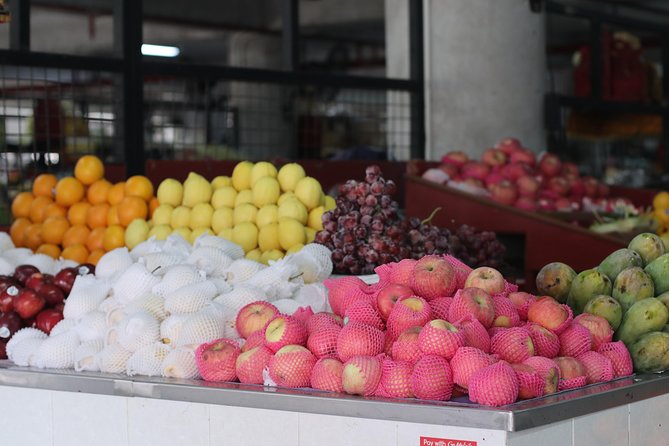
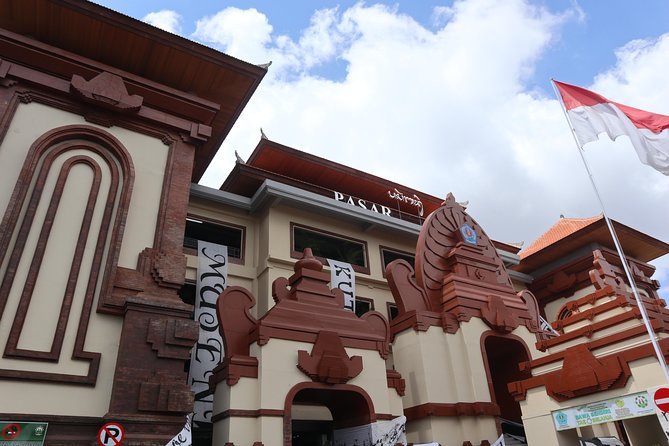
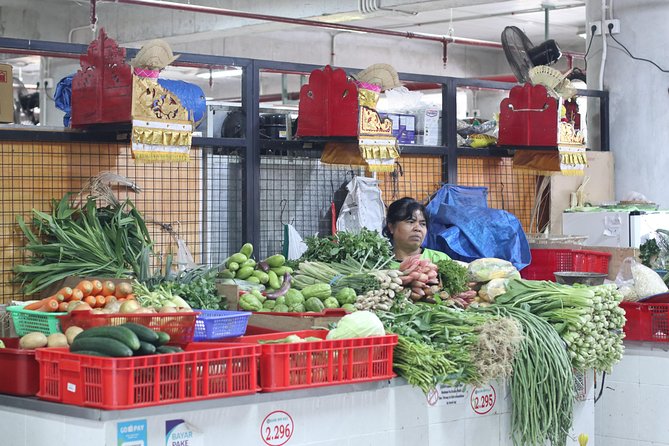
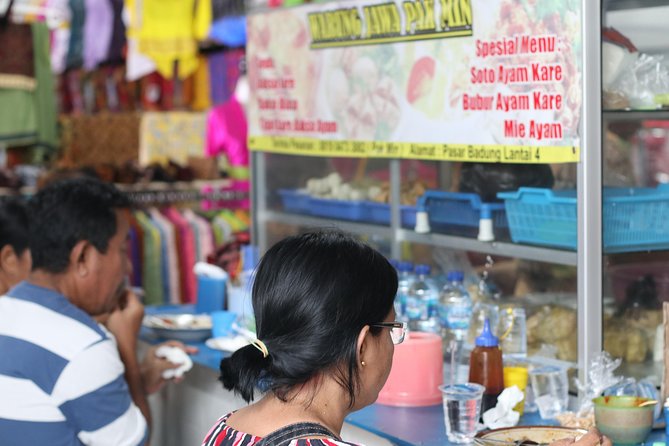
Pasar Badung is the food heart of the route. It is described as Bali’s first traditional market, and the stop gives you a chance to see where local ingredients and prepared foods meet.
The market visit is not only for looking around. You try the famous curry served there, along with an east Bali salad, a traditional Balinese snack, and a local drink. That is a lot of variety in one stop, so you will want to manage your portions even though the tour begins with a warning not to eat breakfast.
I appreciate the way this stop connects food to place. A curry eaten inside a traditional market has a different meaning from the same dish served in a hotel dining room. You get the chance to see a food setting that is part of ordinary Denpasar life, and the host can explain what makes the dishes local.
This is also where the tour may feel most intense. Markets are active places, and you may be walking, standing, and eating in a setting that is more functional than decorative. If you prefer carefully plated food and a slow sit-down meal, this may not be your favorite part. If you want to understand how the city eats, it is likely to be one of the most useful stops.
Puputan Square and the city’s public memory
From the market, the walking route continues to Puputan Square, also called Puputan Badung Park. The host gives a short account of its history and uses the park as the setting for two popular local snacks.
This pairing works well. You do not just hear about an important place and then return to a vehicle. You pause in the square, learn why it matters, and eat foods that local people enjoy when visiting the park.
The provided details do not name the two snacks, so you should not book this expecting a fixed list. Menus and food availability can change. The useful point is that you get two more small tastes in a public city setting, after the market dishes and before the heavier meal later.
For me, the value here is the change of pace. The market introduces ingredients and prepared food. The square adds civic history and space to breathe. It helps the tour feel like a city walk with food, rather than a restaurant crawl.
More Food and Drink Tours in Seminyak and Kuta
- Bali Private Food Walking Tour With Locals: The 10 Tastings
★ 5.0 · 243 reviews - Bali Bites Food Tour with 15+ Tastings
★ 5.0 · 114 reviews - Chef Bagus Balinese Indonesian Food Cooking Class
★ 5.0 · 89 reviews - Taste & Explore Bali: Denpasar Street Food & Historic Sites
★ 4.5 · 27 reviews
Pura Jagatnatha and Denpasar’s cultural center
Pura Jagatnatha is another listed stop. The itinerary does not specify the length of the visit or whether you enter the temple, so you should think of it as a heritage and cultural point along the walk rather than a full temple tour.
Its presence adds context to the meal stops. Denpasar is not presented only as a place to eat. You also see a site connected to Balinese religious life, alongside the market and public square.
Dress and visitor rules are not provided in the tour details. You should follow the host’s instructions and respect local temple customs. Do not assume that a short stop means you can walk everywhere or take photographs without asking.
The tour’s cultural content appears to be brief and practical. If your main goal is a detailed study of Balinese temples, you will need a separate visit. If you want a food walk that includes a little city context, Pura Jagatnatha fits the plan.
Satay, soup, and the important pork question
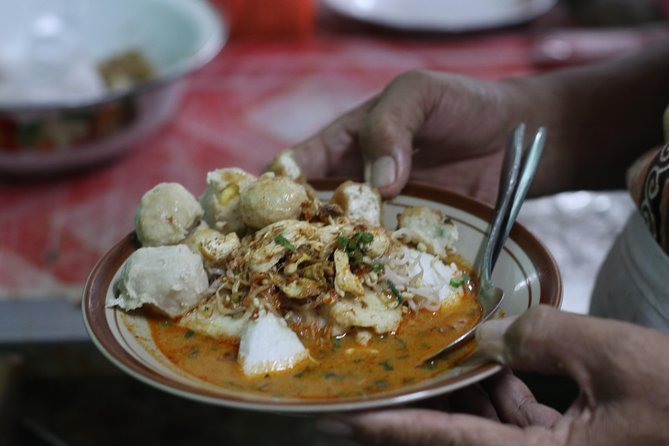
One of the more substantial food stops centers on famous pork satay and beef soup. For a halal option, the route offers goat satay and goat curry instead.
This is an important detail to settle before you start. Pork is common in Balinese cuisine, and the final meal may also be babi guling, or suckling pig. If you eat halal, tell the provider when booking and confirm the available substitutions. The tour specifically lists beef and goat alternatives, but it does not provide a separate halal menu for every single tasting.
I like that the tour makes the choice clear instead of pretending that all Balinese food is interchangeable. Food restrictions can change the experience, but you still have a substantial route with meat, curry, snacks, and rice dishes.
You should also remember that this is a tasting tour, not ten tiny samples of one category. By this point, you may have eaten several snacks and savory dishes. The no-breakfast advice is practical, but arriving too hungry can make a three-hour food schedule feel rushed. A light start may be wise if you know you cannot comfortably handle a large amount of food before lunch, though the tour strongly encourages you to come without breakfast.
The old cake shop and Indonesian sweets
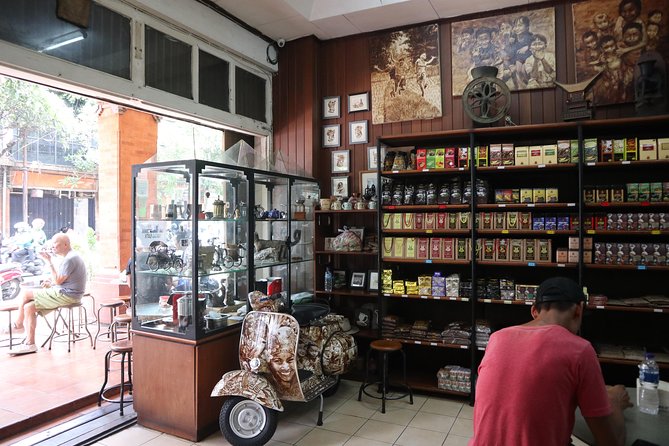
The route then visits the oldest traditional Toko Kue, or cake shop, and includes Indonesian delicacies. This is a nice change from curries and grilled meat.
Indonesian cake shops often cover a broad range of sweet and snack-like foods, but the exact items are not named here. You should expect local delicacies rather than European pastries or a standard dessert tasting. The point is to see an older style of food business and try things you might miss on a restaurant menu.
This stop may appeal most to curious eaters. If you like comparing texture, sweetness, and the use of local ingredients, it gives the tour another layer. If you do not care for sweet foods, ask for a small portion so you can save room for the final meal.
The age of the shop is part of the appeal, but the supplied information does not give its name or founding date. Keep your expectations practical: this is a tasting stop with a story, not a formal historical presentation.
Ending with nasi campur or babi guling
The final stop is the meal that brings everything together. You finish with nasi campur, a mixed rice plate, or babi guling, the Balinese suckling-pig dish. The halal option is nasi campur, while the pork route includes the famous babi guling.
Nasi campur is a sensible ending after a tour built around many small tastes. Rice and several side dishes give you a complete meal, while babi guling offers a signature Balinese food for those who eat pork.
Because lunch is included, this is more than a snack crawl. You are paying for a sequence of foods that ends with something filling. All food and nonalcoholic drinks are included, along with bottled water, coffee or tea, and snacks. Alcohol is not included, and not every stop serves it.
The food list is broad, but you should not expect a precise ten-course menu printed in advance. The description identifies the main categories and stops, while some individual snacks remain unspecified. That flexibility is common on local food walks, but it means you should ask about substitutions if you have allergies or dietary limits.
What $100 gets you in three hours
At $100, this is a costly three-hour activity compared with buying individual dishes in Denpasar. The price makes more sense if you value the guide, the route planning, the explanations, and the chance to find established local food places without having to research them yourself.
You also receive ten types of food, lunch, drinks, coffee or tea, snacks, and bottled water. The group limit of ten is another plus. A small group can keep the walk moving and make it easier for the host to explain dishes or adjust for halal needs.
Private transportation is not included. That matters because Denpasar is separate from the airport and the resort districts. Your cost is therefore not finished when you pay for the tour. You still need to reach Bhineka Djaja at 10:00 a.m. and return from the same meeting point after the activity.
I would call this good value for a visitor who wants a guided introduction to Denpasar and would otherwise spend time guessing where to eat. I would call it less attractive for an experienced Bali eater who already knows the city’s markets and food stalls.
The guide can make or break the outing
The host associated with the tour is Ratih, the founder of Bali Bite & Beyond Food Tour. The strongest praise focuses on her friendly approach, her ability to identify good local places, and her explanations of regional differences in Indonesian food.
That combination is important. A food guide should do more than point at a plate and name it. You want help understanding why one dish belongs to Bali, how regional cooking changes the flavor, and what makes a market or old shop worth visiting.
There is also one serious operational warning. A booking was reported in which the guide did not arrive, did not answer WhatsApp messages, and did not respond to a phone call. That is not a minor inconvenience for a tour with a fixed meeting point and a $100 price.
I would message the provider shortly before the day of the tour and confirm the 10:00 a.m. start at Bhineka Djaja. Keep the confirmation and meeting details handy. The activity has free cancellation up to 24 hours before the start time, but changes or cancellations inside that window are not accepted for a refund.
Who should book this Denpasar food tour?
I would recommend it to you if you want to get away from resort dining and try Indonesian and Balinese food in local settings. It suits first-time visitors who want a guided introduction, especially if you enjoy learning the story behind a dish instead of simply taking a photograph of it.
It also suits people who like variety. In three hours, you move from coffee to market curry, salad, snacks, satay, soup or goat dishes, cakes, and rice meals. The route has enough range to show that Balinese food is not just one famous pork dish.
You should think twice if you need strict dietary control, dislike pork-related food settings, or want a slow, polished lunch. Ask about halal arrangements before booking, and confirm how substitutions will work.
I would also avoid booking this as your only Denpasar plan if you expect a long guided visit at every heritage site. The cultural stops support the food route, but food is clearly the main event.
FAQ
Where does the Denpasar food tour start?
It starts at Bhineka Djaja, also known as Kopi Bali, at Jl. Gajah Mada No. 80, Dauh Puri Kaja, Denpasar.
What time does the tour begin?
The tour starts at 10:00 a.m.
Where does the tour end?
The activity ends back at the same meeting point where it starts.
How long does the tour last?
The tour lasts approximately three hours.
How many foods will I try?
The tour includes ten types of Indonesian or Balinese food.
Is lunch included?
Yes. All food and nonalcoholic drinks are included, and the tour ends with nasi campur or babi guling, depending on your food choice.
Is there a halal option?
Yes. The tour offers beef soup or goat satay and goat curry as halal alternatives to some pork dishes. Confirm your requirements with the provider before the tour.
Is transportation included?
No. Private transportation is not included, so you must arrange your own transport to and from the meeting point.
Should you book it?
I would book this tour if your priority is local food, market life, and a short introduction to central Denpasar. The mix of ten foods, heritage stops, a small group, and a final rice meal gives you more substance than a simple tasting walk.
The $100 price is fair only if you use the guide’s local knowledge and eat most of what is offered. If you decide to book, arrive without breakfast, confirm the meeting arrangements with Ratih or the provider, and state any halal or dietary needs in advance.
The no-show report is the one reason I would not book without a final confirmation. If the operator confirms clearly, this could be one of the more useful ways to spend a morning in Denpasar, especially for anyone ready to trade resort menus for the real city plate.
Just added around Seminyak and Kuta
- Bali-Nusa Penida. East Part. Private car. All-inclusive★ 4.5 · 15 reviews
- Ubud Private Tour : Ubud Temple and Authentic of Ubud★ 5.0 · 18 reviews
- Bali Swing Hot Spring And Waterfall Private Guided Tour★ 5.0 · 50 reviews
- Ubud Monkey Forest Sanctuary Tours and Cretya★ 5.0 · 3 reviews
- Ubud Tours and Cretya Day Club Pool★ 5.0 · 3 reviews
- Bali Adventure Tour: Hidden Canyon, Tegenungan Waterfall, Goa Gajah temple★ 5.0 · 48 reviews
- Penglipuran Village Waterfall Swing Private Guided Tour★ 5.0 · 13 reviews
- Bali Sightseeing Car Hire with English-speaking Guide and Driver★ 5.0 · 24 reviews
City Tours, compared.

Jakarta Heritage of Old Batavia Private City Tour (Historical)
Read our review →
Jakarta Half-Day Sightseeing Tour To Modern City and Old Town
Read our review →
Halfday Excursion Old city Batavia with Lunch and Souvenir
Read our review →
Borobudur and Prambanan Tours from Yogyakarta City
Read our review →
4 Hours Jakarta Private City Tour – (Most Tourist Attractions)
Read our review →
Highlights & Hidden Gems of Bali: Private City Tour
Read our review →
Jakarta Half Day Visit The Monument with Highlight City Tour
Read our review →Browse the lists this tour appears in