
Reviewed · 3-DAY EXPERIENCES
3-Day Freediving Level 1 Course
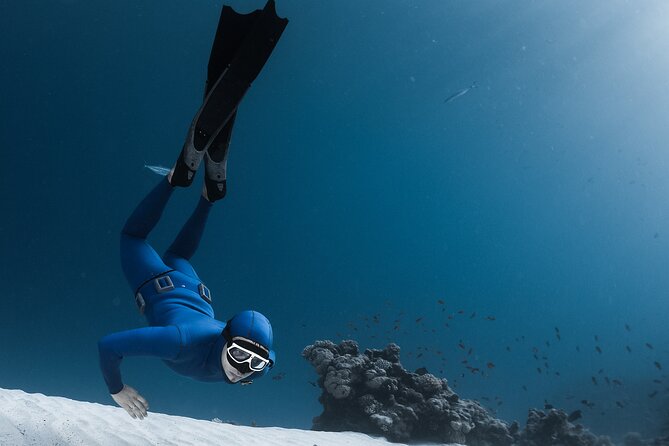
The quiet below the surface changes everything. This three-day Nusa Penida course gives you a careful introduction to freediving, with classroom lessons, pool work, and open-ocean practice. I like the four-student maximum per instructor, which allows for close attention, and I like that equipment, certification, and digital learning materials are included. The main drawback is the full daily schedule, from 8:30 a.m. to 4:30 p.m., with lunch, accommodation, and private transport left to you.
You do not need past freediving experience. You only need to be able to swim and have a moderate level of fitness. By the end, many students reach 15 to 20 meters, or about 50 to 65 feet, on one breath and hold their breath for more than two minutes. Those are useful goals, but your own progress will depend on comfort, technique, and how your body responds.
In This Review
- Key points before you book
- What three days in Nusa Penida are designed to teach
- Day 1: Theory, comfort, and the first confined-water session
- Day 2: Building technique before going farther
- Day 3: Open-water sessions and measurable progress
- Why the four-person group size matters
- The instructors and the learning atmosphere
- What the $450 price includes
- Practical planning for your Nusa Penida stay
- Who will get the most from this course?
- Should you book the Nusa Penida Level 1 course?
- FAQ
- Where does the freediving course take place?
- How long is the course?
- Do I need previous freediving experience?
- Do I need to know how to swim?
- How many students are in each group?
- What water sessions are included?
- What depth might I reach by the end?
- How long might I hold my breath?
- Is equipment provided?
- Is certification included?
- Are meals and accommodation included?
- Can I cancel for a full refund?
Key points before you book
- Small groups of four: The instructor-to-student ratio is unusually personal for a beginner course.
- Three kinds of practice: You receive theory on land, two confined-water sessions, and three open-water sessions.
- No special kit required: Freediving equipment is supplied, so you do not need to buy fins, masks, or other essentials before arrival.
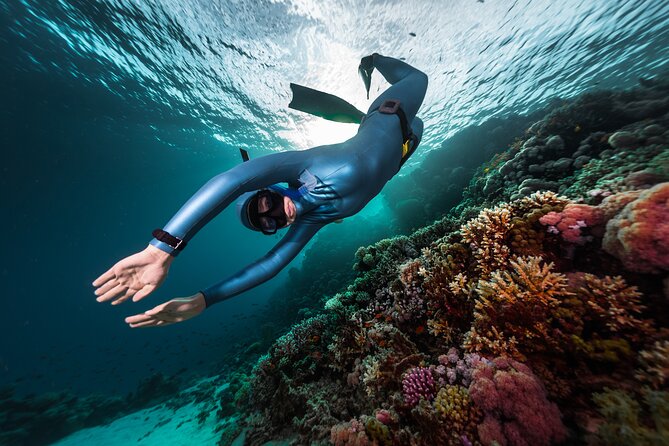
- Underwater photos included: You can take home digital images of yourself among coral and tropical fish.
- A real qualification: The course includes freediving certification and digital study materials.
- A serious but friendly introduction: Instructors such as Sabli, Artem, Roberto, Seva, Hamza, Gaston, Gas, and Chiara are praised for clear teaching, patience, and steady encouragement.
What three days in Nusa Penida are designed to teach
This is not a quick photo stop with a mask and snorkel. It is a structured Level 1 course intended to help you understand breath control, body position, safety, and the mental side of staying calm underwater.
The program runs for three days, roughly 8:30 a.m. to 4:30 p.m. each day, including a lunch break. That is a substantial block of time, but it gives the instructors room to introduce a skill, watch you try it, correct your form, and let you repeat it without rushing.
The course combines land-based theory with practical sessions. That matters because freediving is not just about holding your breath for as long as possible. You need to understand how to prepare, how to move with less effort, and how to return safely to the surface.
No previous water-sport experience is required. Still, the swimming requirement is important. You should be comfortable enough in water to follow instructions and stay focused rather than spending all your energy simply staying afloat.
A few more Nusa Penida trips worth comparing
- ️Nusa Penida by Private Boat – Snorkeling 4 spots, Swim with Mantas + Land Tour
★ 5.0 · 6,424 reviews - One Day Nusa Penida Island West with Snorkeling
★ 4.5 · 560 reviews - Nusa Penida Two Dives Trip for Certified Divers
★ 5.0 · 197 reviews
Day 1: Theory, comfort, and the first confined-water session
Your first day begins at Freedive Nusa, on Jl. Ped Buyuk in Ped, Nusa Penida. The early start means you should plan your morning carefully, especially if you are coming from another part of Bali.
The opening lessons take place on land. You learn the basic ideas behind freediving before heading into the water. The exact order of each lesson is not specified, but the course includes theory and practical work on land, followed by confined-water training.
For a beginner, this gradual start is one of the best parts of the program. Many people are uneasy at first about not breathing underwater. One participant described being afraid of that feeling at first, then becoming comfortable step by step with support from instructor Roberto. That is the right way to approach the sport. You are not expected to switch off your instincts in one morning.
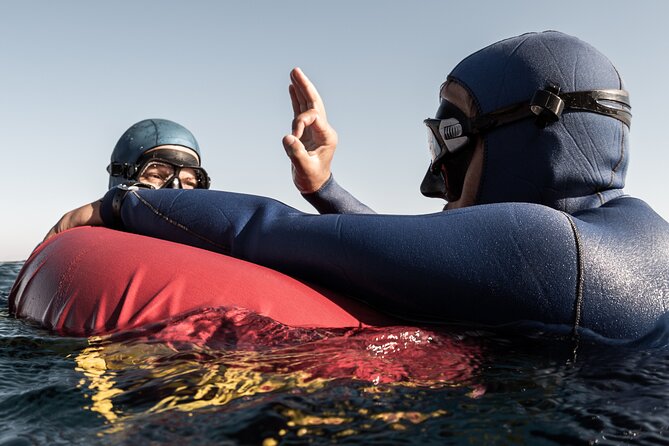
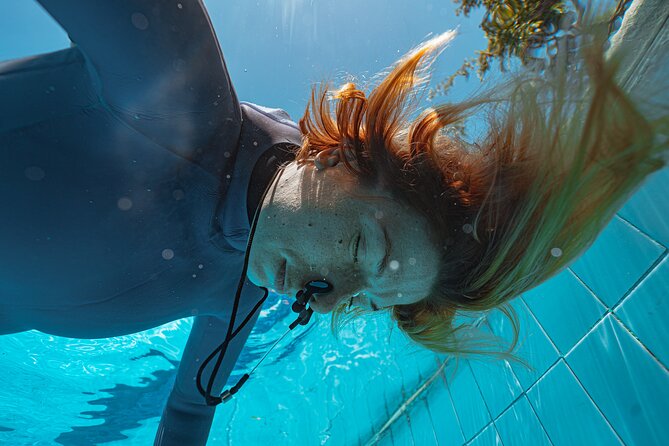
The first confined-water session gives you a controlled setting in which to test breathing and movement. It is also where an instructor can watch small details that are hard to notice alone. The four-person group limit is especially useful here. You are not lost in a large class, and the teacher can give each person direct feedback.
The staff style appears to be encouraging rather than harsh. Artem is praised for taking care of each student while still nudging people toward a reasonable challenge. That balance matters. You want an instructor who helps you progress, but not one who treats a beginner’s nerves as a problem.
Day 2: Building technique before going farther
The second day continues the mix of study and water work. You receive the second confined-water session and begin the open-ocean portion of the course.
Confined water is valuable because it lets you focus on technique without the added pressure of a larger natural setting. It gives you a chance to repeat the basics, notice where you tense up, and learn to use your body more efficiently.
The open ocean adds a new layer. You are now working in the setting that makes Nusa Penida appealing, with coral and tropical fish available around the underwater sessions. The surroundings are not just decoration. They give you a reason to practice calm movement and look around, rather than treating the lesson like a timed test.
At the same time, the ocean can feel more demanding than a pool. Your comfort level may change, and your depth may not match the course’s typical 15 to 20-meter result. That is not a failure. The advertised figures are what most students can achieve by the end, not a promise that every person will reach the same number.
The instructors’ personal approach is a strong asset here. Seva is praised for being patient, kind, funny, and attentive to safety. Gas and Chiara are described as relaxed and clear in their teaching, with theory presented in a way that made the main points easy to remember.
Those details suggest a course that does not separate safety from enjoyment. The goal is not only to reach a depth. It is to learn enough control that you can enjoy the underwater world without panicking or wasting energy.
Day 3: Open-water sessions and measurable progress
The final day includes the remaining open-water work. In total, the course provides three open-water sessions, along with the two confined-water sessions and land instruction.
This is where you can bring together the pieces from the first two days. You have studied the principles, practiced in controlled water, and then adjusted to the ocean. The final session gives you a chance to see what has changed.
Most students finish able to hold their breath for more than two minutes and reach 15 to 20 meters on a single breath. Those figures provide a useful benchmark, but the best measure of success may be simpler: Can you descend calmly, move with less effort, and return to the surface feeling in control?
You also receive underwater photographs of yourself among coral and tropical fish. That is a pleasant extra, particularly because freediving can be hard to document when you are concentrating on the experience. The photos give you a record of your progress and a souvenir that feels connected to the course rather than added as a separate paid photo session.
The course ends back at the meeting point. It includes certification and digital learning materials, so you leave with more than a memory and a few pictures. You have a qualification and study content that can help you continue practicing.
Still Nusa Penida, at a slower pace:
- Two fun dives morning trip (Certified Divers only)
★ 5.0 · 170 reviews - Snorkeling Manta Ray Safari in Nusa Penida
★ 4.0 · 167 reviews - Snorkeling and Freediving Trip around Nusa Penida
★ 4.5 · 77 reviews - Nusa Penida Three Dives Trip for Certified Divers
★ 5.0 · 66 reviews
Why the four-person group size matters
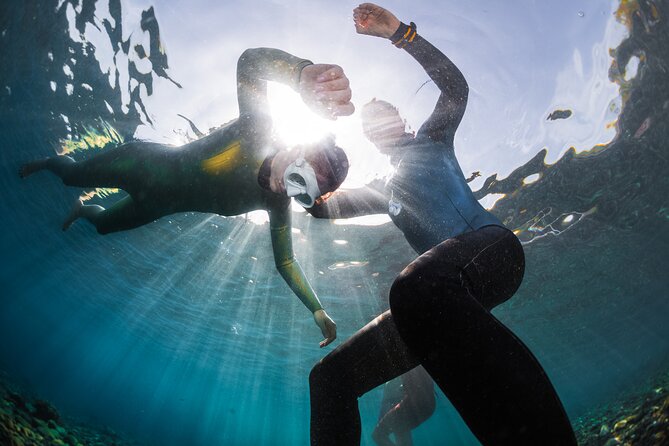
A maximum of four students per instructor is one of the clearest reasons to consider this course. Freediving requires close attention to safety, breathing, and technique. A large class would make it harder for an instructor to spot tension, hesitation, or poor form.
A small group also makes the course feel more intensive. You are likely to receive direct corrections instead of general advice meant for everyone. The experience may still feel social, but it is not a crowd activity.
There is one tradeoff. A small-group course can feel more personal, but it also means your daily progress is visible to the instructor and the other students. If you prefer to stay anonymous while learning a new physical skill, this setup may feel more exposed. For most beginners, that is a useful kind of attention.
The instructors and the learning atmosphere
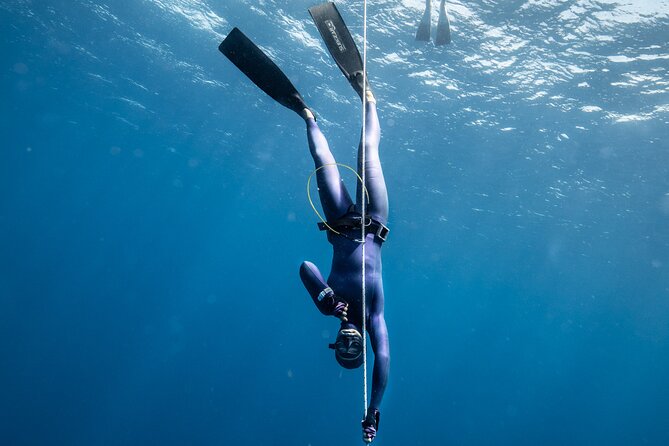
The strongest theme in the available feedback is the teaching. Sabli is praised for clear explanations, good equipment, and careful organization. Artem receives credit for being considerate while still helping a beginner move toward a challenge.
Roberto is singled out for making a nervous beginner feel supported. Seva is praised for patience, kindness, humor, and a strong sense of care. Hamza is described as extremely patient and kind, helping a beginner gain confidence. Gaston is praised for professionalism and support, while Gas and Chiara receive credit for making theory simple to remember.
You should not assume you will be assigned a particular instructor. The course uses several teachers, and availability can vary. Still, the consistent picture is useful: the school’s strength is its patient, encouraging approach, not just the tropical setting.
That matters because breath-hold activities can trigger fear. Good instruction does not mean pushing you to ignore that fear. It means helping you understand it, work gradually, and know when to stop.
What the $450 price includes
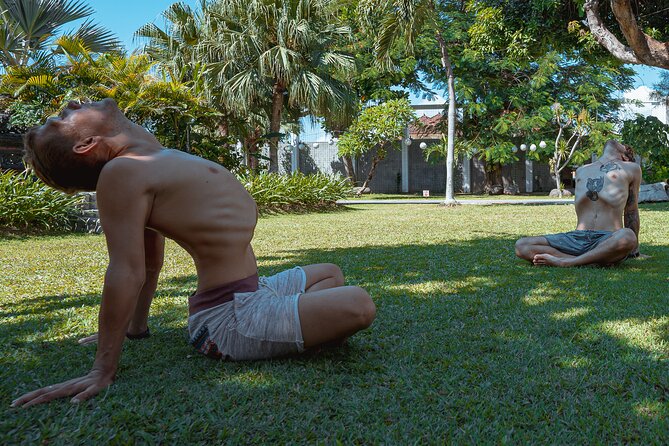
At $450 per person, this is a significant activity cost. The value depends on whether you want a proper qualification or simply want to try a short underwater excursion.
The fee includes:
- Freediving equipment
- All fees and taxes
- Freediving certification
- Digital learning materials
- Underwater photos, as described in the course highlights
Equipment is a meaningful saving for a first course. You do not have to purchase the basic kit before knowing if you enjoy the sport. The certification and three full days of instruction also make the price easier to justify than a one-hour recreational session.
You still need to budget for lunch, accommodation, and private transportation. Those exclusions are important. The course starts and ends at Freedive Nusa in Ped, Nusa Penida, so getting there and arranging somewhere to stay are your responsibility.
For someone already planning several days on Nusa Penida, the course can make good use of the island stay. For someone visiting Bali on a tight schedule, the added transport and lodging costs may make the total higher than the advertised price.
Practical planning for your Nusa Penida stay
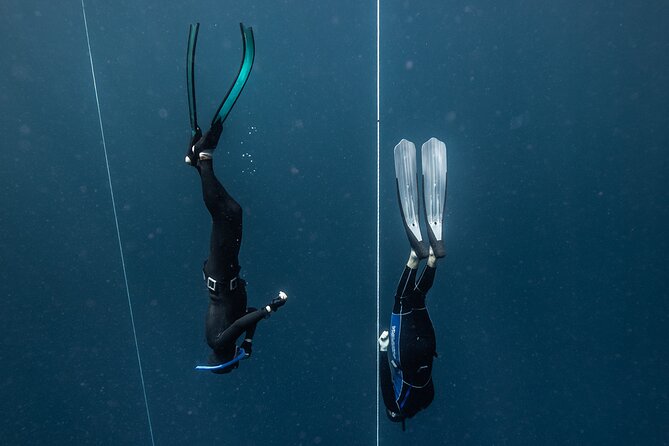
The meeting point is Freedive Nusa, Freediving School, Jl. Ped Buyuk No. Desa, Ped, Kec. Nusa Penida, Nusa Penida, Bali 80771, Indonesia. The listed operating hours are Monday through Sunday, 8:30 a.m. to 4:30 p.m.
Because the course occupies most of the day for three days, do not plan it as a side activity between several distant island stops. You need to be at the school for the morning start, and the day ends back there in the afternoon.
Lunch is not included. You should plan for that daily expense and allow enough time for the stated break. Accommodation is also separate, so check that your lodging fits the meeting point and schedule before booking the course.
The ticket is mobile, and booking confirmation is provided at the time of booking. Cancellation is free if you cancel at least 24 hours before the start time. A cancellation made less than 24 hours ahead is not refunded, and late changes are not accepted.
Who will get the most from this course?
This course suits you if you can swim, have moderate physical fitness, and want more than a casual look underwater. It is also a good choice if you are new to water activities and want a measured introduction rather than being thrown straight into a difficult session.
It may suit couples or friends particularly well. One couple completed the course with Seva and described it as challenging but fun, with a strong feeling of safety and care.
You should think twice if you dislike early starts, full activity days, or structured lessons. You should also be realistic about depth goals. The 15 to 20-meter result is common for many students, but it should not become a source of pressure.
Should you book the Nusa Penida Level 1 course?
I would recommend booking if you want a serious first step into freediving, especially if certification, equipment, and personal instruction matter to you. The four-person limit, five water sessions, patient teaching style, and underwater photos give the $450 fee real substance.
Book it as a three-day learning commitment, not as a quick holiday add-on. Arrange your own transport, lodging, and lunches, arrive ready to swim, and treat the depth and breath-hold figures as possible outcomes rather than promises. If that approach suits you, this looks like a supportive and well-organized way to meet Nusa Penida from below the surface.
FAQ
Where does the freediving course take place?
The course takes place at Freedive Nusa, Freediving School, on Jl. Ped Buyuk in Ped, Nusa Penida, Bali.
How long is the course?
The course lasts three days. Each day runs approximately from 8:30 a.m. to 4:30 p.m., including a lunch break.
Do I need previous freediving experience?
No. Previous experience is not required.
Do I need to know how to swim?
Yes. You must be able to swim to participate.
How many students are in each group?
The activity has a maximum of four students per instructor.
What water sessions are included?
The course includes two confined-water sessions and three open-water sessions, along with theory and practical work on land.
What depth might I reach by the end?
Most students can reach about 15 to 20 meters, or 50 to 65 feet, on one breath by the end of the course.
How long might I hold my breath?
Most students can hold their breath for more than two minutes at the end of the course.
Is equipment provided?
Yes. The use of freediving equipment is included, so you do not need to buy special equipment for the course.
Is certification included?
Yes. Freediving certification and digital learning materials are included.
Are meals and accommodation included?
No. Lunch, accommodation, and private transportation are not included.
Can I cancel for a full refund?
Yes, if you cancel at least 24 hours before the experience start time. Cancellations made less than 24 hours ahead are not refunded.
Just added around Nusa Penida
- Thrilling Off Road Adventure Explore Nature with ATV With Lunch★ 5.0 · 3 reviews
- Seaweed Farming Activity and Sightseeing at Diamond Beach★ 4.5 · 3 reviews
- Try Freediving on Nusa Penida★ 5.0 · 30 reviews
- Full-Day Nusa Penida Island with Snorkeling from Bali★ 5.0 · 21 reviews
- Snorkeling 4 Spot With Manta Bay Or Optional Land Trip★ 5.0 · 14 reviews
- Snorkeling 3 Spots with GoPro & West Coast Tour Nusa Penida★ 4.5 · 5 reviews
- Reef Rehabilitation Course and Snorkeling★ 5.0 · 7 reviews
- Solo Traveler in Nusa Penida★ 4.5 · 6 reviews
3-Day Experiences, compared.
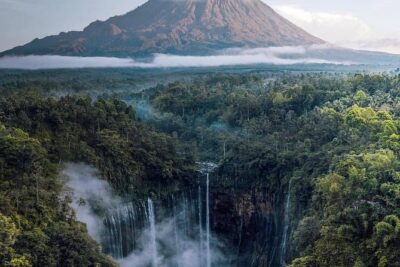
3Days – Tumpaksewu Bromo Ijen Adventure via Malang or Surabaya
Read our review →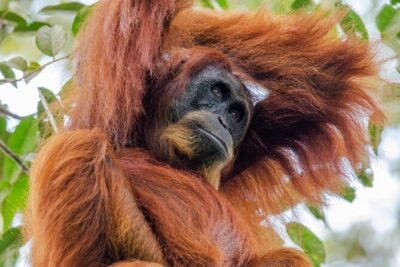
3-Day Ethical Orangutan Jungle Trek | Bukit Lawang, Sumatra
Read our review →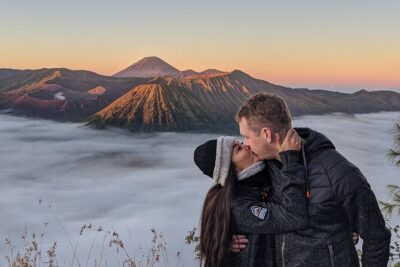
From Surabaya / Malang : Mt Bromo Sunrise – Ijen Blue Fire 3D2N
Read our review →
All inclusive Private 3 day tours package : Bali highlights
Read our review →
Monkey Business 3 days – 2 nights Jungle trekking (including rafting)
Read our review →
Active Volcanoes Bromo and Ijen – Start Surabaya 3 Days and 2 Nights
Read our review →
More Complete: Discover Bali In 3 Days Private Tour Package
Read our review →Browse the lists this tour appears in