
Reviewed · SNORKELING
Reef Rehabilitation Course and Snorkeling
Plant a reef, not just a memory. This six-hour Nusa Penida experience combines three guided snorkeling sessions, a coral lesson, reef planting, a local lunch, and a knot-tying class. I like the hands-on 70-coral commitment and the chance to work with a local conservation team rather than simply buying a symbolic coral certificate. The small maximum of 10 people should also keep the instruction personal.
The price is $62.61 per person, which is strong value if you want an activity with real participation, not just sightseeing. I especially like that the fee includes snorkeling equipment, restoration materials, lunch, and a gift for local children and their school. The main consideration is physical: you should swim comfortably and have moderate fitness for several water-based activities over roughly six hours.
In This Review
- Key points to know before you book
- A conservation day with work beneath the surface
- Starting at Ecotourism Nusa Penida in Ped
- Learning how a coral nursery works
- Three snorkeling sessions with a practical purpose
- The rope lesson turns snorkeling into a skill
- Planting 70 corals across 4 square meters
- Lunch at Coral Cafe gives the day a needed pause
- Saturday adds a school and community connection
- What the $62.61 price really buys
- Who will enjoy this reef rehabilitation course
- Booking advice and cancellation terms
- Should you book it?
- FAQ
- How long does the reef rehabilitation experience last?
- Where does the activity begin and end?
- How many corals does each participant plant?
- Is lunch included?
- Is snorkeling equipment provided?
- Do I need to be a strong swimmer?
Key points to know before you book
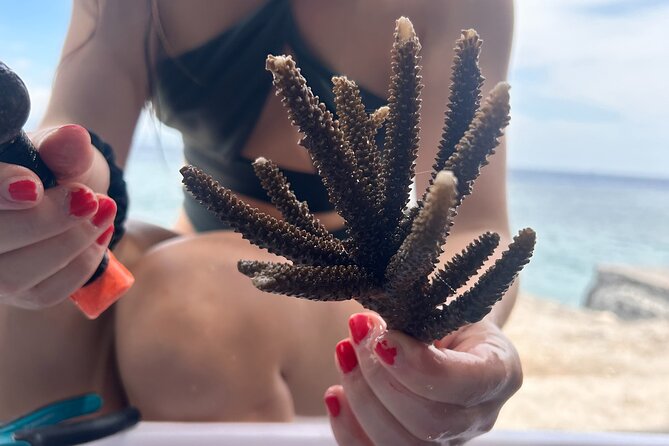
- You plant 70 corals: Each participant helps restore about 4 square meters of reef by attaching coral fragments to prepared ropes and placing them on the seabed.
- The work begins in a coral nursery: You learn how fragments are cultivated before harvesting suitable pieces for planting.
- Three guided snorkeling sessions are included: The water time is tied to the conservation work, not added as a quick photo stop.
- Lunch is served at Coral Cafe: A local meal gives the schedule a useful break between water activities.
- Saturdays include a school visit: The program may add English teaching and conservation work with local children, such as a beach cleanup.
- The group is capped at 10 people: That matters when you need help with equipment, knots, ropes, and underwater placement.
A conservation day with work beneath the surface
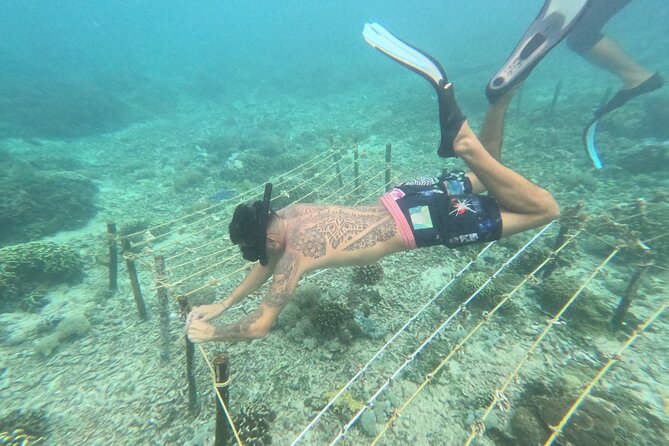
Many reef activities ask you to look, pose, and leave. This one asks you to handle coral fragments, prepare ropes, and place the finished work on the seabed. That difference gives the day a clear purpose.
You begin with a presentation about coral biology, ocean conditions, and the role reefs play in marine ecosystems. This is not just background filler. You need to understand why coral fragments are grown in a nursery, how damaged areas can recover, and why placement and attachment matter.
The local team has spent seven years working on coral restoration. That experience gives the activity a stronger foundation than a one-off beach attraction. You are not promised a miracle cure for reef damage, but you are taking part in a defined restoration method with a measurable target: 70 corals and about 4 square meters per person.
I also like the way the program links conservation with local life. The provider, Ecotourism Nusa Penida, presents the activity as a community effort, with school support and local staff. Nyoman and Festi are named members of the team, and their role includes explaining the reef work and guiding participants through it.
More Snorkeling Trips in the Nusa Islands
- ️Nusa Penida by Private Boat – Snorkeling 4 spots, Swim with Mantas + Land Tour
★ 5.0 · 6,424 reviews - One Day Nusa Penida Island West with Snorkeling
★ 4.5 · 560 reviews - Snorkeling Manta Ray Safari in Nusa Penida
★ 4.0 · 167 reviews
Starting at Ecotourism Nusa Penida in Ped
The meeting point is Ecotourism Nusa PenidaBuyuk on Jalan, Ped, Nusa Penida, Klungkung Regency, Bali 80771. The activity returns to this same meeting point at the end, so you do not need to arrange a separate finish location.
That simple start and finish can be useful on an island where transport planning takes extra thought. The experience does not include personal expenses, so you should budget separately for anything outside the listed inclusions. A mobile ticket is provided, and confirmation arrives when you book.
This tour is commonly reserved about 38 days ahead. That does not guarantee every date will sell out, but it is a useful sign that you should not leave this particular experience until the last day of a short Nusa Penida stay. If the conservation element matters to you, reserve early enough to fit it into your plans.
The maximum group size is 10. A small group helps in practical ways: you can hear the coral explanation, ask about nursery methods, and get support when handling ropes and fragments. It should also make the underwater planting less crowded than a large snorkeling outing.
Learning how a coral nursery works
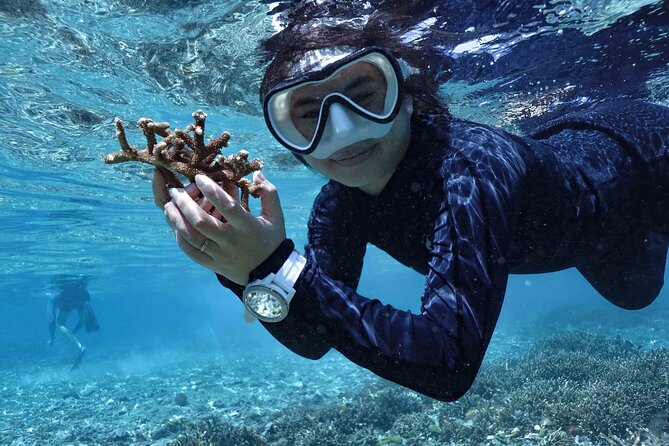
The coral nursery is one of the most useful parts of the day. Instead of seeing only the finished reef, you get to see the stage where coral fragments are cultivated and prepared for later planting.
The presentation covers coral biology and ecosystem value, then the team shows you how the nursery operates. You learn what the fragments are for and how the restoration process moves from cultivation to reef placement.
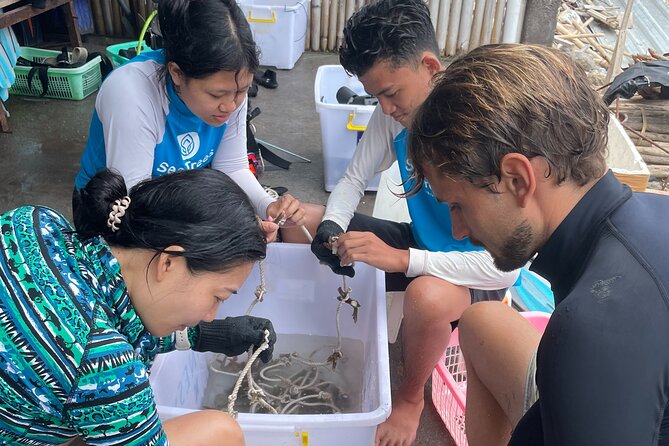
Next comes harvesting. You collect suitable coral fragments for your planting work, following the team’s instructions. This is an important point: you are not simply given a prearranged object and told to put it somewhere. You take part in the preparation that leads to the planting.
The work also gives you a better sense of scale. Seventy corals per person may sound like a large number, but the activity breaks it into manageable steps. You collect fragments, prepare rope, attach the pieces, and then take the finished material into the water.
The coral garden received particular praise for making the process clear and memorable. I can see why. A nursery turns conservation from an abstract idea into something you can inspect with your own eyes and handle with your own hands.
Three snorkeling sessions with a practical purpose
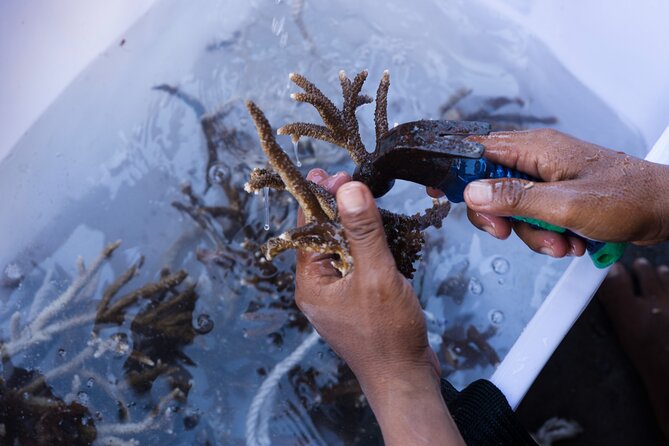
The day includes three guided snorkeling experiences. The schedule connects each session to a different part of the restoration work, rather than treating snorkeling as a separate add-on.
One session helps you see the nursery and understand how the coral is cultivated. Another supports the collection and preparation stage. The final water work centers on placing the coral ropes on the seabed.
The exact order can depend on local conditions and the team’s schedule. Ocean conditions matter to coral work, so you should expect the staff to organize the water portions around what is safe and workable that day.
You need to be comfortable swimming. This is not a shoreline activity where you can remain dry and still complete the main task. You will use snorkeling equipment and work in the water while following instructions from the guides.
A participant described learning how to work the coral, tie it to ropes, and secure it on the seabed. That sequence is the heart of the experience. It gives you a real task to complete, while the guides handle the technical direction.
If you are an occasional snorkeler, the physical demands deserve attention. Six hours with several water sessions can be tiring, especially when you add rope preparation and time on your feet during instruction. Bring the attitude of someone joining a conservation workday, not someone expecting a short swim followed by free time.
More Snorkeling Trips in Nusa Penida:
- Snorkeling and Freediving Trip around Nusa Penida
★ 4.5 · 77 reviews - Explore 4 iconic snorkeling spots of Manta Bay in Nusa Penida
★ 4.5 · 29 reviews - Manta Point Snorkeling & West Nusa Penida Island Day Tour
★ 4.5 · 23 reviews - Full-Day Nusa Penida Island with Snorkeling from Bali
★ 5.0 · 21 reviews
The rope lesson turns snorkeling into a skill
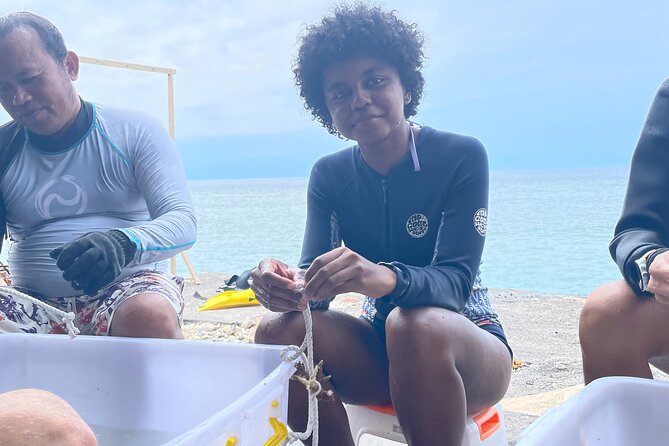
The knot-tying lesson is a small feature with a practical purpose. You learn how to tie knots underwater, then use that skill to prepare ropes with your collected coral fragments.
That may sound simple on land. Underwater, the task is different. You must manage the rope, hold the fragment correctly, and work with limited movement while keeping track of the guide’s instructions. The lesson gives you a clearer idea of the care needed to place coral securely.
The method also makes the final planting feel earned. You have not just carried a piece of coral from one point to another. You have taken part in the preparation, attachment, and placement stages.
The team guides you through the process, but you should still expect to pay attention. Coral restoration is hands-on work, and careless handling would defeat the purpose. Listen closely when the staff explains how to handle the fragments and where to put the rope.
This is one of the reasons the small group size matters. With no more than 10 participants, the team has a better chance of checking each person’s technique and helping when a knot or attachment proves awkward.
Planting 70 corals across 4 square meters
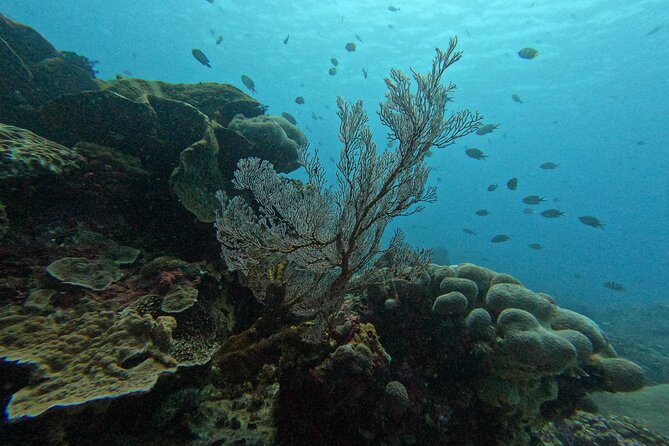
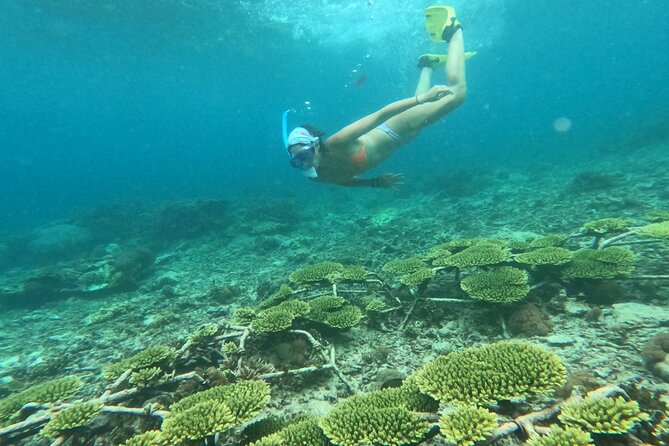
The main target is clear: each person plants 70 corals, covering about 4 square meters of reef. That gives the activity a concrete result rather than a vague promise to help.
The number also helps you judge the pace. You will need to work steadily, follow the instructions, and stay engaged across the planting stage. The goal is not to rush through 70 pieces for a photograph. It is to place the fragments in a way that supports the restoration project.
The provider compares this level of direct participation with the much higher cost of similar work through typical nonprofit programs. I would treat that comparison as promotional rather than a guaranteed market standard, but the value is still easy to assess. For $62.61, you receive a six-hour program, three guided snorkeling sessions, equipment, materials, lunch, instruction, and a defined restoration task.
You should not think of the price as a donation that guarantees a personal coral legacy forever. Coral survival depends on ocean conditions and many other factors. The fairer way to view it is as an educational conservation activity where your fee supports a local project and your labor contributes to a specific planting session.
That is more meaningful than a paper adoption for people who want to understand the work behind reef recovery. It is also more demanding. You are paying for participation, not simply a keepsake.
Lunch at Coral Cafe gives the day a needed pause
Lunch at Coral Cafe breaks up the water and work sessions. That matters because snorkeling, rope preparation, and instruction can use more energy than a standard sightseeing trip.
The meal is included, which makes the $62.61 price easier to calculate in advance. You do not need to arrange lunch separately during the activity, though personal expenses are not included.
The available details do not specify the exact menu, dietary choices, or serving style. If you have dietary restrictions, ask the provider before booking rather than assuming the meal will suit you.
I like the placement of lunch in the program. It gives you time to dry off, eat, and think about the morning’s work before returning to the conservation tasks. It also keeps the day connected to the local setting instead of relying on a generic packed meal.
Saturday adds a school and community connection
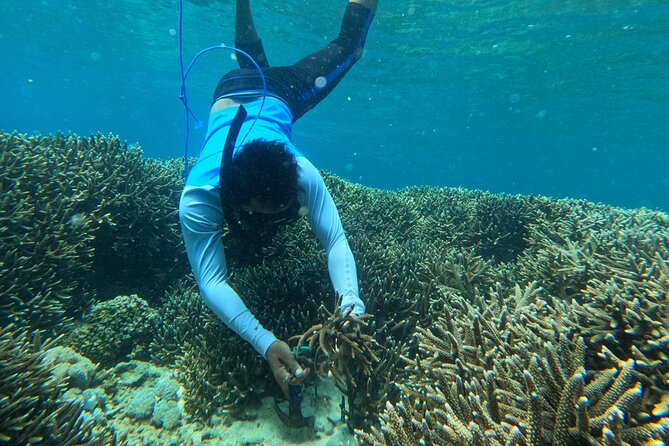
On Saturdays, the program includes a visit to a local school. You may teach English and join conservation activities with the children, including beach cleanups.
This is a distinct feature, so check the date when you book if the school visit matters to you. It changes the character of the day from reef work alone to a wider community program.
The included gift for the local children and school supports that connection. The information does not specify the gift or the exact teaching plan, so you should expect a general school and conservation activity rather than a formal teaching placement.
For some people, this will be the most memorable part of the day. It offers contact with local community work that a standard marine excursion cannot provide. For others, the extra school component may make the schedule feel less focused on snorkeling. Either way, Saturdays appear to offer a broader conservation day.
What the $62.61 price really buys
At $62.61 per person, this is not the cheapest snorkeling option in Bali. A basic swim and equipment rental can cost less. That comparison misses the point, though, because this experience includes instruction, three guided water sessions, nursery access, coral materials, lunch, and hands-on planting.
The strongest value comes if you want all of those pieces in one organized half-day. You avoid paying separately for equipment and materials, and you do not have to figure out how to support a reef project on your own.
The experience also has a clear limit. It is not a private tour, even with a maximum of 10 people. It is not a technical marine biology course, and it does not promise that every planted coral will survive. You are joining a local restoration effort for one day, with a practical introduction to the work.
I would pay the price for the combination of access and participation. The coral nursery, rope work, and seabed planting make it better value than a simple photo-focused snorkeling trip. If you want a leisurely beach day with minimal instruction, you may find the schedule too active.
Who will enjoy this reef rehabilitation course
I would recommend this experience to you if you:
- Swim comfortably and are happy spending several sessions in the water.
- Want conservation work to be the main reason for booking.
- Prefer a small group and direct contact with local guides.
- Like learning a practical skill, such as underwater knot tying.
- Want your activity fee to support a local project and school connection.
- Have moderate fitness for a six-hour program.
I would be more cautious if you dislike structured activities, cannot swim comfortably, or want a short snorkeling outing with plenty of unplanned beach time. The coral planting is the point of the program, so it cannot be treated as an optional extra.
Service animals are allowed. The stated fitness requirement is moderate, and comfortable swimming ability is expected. If you have concerns about your physical ability, contact Ecotourism Nusa Penida before booking.
Booking advice and cancellation terms
The activity offers free cancellation if you cancel at least 24 hours before the start time. A cancellation made less than 24 hours ahead is not refunded, and changes within that period are not accepted. The cut-off follows local time.
Because the experience is often booked well ahead, I would reserve early if your Nusa Penida schedule is tight. Then keep the day before the tour flexible enough to make changes if needed.
Read the timing carefully when planning other island activities. Six hours is an approximate duration, and the program includes several stages, lunch, and water work. Do not place a distant appointment immediately afterward.
Should you book it?
Book this reef rehabilitation course if you want to do more than admire Nusa Penida’s marine life. The best parts are specific and practical: you visit the nursery, collect fragments, learn underwater knots, prepare ropes, and plant 70 corals across about 4 square meters.
The price is fair for the amount included, especially with lunch, snorkeling equipment, materials, and a small group. I would choose it over a standard snorkeling trip if conservation is central to your Bali plans.
Skip it if you are not a confident swimmer or if you want a relaxed outing with little physical work. For the right participant, this is a useful way to spend six hours: local, active, educational, and tied to a project with a seven-year record of reef restoration.
FAQ
How long does the reef rehabilitation experience last?
The experience lasts approximately six hours.
Where does the activity begin and end?
It begins at Ecotourism Nusa PenidaBuyuk on Jalan, Ped, Nusa Penida, Klungkung Regency, Bali 80771, Indonesia. It ends back at the same meeting point.
How many corals does each participant plant?
Each participant plants 70 corals, covering about 4 square meters of reef.
Is lunch included?
Yes. Lunch at Coral Cafe is included in the experience.
Is snorkeling equipment provided?
Yes. Snorkeling equipment and the materials needed for coral restoration are included.
Do I need to be a strong swimmer?
You should be able to swim comfortably and have a moderate level of physical fitness.
Just added around Nusa Penida
- Thrilling Off Road Adventure Explore Nature with ATV With Lunch★ 5.0 · 3 reviews
- Seaweed Farming Activity and Sightseeing at Diamond Beach★ 4.5 · 3 reviews
- Try Freediving on Nusa Penida★ 5.0 · 30 reviews
- Snorkeling 4 Spot With Manta Bay Or Optional Land Trip★ 5.0 · 14 reviews
- Snorkeling 3 Spots with GoPro & West Coast Tour Nusa Penida★ 4.5 · 5 reviews
- Full-Day Nusa Penida Island with Snorkeling from Bali★ 5.0 · 21 reviews
- Solo Traveler in Nusa Penida★ 4.5 · 6 reviews
- Nusa Penida : Snorkeling Trip Manta Point, Gamat Bay and Wall Bay★ 5.0 · 17 reviews
Snorkeling, compared.
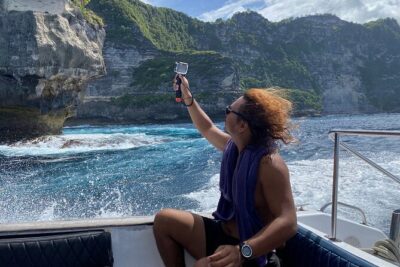
Nusa Penida by Private Boat – Snorkeling 4 spots, Swim with Mantas + Land Tour
Read our review →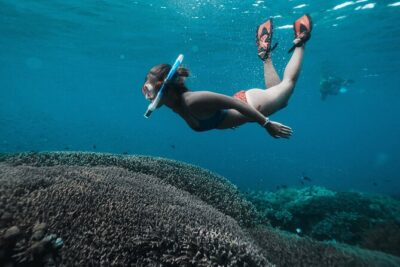
Nusa Penida day trip: boat, 4 snorkeling, Manta rays & Land tour
Read our review →
Nusa Penida Snorkeling Adventure (Private & All-Inclusive)
Read our review →
All Inclusive : Bali Blue Lagoon Snorkeling, Lunch, and Transport
Read our review →
Bali Blue Lagoon Snorkeling – Lunch and Transport All Inclusive
Read our review →One Day Nusa Penida Island West with Snorkeling
Read our review →
Blue Lagoon Snorkeling – Lunch – Kantolampo – Tibumana Waterfall
Read our review →
Bali Blue Lagoon Snorkeling with Private Transfer & Lunch
Read our review →Browse the lists this tour appears in