
Reviewed · TEMPLE TOURS
Uluwatu Silver Class: A Unique Jewelry-Making Experience in Bali
Make Bali’s souvenir with your own hands. The Uluwatu Silver Class takes you through melting, shaping, soldering, sanding, and polishing silver with help from local silversmiths. I especially like the hands-on process and the fact that you take home the piece you create. The workshop also fits neatly into a south Bali day near Uluwatu’s beaches and cultural sights.
The price is $45.82 per person, including materials, tools, a snack, mineral water, and Wi-Fi. I also like that the activity is private to your group, so you are not working in a crowded class. One thing to consider is communication: one participant found the instructor’s English limited, which reduced the amount of explanation during the session.
In This Review
- Key Points Before You Book
- Turning Silver Grain Into a Personal Souvenir
- The Main Work: Shaping, Soldering, and Finishing
- What You Can Make With the Silver Allowance
- A Private Class Near Ungasan and Uluwatu
- Pairing the Workshop With South Bali Sights
- Is $45.82 Good Value?
- What the Strong Praise Gets Right
- Who Will Enjoy This Most?
- Practical Tips for a Better Class
- Should You Book Uluwatu Silver Class?
- FAQ
- Where does the Uluwatu Silver Class take place?
- How long does the silver-making class last?
- What jewelry can I make?
- Is silver included in the price?
- Can I add a gemstone?
- Is transportation included?
- Can I cancel for a full refund?
Key Points Before You Book
- Make one piece from start to finish: Choose a design, work the silver, and leave with your own jewelry.
- Expect a 1.5 to 3-hour class: The exact length depends on your design and how much guidance you need.
- Your silver allowance is based on 5 grams: Even if your finished piece weighs less, the full 5-gram usage is counted.
- The base price covers silver and tools: Gemstones and silver above 5 grams cost extra.
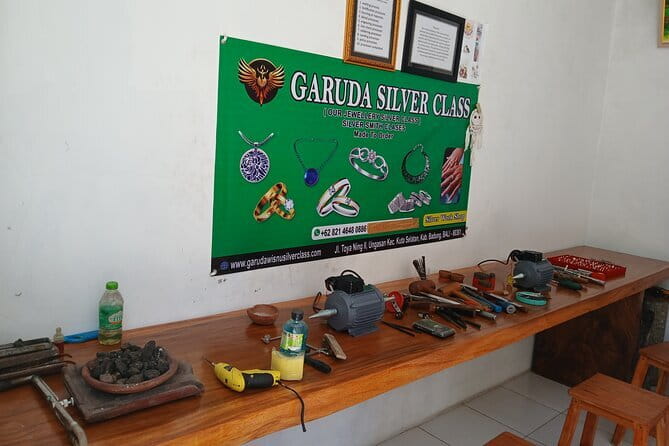
- The class meets in Ungasan: The address is Garuda Silver Class, Jl. Toya Ning II, near beaches and Uluwatu attractions.
- Only one piece is allowed per participant: You cannot combine or share your silver allowance with another person.
Turning Silver Grain Into a Personal Souvenir
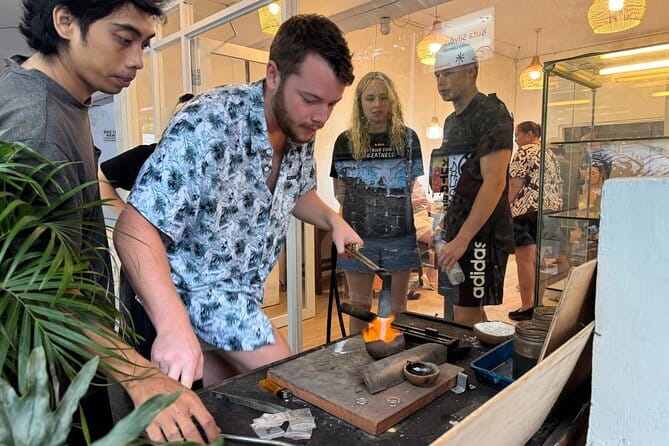
Many Bali souvenirs are bought in a shop and packed into your luggage. This class gives you a different kind of memento. You make the object yourself, with help at the points where silver work becomes difficult or unsafe.
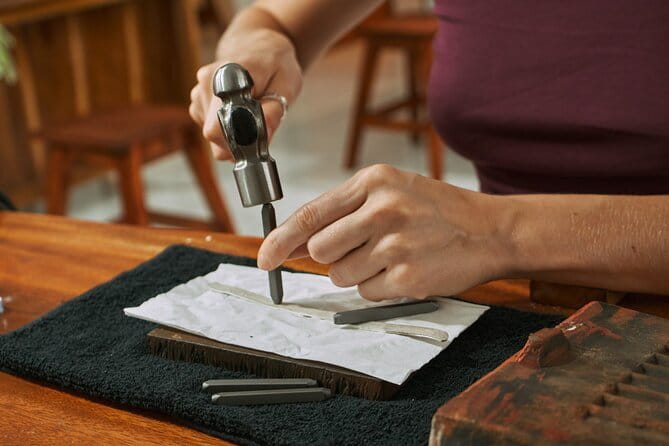
The process begins with a design choice. You may create a ring, bracelet, or another small jewelry piece, depending on the options available and the amount of silver your design needs. The design stage matters because it sets the limits for the rest of the class. A simple shape gives you more time to learn the technique. A detailed design may require more careful shaping, soldering, and finishing.
You then receive an introduction to the tools and materials. This is useful even if you have never handled jewelry-making equipment. The class is aimed at beginners, so you do not need previous silversmithing experience.
The silver starts as small grains. Under guidance from the silversmiths, you learn how those grains are melted and turned into usable wire or a flat plate. That transformation is one of the most rewarding parts of the activity. You are not simply decorating a ready-made pendant. You are helping create the material that becomes your finished item.
More Temple Tours in Seminyak and Kuta
- Uluwatu Sunset Tour: Kecak and Fire Dance with Jimbaran Dinner
★ 4.5 · 597 reviews - Private Tour Bali Beaches and Uluwatu Temple with Dinner
★ 5.0 · 363 reviews - Tanah Lot Tour with Ubud Monkey Forest, Rice Terraces, and Waterfalls
★ 5.0 · 273 reviews
The Main Work: Shaping, Soldering, and Finishing
Once the silver has been formed, you shape it according to your chosen design. Rings require careful sizing and bending. Bracelets need a form that sits comfortably on the wrist. Other designs may involve cutting, joining, or bending silver into a particular outline.
The silversmiths guide you through each stage, but this is still a practical class rather than a demonstration where you sit and watch. You should expect to handle the work yourself while asking for help when needed.
Soldering joins separate pieces of silver. It is a technical step, and the instructor’s help is especially important here. The supplied information does not promise a particular instructor or a fixed lesson language, so you should be prepared for a mixture of demonstration and hands-on correction. One participant found the instructor’s English relatively poor, while still appreciating the friendly atmosphere and the finished rings. If detailed verbal instruction is important to you, confirm the language support before booking.
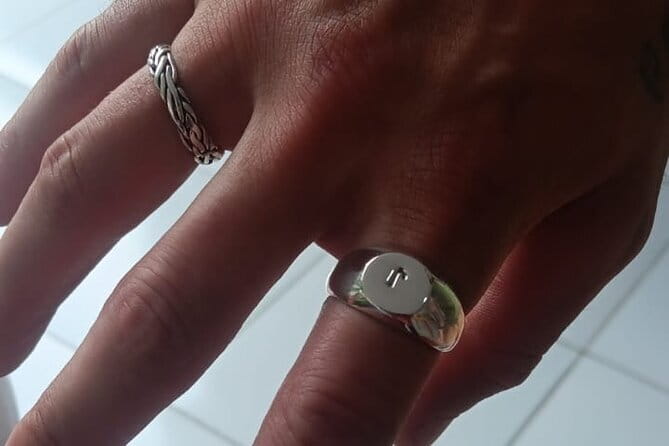
After the piece is assembled, you sand it and polish it. These final stages can change the look of the jewelry considerably. Sanding removes rough edges and marks, while polishing brings out a cleaner shine. The result may not have the perfect finish of a factory-made item, but that is part of its appeal. You can see the small decisions and human work in the piece.
What You Can Make With the Silver Allowance
Each participant can make one silver jewelry item. The included silver starts at 1 gram and is accounted for as 5 grams if the finished jewelry uses less than 5 grams. This pricing rule is worth understanding before you begin, since the allowance is not pooled between members of your group.
If your design requires more than 5 grams, the extra charge is IDR 100,000 per gram. Gemstones are also separate, costing from IDR 100,000 to IDR 500,000 depending on the type and size. Ask about these additions before settling on a design, especially if you want a larger piece or a stone setting.
You cannot share silver with another person. That means a couple cannot combine two allowances to make one larger item under a single participant’s allocation. Each person needs to make a separate piece.
The arrangement is simple and fair enough if you want a small ring, bracelet, or similar keepsake. It becomes less predictable if you arrive with a large or elaborate design in mind. I would choose a design that fits comfortably within the 5-gram allowance unless you are happy to pay extra.
A Private Class Near Ungasan and Uluwatu
The meeting point is Garuda Silver Class on Jl. Toya Ning II in Ungasan, in Bali’s south Kuta area. The activity begins and ends at this location. A mobile ticket is provided, and confirmation is issued at booking.
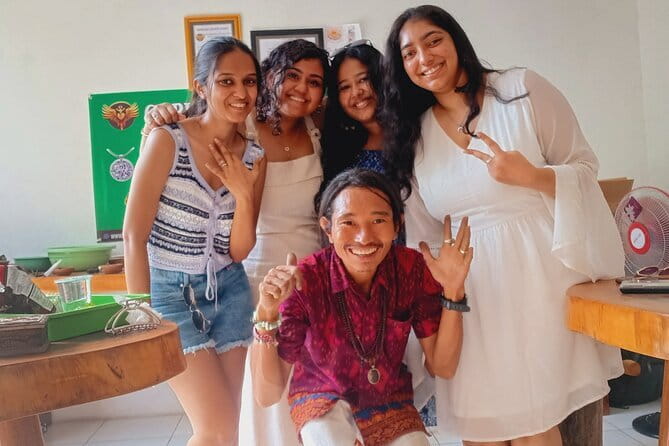
The class is private to your group. That is a real advantage for couples, families, and small groups who want to work at their own pace. You can ask questions without competing with a large room of strangers, and the class may feel more relaxed when everyone is making a different design.
The class duration is listed as approximately three hours, though the stated range is 1.5 to 3 hours. Your design and working speed affect the timing. A simple piece may finish sooner, while a more detailed design can use the full session.
There is no shuttle service included. You will need to arrange your own way to the meeting point. The location is near public transportation, but the supplied details do not specify a route, stop, or pickup area, so check the address carefully before setting out.
Still Seminyak and Kuta, at a slower pace:
- Bali Full-Day Traditional Village Sightseeing Trip All Inclusive
★ 5.0 · 3,069 reviews - Nusa Penida day trip: boat, 4 snorkeling, Manta rays & Land tour
★ 5.0 · 2,033 reviews - Experts Bali Driver : Best Bali Private Driver for Tour in Bali
★ 5.0 · 1,339 reviews - Bali Nusa Penida West Private All-Inclusive Tour
★ 5.0 · 1,277 reviews
Pairing the Workshop With South Bali Sights
The workshop is near several well-known beaches, including Balangan Beach, Melasti Beach, Pandawa Beach, Nyang-Nyang Beach, and Uluwatu Beach. It is also close to Garuda Wisnu Kencana Culture Park and the sunset Kecak Dance performance at Uluwatu.
This makes the class easier to fit into a south Bali plan than an activity requiring a separate cross-island journey. You could schedule the workshop around a beach visit or a cultural stop, but allow enough time for traffic and the class itself. The experience does not include transportation to these places, beach time, or the Kecak performance. Those are nearby possibilities, not part of the workshop.
The best use of the location is to treat the class as one stop in a full Ungasan or Uluwatu day. Do not assume you can finish the jewelry, visit several beaches, and reach a sunset performance without careful timing. The class can last up to three hours, and the making process is more enjoyable when you are not watching the clock.
Is $45.82 Good Value?
At $45.82 per person, the class costs more than buying a basic silver accessory at a market. But the comparison is not quite like for like. You are paying for the silver, tools, instruction, workshop time, and the chance to create a piece that carries a personal story.
The included snack, mineral water, and Wi-Fi are useful extras, though they are not the main reason to book. The stronger value is the finished item and the process behind it. You also avoid guessing whether a shop-bought piece is truly connected to your Bali experience. Here, you know exactly how it was made because you took part.
The price is most attractive if you want a meaningful souvenir and enjoy practical activities. It is less compelling if you only want inexpensive jewelry or have no interest in making the item yourself.
Remember the possible extra costs. A gemstone can add IDR 100,000 to IDR 500,000, and silver above 5 grams costs IDR 100,000 per additional gram. Since silver below 5 grams is still counted as 5 grams, it is sensible to ask the instructor to explain the design and weight rules before work begins.
What the Strong Praise Gets Right
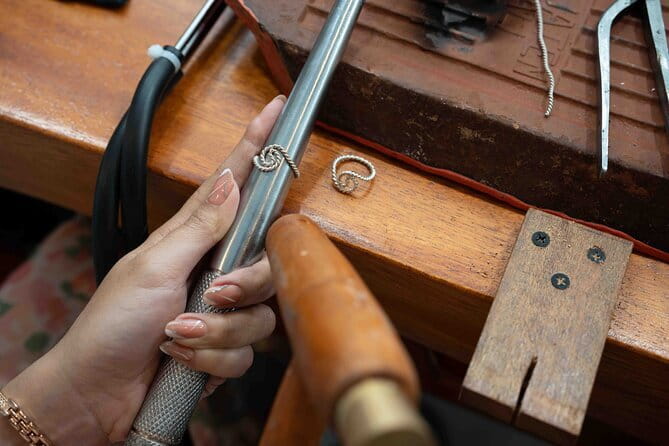
The most consistently praised part of this class is the personal result. One participant described making a bracelet that looked amazing, while another family created rings and valued having lasting keepsakes from the trip. A parent and son enjoyed the experience so much that the son made a second ring, although each participant’s one-piece limit still applies to the normal booking arrangement.
The friendly teaching style also receives strong approval. The silversmiths are described as patient and helpful, which matters when you are learning unfamiliar tasks such as shaping and soldering. You are not expected to arrive with technical skills.
The class has a 4.9 rating from 30 reviews, with 97 percent recommending it. That is a strong signal, but the lower-scoring experience adds useful balance. The participant still appreciated the friendliness and liked the finished rings, yet felt the limited English meant there was not enough explanation. I would treat that as a possible communication issue rather than a reason to dismiss the activity entirely.
If you learn best by watching and copying, the class may work well. If you want a long technical lecture about silver chemistry or traditional jewelry methods, the experience may feel lighter than expected.
Who Will Enjoy This Most?

I would recommend this class to couples who want matching or complementary pieces, families with older children, and anyone tired of buying standard souvenirs. It also suits people who like craft workshops and do not mind that the finished item may show small signs of handmade work.
The activity can be a good choice during a south Bali holiday because it combines a creative stop with easy access to beaches and cultural sites. The private format is helpful for families and small groups with different confidence levels.
You should think twice if you dislike detailed handwork, need a fully guided lesson in fluent English, or want to make several pieces. The one-item limit is clear, and extra silver or gemstones can raise the final cost.
Practical Tips for a Better Class
Choose a design before you arrive, but stay flexible. A design that looks simple in a picture may require more silver or more soldering than expected.
Ask about the final weight and any gemstone cost before the silver is prepared. This is the easiest way to keep control of your budget.
Leave room in your schedule. The official duration can range from 1.5 to 3 hours, and rushing the polishing stage would undercut the whole point of making your own piece.
Bring your mobile booking confirmation and check that you are heading to Jl. Toya Ning II in Ungasan. The class ends at the same meeting point, and no shuttle is provided.
If you are planning to attend the Kecak Dance at sunset, allow a generous gap after the workshop. South Bali roads can make a short distance take longer than expected, and you will enjoy the jewelry session more without a performance deadline hanging over you.
Should You Book Uluwatu Silver Class?
Book it if you want a small, personal souvenir and enjoy learning by doing. The private class, beginner-friendly stages, local silversmith guidance, and finished piece make the $45.82 price reasonable for a three-hour activity.
I would be more cautious if your priority is low-cost jewelry, extensive spoken instruction, or multiple finished items. Confirm the available language support and ask about your design’s likely silver weight before starting.
For most people, the best choice is a simple ring or bracelet that stays within the 5-gram allowance. You get the pleasure of making something yourself, a useful south Bali location, and a keepsake that will remind you of the work behind it long after the beach sand has left your suitcase.
Free cancellation is available when you cancel at least 24 hours before the start time. Changes or cancellations made inside that window are not accepted for a refund.
FAQ
Where does the Uluwatu Silver Class take place?
The meeting point is Garuda Silver Class, Jl. Toya Ning II, Ungasan, Kuta Selatan, Badung, Bali 80361, Indonesia.
How long does the silver-making class last?
The activity takes approximately three hours, with the stated class range running from 1.5 to 3 hours.
What jewelry can I make?
You can create one silver jewelry piece. Examples shown in the experience information and participant feedback include rings and bracelets.
Is silver included in the price?
Yes. Materials and tools are included, and you can take home your own silver jewelry starting from 1 gram. If the piece uses less than 5 grams, the silver usage is still accounted for as 5 grams.
Can I add a gemstone?
Yes, but gemstones cost extra. The additional charge ranges from IDR 100,000 to IDR 500,000, depending on the gemstone type and size.
Is transportation included?
No. Shuttle service is not included. The class is near public transportation, and the activity begins and ends at the meeting point.
Can I cancel for a full refund?
Yes, if you cancel at least 24 hours before the experience start time. Cancellations or changes made less than 24 hours before the start time are not accepted for a refund.
Just added around Seminyak and Kuta
- Bali-Nusa Penida. East Part. Private car. All-inclusive★ 4.5 · 15 reviews
- Ubud Private Tour : Ubud Temple and Authentic of Ubud★ 5.0 · 18 reviews
- Bali Swing Hot Spring And Waterfall Private Guided Tour★ 5.0 · 50 reviews
- Ubud Monkey Forest Sanctuary Tours and Cretya★ 5.0 · 3 reviews
- Ubud Tours and Cretya Day Club Pool★ 5.0 · 3 reviews
- Bali Adventure Tour: Hidden Canyon, Tegenungan Waterfall, Goa Gajah temple★ 5.0 · 48 reviews
- Penglipuran Village Waterfall Swing Private Guided Tour★ 5.0 · 13 reviews
- Bali Sightseeing Car Hire with English-speaking Guide and Driver★ 5.0 · 24 reviews
Temple Tours, compared.

Monkey Forest, Jungle Swing, Rice Terrace, and Water Temple
Read our review →
Uluwatu Sunset, Kecak Dance, and Dinner Jimbaran Beach
Read our review →
Tanah Lot and North Bali Tour: Scenic Journey
Read our review →
Full-Day Tour to Water Temples and UNESCO Rice Terraces in Bali
Read our review →
Borobudur Temple Climb To The Top & Prambanan Temple – 1 day tour
Read our review →
Uluwatu Sunset Tour: Kecak and Fire Dance with Jimbaran Dinner
Read our review →
Ubud Tour with Monkey Forest Waterfalls Temples and More
Read our review →Browse the lists this tour appears in