
Reviewed · RICE TERRACE TOURS
Ubud: Downhill Cycling with Volcano, Rice Terraces and Meal
See Bali beyond the traffic. This six-hour cycling trip begins near Mount Batur and follows a mostly downhill route through rice fields, farms, villages, temples, and quiet back roads. I like the small maximum group of four, which makes it easier to ask questions and keep a comfortable pace. I also like the strong cultural focus, with stops at a school, family compound, temple, and farming areas rather than a simple ride past scenery.
The main thing to consider is the early start and long drive from Ubud to the Kintamani area. Some outings also include a coffee and herb plantation stop, which may interest you but can feel like an unwanted shopping stop if you would rather get straight to the bicycles. Lunch is included, though one meal was reported as lukewarm, so the food service may not be equally strong every day.
In This Review
- Key points at a glance
- Why this ride is different from a standard Ubud bicycle trip
- The drive to Mount Batur and the first volcano view
- The downhill route through farms, villages, and rice fields
- A local school and a closer look at education
- Family compounds, temples, and village traditions
- Rice fields and the view you miss from a car
- Lunch in Banjar Laplapan
- What the $36.66 price really covers
- Who should book this cycling tour?
- Practical details before you reserve
- Should you book it?
- FAQ
- What time does the tour start?
- How long does the cycling experience last?
- Is hotel pickup available?
- What does the price include?
- How many people can join the tour?
- Can I cancel for a full refund?
Key points at a glance
- Mostly downhill for about 18 kilometers: The route is designed for a relaxed ride with little hard pedaling.
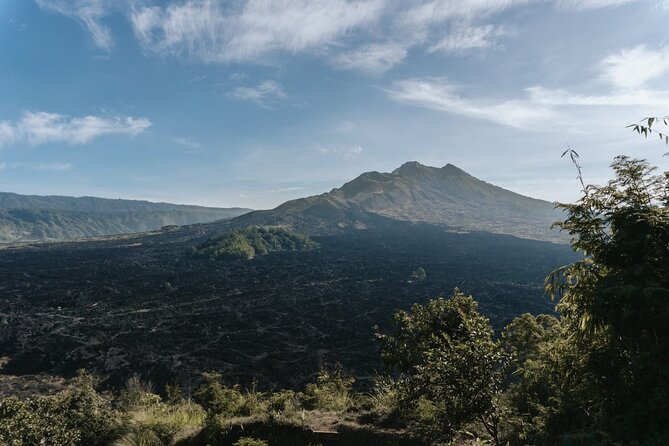
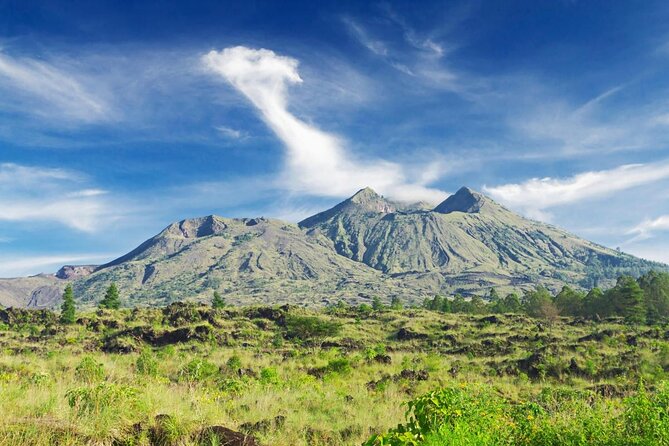
- Mount Batur views begin the day: You stop near the volcano, caldera, and lake before cycling.
- Small groups make a difference: With no more than four people, the guide can adjust the pace and answer questions.
- Culture comes between the cycling: Expect a local school, family compound, temple, rice fields, and village roads.
- Guides add real value: Dika, Agus, August, Eddy, Dedy, and Augustin have all been praised for warmth, humor, patience, and cultural insight.
- Lunch, transport, gear, and insurance are included: At $36.66, the package covers most of the practical costs.
Why this ride is different from a standard Ubud bicycle trip
Ubud is famous for rice terraces, but many visitors see them through a car window or from a crowded road. This ride gives you time to notice smaller details: farm paths, village shrines, family compounds, school buildings, and people going about their daily routines.
The ride starts in the Kintamani volcano area, well north of central Ubud. From there, you cycle back toward the countryside on a route reported to be about 18 kilometers. The important detail is the direction: this is mainly a downhill outing, not a demanding mountain ride.
That makes it a good option if you want to cycle in Bali but do not have strong fitness. Several families with children, including teenagers, found the pace manageable. One family described the route as about 95 percent downhill, while another called it an easy ride with very little pedaling. You still need to control your bicycle, pay attention to the road, and handle some downhill sections, but this is not built around athletic effort.
I would choose this tour for the combination of movement and conversation. You are not just being driven from one photo stop to another. You ride between stops, then hear about Balinese education, farming, religion, family life, and local customs from an English-speaking guide.
More Bike Tours in Ubud
- Electric Cycling Tour of Ubud with Free Hotel Transfer and Lunch
★ 5.0 · 1,397 reviews - Ubud eBikes Tour to Tegallalang Rice Terrace
★ 5.0 · 507 reviews - Half-Day Ubud Electric Cycling Tour to Tirta Empul Water Temple
★ 5.0 · 315 reviews
The drive to Mount Batur and the first volcano view
Pickup begins around 8:30 a.m. from hotels in the Ubud area. The tour uses an air-conditioned vehicle, and the drive to the Kintamani volcano area takes roughly an hour from Ubud according to one detailed account.
That transfer is a tradeoff. It adds road time to a six-hour experience, but it also takes you to a higher starting point where the views are a major part of the morning. At Mount Batur, you have about 15 minutes to look across the volcano, caldera, and lake.
Do not expect a full volcano hike or a long viewpoint visit. This is a short scenic stop before the ride. Still, it gives the day a clear sense of place. You begin among Bali’s volcanic peaks, then gradually move down into farmland and village country.
Weather will affect the view. One outing had heavy rain, but the guide and driver adjusted as well as possible. If the sky is clear, bring your camera. If clouds roll in, the cycling and cultural visits still provide the main value of the day.
The downhill route through farms, villages, and rice fields
Once you get on the bicycle, the pace is intended to be gentle. You follow back roads through local farms, traditional villages, rice fields, and paddy areas. The scenery changes gradually, which is part of the pleasure. You are not racing toward a single famous terrace. You are watching everyday Bali unfold over two wheels.
The route is especially good for families and mixed-age groups. Children aged 12 and 14 completed it comfortably, and reluctant teenagers were reportedly won over by the end. The ride is also suitable for people who worry that a cycling tour will be too strenuous.
I would still take the downhill label seriously. Even an easy route requires braking, steering, and attention. One useful detail from the feedback is that the bicycles had good brakes, which matters on a mostly downhill course. Cycling equipment is included, but you should wear comfortable clothes, use sun protection, and bring a little patience for tropical weather. Sun block is not included.
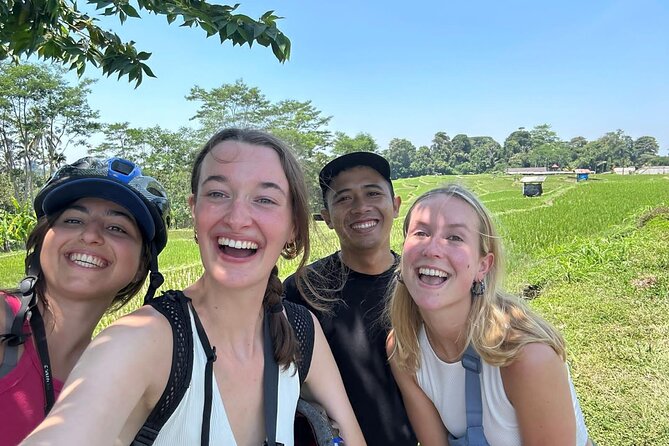
The guide sets the pace and allows time for photographs. Dika was praised for being funny, patient, and easy to understand, while other guides, including Agus, August, Eddy, Dedy, and Augustin, were singled out for friendly service and strong explanations of Balinese life.
A local school and a closer look at education
One of the most useful stops is a local school in the Manukaya area. You get a chance to see classrooms and learn about education in Bali. This is more meaningful than another quick temple photo because it connects the scenery to daily life.
The stop is part of a larger two-and-a-half-hour section that includes several points of interest. The exact order may vary, but the school visit helps explain how local children spend their days and gives you a view of Bali beyond ceremonies and scenery.
This is also where a good guide matters. The experience depends less on a formal display and more on the explanations you receive. Eddy was praised for discussing education, culture, and family life, while another guide helped explain where Balinese children go to school. If you enjoy asking questions, the four-person group size is a real advantage.
Keep in mind that this is a working local setting, not a staged attraction. Be respectful with photography and follow the guide’s instructions.
More Rice Terrace Tours in Ubud
- Ubud: Monkey Forest, Jungle Swing, Rice Terrace, and Water Temple
★ 5.0 · 7,160 reviews - Full-Day Tour to Water Temples and UNESCO Rice Terraces in Bali
★ 5.0 · 2,539 reviews - Ubud Top Attractions: Waterfalls, Temples and Rice Terraces
★ 5.0 · 460 reviews - Private Full-Day Tour: Balinese Temples and Rice Terraces
★ 5.0 · 246 reviews
Family compounds, temples, and village traditions
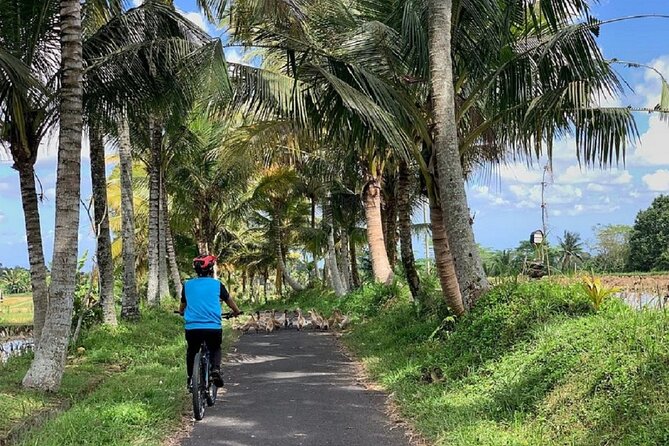
The tour also stops at a Balinese family compound and a temple. These visits offer a glimpse into how religion and family life fit into the structure of a village.
A family compound is valuable because it brings cultural ideas down to a human scale. Instead of only hearing about Balinese traditions, you can see how a home area is arranged and ask questions about family life. One outing also included a visit to a family temple, while another included a traditional Balinese public cremation that happened to be taking place that day. Such events are not guaranteed, but the example shows how the route can connect with real local life.
You may also see unusual details along the way, such as a giant jackfruit. That sounds minor, but it captures the charm of this ride. The day is built from small encounters, not only grand viewpoints.
The temple stop should be approached with care. Dress and behavior should be respectful, and your guide can help explain what you are seeing. This cultural layer is one of the strongest reasons to pick this tour instead of renting a bicycle and following a map.
Rice fields and the view you miss from a car
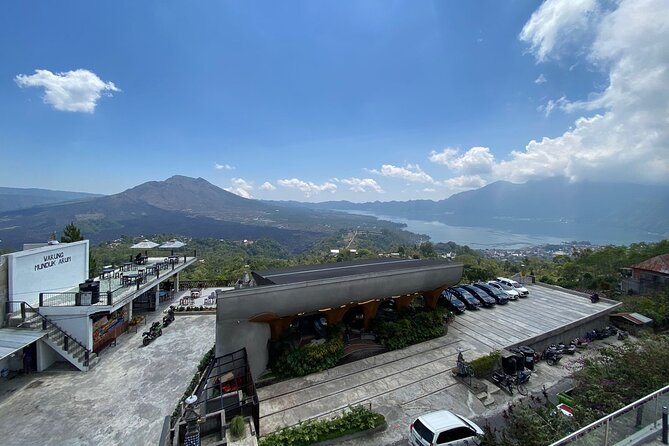
The rice fields are the visual heart of the ride. You move through paddy areas and heritage-listed rice fields on roads and paths that a standard car tour cannot reach in the same way.
From a vehicle, you see a broad view for a few seconds. On a bicycle, you can stop, take photographs, and notice the work around the fields. The changing elevation also helps explain Bali’s farming country, as the route moves from the volcano area toward lower rural communities.
I like this part because it does not treat the rice terraces as a decorative backdrop. The guide connects the fields with farming families and village life. You are encouraged to understand the place, not just photograph it.
Rain is the main concern. Wet roads can slow the ride and reduce visibility. The company provides equipment and insurance, but weather remains outside anyone’s control. If you want the clearest volcano views and driest roads, morning conditions are generally worth hoping for, though no tour can promise them.
Lunch in Banjar Laplapan
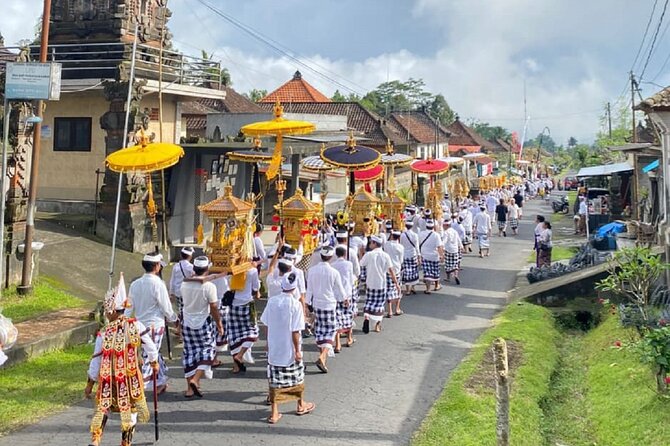
The final stop is a one-hour meal in Banjar Laplapan. After a morning of cycling and cultural visits, lunch gives you time to sit down and reset.
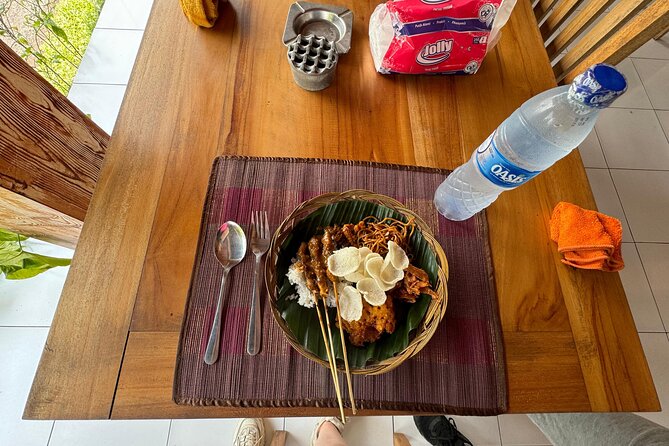
Lunch is included in the price, and the feedback is mostly positive. Several people described it as delicious, with a buffet offering plenty of choices. One family specifically noted that the meal accommodated a person with coeliac disease, though you should still communicate dietary needs clearly when booking or before departure.
There is one fair caution: one meal was described as acceptable but lukewarm. That sounds like an occasional service issue rather than the normal experience, but it is worth keeping expectations sensible. This is a practical included meal, not a destination restaurant.
The meal is a good finish because it leaves room for conversation. By this point, you have seen the volcano, cycled through rural Bali, visited cultural sites, and heard about local customs. Lunch lets the day end at an unhurried pace rather than with a rushed return to the vehicle.
What the $36.66 price really covers
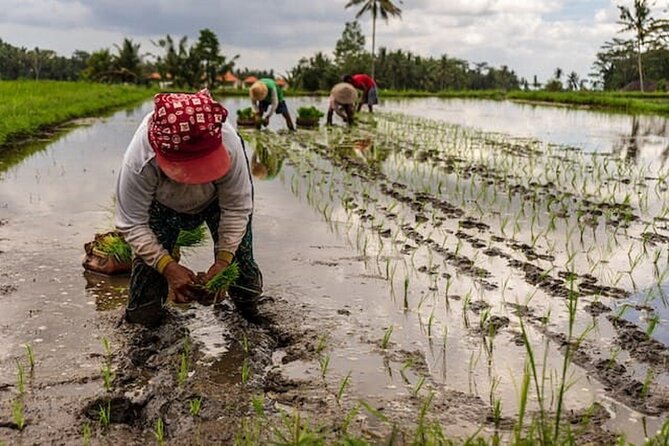
At $36.66 per person, the tour offers strong value if you use the inclusions. The price covers hotel pickup in the Ubud area, an air-conditioned vehicle, an English-speaking guide, bicycle equipment, bottled water, lunch, and personal insurance.
You are also paying for route planning and support. You do not need to work out how to get from Ubud to Mount Batur, arrange a bicycle, navigate rural roads, or find a meal afterward. For a first visit to Bali, that convenience matters.
The maximum of four people is the biggest value point. A small group can make the cultural stops feel more personal, and the guide can keep an eye on the pace. It also reduces the chance of spending the day waiting for a large line of cyclists.
Alcohol, sun block, souvenirs, and personal expenses are not included. Bring sun protection and money for anything extra. The listed insurance covers up to IDR 2,500,000 for people aged 5 to 65, so check the age condition if that matters to your group.
Who should book this cycling tour?
I would recommend it most strongly to families, couples, and first-time visitors who want an easy active day with cultural context. It suits people who like scenery but also want to understand how local schools, farms, homes, and temples fit together.
It is also a good choice for anyone nervous about cycling in Bali. The route is mostly downhill, the pace is gentle, and guides have been praised for patience and clear communication. You are not left to find your own way.
I would think twice if you dislike long vehicle transfers, organized stops, or any possible coffee plantation visit. If you want a serious cycling challenge, this route may feel too easy. It is built for access and sightseeing, not hard exercise.
Some departures include a coffee and herb plantation stop before the volcano views. One person found it interesting, while another would have preferred to skip it. Ask about the current schedule if that stop matters to you.
Practical details before you reserve
The tour lasts about six hours and starts at 8:30 a.m. Pickup is offered from Ubud-area hotels, but you should provide accurate accommodation details when booking so the morning transfer runs smoothly.
Wear comfortable clothing and shoes suitable for cycling. Apply sun block before pickup because it is not supplied. Bring water if you prefer more than the included bottled supply, and carry a camera that you can keep secure during the ride.
Most people can participate, and the stated personal insurance age range is 5 to 65. The company supplies cycling gear, but the information does not specify every item included, so ask if you need a helmet or any special equipment.
Free cancellation is available when you cancel at least 24 hours before the start time. Changes or cancellations inside that window are not accepted for a refund.
Should you book it?
I would book this tour if you want an easy ride through real countryside rather than a high-effort bike adventure. The best parts are the mostly downhill route, the small group, the excellent guides, and the stops that bring you into contact with Balinese education, farming, family life, and religion.
The early drive and possible plantation stop are the main drawbacks. Lunch also seems good overall, though not flawless every time. At $36.66, the combination of transport, equipment, guide, meal, and cultural access makes this one of the better-value ways to get beyond central Ubud for a day.
FAQ
What time does the tour start?
The tour starts at 8:30 a.m.
How long does the cycling experience last?
The full experience lasts approximately six hours. The cycling portion is described in the feedback as roughly 18 kilometers and mostly downhill.
Is hotel pickup available?
Yes. Pickup is offered from hotels in the Ubud area, and the tour includes an air-conditioned vehicle.
What does the price include?
The price includes transport, an English-speaking guide, cycling equipment, bottled water, lunch, and personal insurance for people aged 5 to 65, with coverage up to IDR 2,500,000.
How many people can join the tour?
The tour has a maximum of four people.
Can I cancel for a full refund?
Yes, if you cancel at least 24 hours before the experience start time. Cancellations or changes made less than 24 hours before departure are not refunded or accepted.
Just added around Ubud
- Half-Day Tour: Uluwatu Temple and Kecak Fire Dance Show★ 5.0 · 63 reviews
- 3 Days for the best of Ubud Private Tour★ 5.0 · 63 reviews
- Bali Amazing Cooking Class★ 5.0 · 63 reviews
- Private Mount Batur Sunset Trekking – All inclusive tour★ 5.0 · 63 reviews
- Private Full-Day Handara, Ulun Danu, Jatiluwih and Tanah Lot Tour★ 5.0 · 63 reviews
- Mount Batur Sunrise Trekking★ 5.0 · 65 reviews
- Trunyan Cemetery, Hot Spring, Penglipuran Village, and Waterfall Tour★ 5.0 · 65 reviews
- Bali Iconic Tour with Buffet Lunch and Attraction Tickets★ 5.0 · 66 reviews
Rice Terrace Tours, compared.
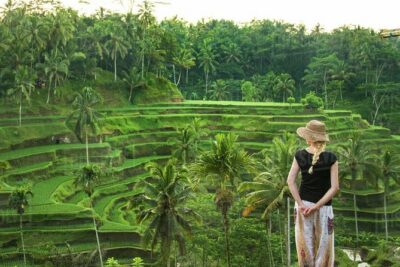
Monkey Forest, Jungle Swing, Rice Terrace, and Water Temple
Read our review →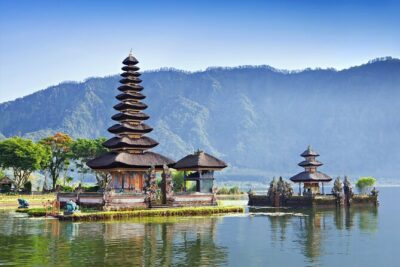
Full-Day Tour to Water Temples and UNESCO Rice Terraces in Bali
Read our review →
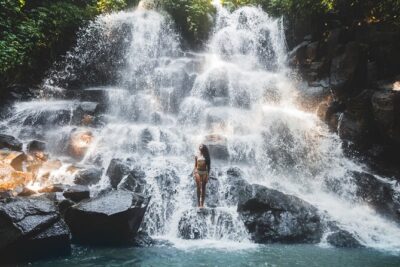
Ubud Top Attractions: Waterfalls, Temples and Rice Terraces
Read our review →
Tetebatu Walking Tour – Rice Terraces, Waterfall & Monkey Forest
Read our review →
Tanah Lot Tour with Ubud Monkey Forest, Rice Terraces, and Waterfalls
Read our review →
Private Full-Day Tour: Balinese Temples and Rice Terraces
Read our review →
Private Full-Day Tour: Ulun Danu Beratan Temple, Jatiluwih and Tanah Lot Temple
Read our review →Browse the lists this tour appears in