Reviewed · UBUD MONKEY FOREST
Day Trip: Ubud Monkey Forest, Rice Terrace, Temple and Waterfall
Bali’s best stories are found beyond the beach. This 8-hour private tour from Nusa Dua links Tegenungan Waterfall, the Sacred Monkey Forest, Tegalalang Rice Terrace, Tirta Empul Temple, and several craft villages in one long day. You get a useful look at Balinese religion, farming, family life, and local work without having to arrange several separate trips.
I like the door-to-door transport and the chance to see both Ubud’s famous scenery and its cultural side. I also like that the tour includes a local English-speaking driver, entrance fees, petrol, parking, and mineral water, which keeps the day simple to budget. The main drawback is the pace: with many stops packed into roughly eight hours, some visits may feel more like an introduction than a slow, thoughtful exploration.
The tour costs $37 per person and is offered as a private activity for your own group. That is a fair price if you want a broad Ubud sampler with transport from Nusa Dua. It is less suited to you if your priority is spending a full morning at one temple, taking a long swim, or lingering over every market and workshop.
In This Review
- Key points to know before booking
- Why this tour works from Nusa Dua
- Tegenungan Waterfall starts the sightseeing
- Two hours among macaques at the Sacred Monkey Forest
- Tegalalang Rice Terrace and Bali’s farming system
- Tirta Empul brings religion into the itinerary
- Village stops turn sightseeing into a cultural lesson
- Family life, plantations, and coffee production
- What the $37 price really covers
- Timing, comfort, and who should book
- The guide can shape the whole day
- Should you book this Ubud day trip?
- FAQ
- How long is the Ubud day trip?
- Is hotel pickup and return included?
- Is this a private tour?
- What is included in the $37 price?
- Are meals included?
- What is the minimum age?
- Can I cancel for a full refund?
Key points to know before booking
- Tegenungan Waterfall opens the day with a powerful 15 to 20-meter cascade, and swimming may be possible when water conditions are clear.
- The Sacred Monkey Forest receives the longest scheduled visit, giving you about two hours among gray macaques and Hindu temples.
- Tegalalang Rice Terrace offers Bali’s classic agricultural view, but the stop is planned for about one hour.
- Tirta Empul is a working Balinese water temple, where religious customs and respectful dress matter.
- Tohpati, Mas, and a silver-crafting stop add local industry to the day, though shopping can become part of the experience.
- Private transport covers a wide pickup area, including Nusa Dua, Tanjung Benoa, Sanur, Kuta, Seminyak, Ubud, Tanah Lot, and Benoa Port.
Why this tour works from Nusa Dua
Nusa Dua is comfortable and polished, but it does not show you much of inland Bali. Ubud offers a very different picture: rice cultivation, Hindu shrines, family compounds, carved wood, woven cloth, coffee production, and village workshops.
This trip is designed to connect those pieces. You are not simply driven to one attraction, given time for a photo, and returned to the hotel. The day adds several cultural subjects to the major sights, including traditional crafts, plantations, Balinese coffee production, rice farming, and the layout of a typical family compound.
The private format matters. Only your group takes part, so you can ask the driver questions and avoid being tied to a large coach schedule. Still, private does not mean slow. The route covers several districts and includes a number of stops, so you should expect a full day on the road.
Pickup begins at about 8:30 a.m. Hotel return transfer is included for a long list of areas. That is especially useful from Nusa Dua, where arranging a separate car to Ubud can add cost and effort. The air-conditioned vehicle, petrol, parking, and mineral water are also included.
More Rice Terrace Tours in Nusa Dua and Jimbaran
- Mount Batur Sunrise Trekking and Rice Terrace Adventure
★ 5.0 · 111 reviews - Gunung Kawi Rice Terrace Swing And Waterfall Private Guided Tour
★ 5.0 · 73 reviews - Bali Hindu temple, Rice terrace, Waterfall -All Inclusive
★ 5.0 · 32 reviews
Tegenungan Waterfall starts the sightseeing
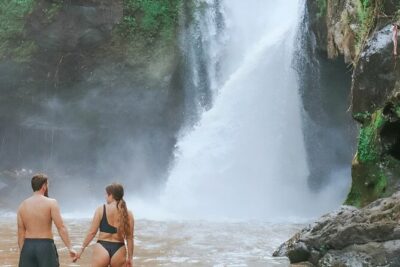
The first stop is Tegenungan Waterfall, one of Bali’s more accessible and frequently visited waterfalls. Water drops from a height of roughly 15 to 20 meters, and the flow can be heavy. You have about one hour here, with admission included.
The appeal is clear. A waterfall gives the day an energetic opening, and the setting provides a sharp contrast to Nusa Dua’s coastal resort atmosphere. If water conditions are clear, swimming is allowed, though the information provided does not promise that conditions will suit swimming on every visit.
Treat the swim as an option, not the main reason to book the tour. With only an hour scheduled, you may prefer to view the falls, take photographs, and enjoy the setting rather than change clothes and spend much of the stop in the water. Your driver can also help you understand how much time is practical.
Tegenungan is described as a waterfall near urban areas, so this is not a remote wilderness outing. That makes it easier to include in a packed Ubud route, but it also means you should not expect solitude.
Two hours among macaques at the Sacred Monkey Forest
The Sacred Monkey Forest Sanctuary receives about two hours, the longest single stop on the schedule. Gray macaques move through a forest filled with Hindu temples, giving you one of Ubud’s most recognizable combinations of nature, religious architecture, and wildlife.
This is the part of the day that benefits most from unhurried time. Two hours allows you to walk through the forest rather than simply stop at a viewpoint. You can look at the temple structures, watch the macaques, and take in how the religious setting and forest are placed together.
You should treat the monkeys as wild animals. The supplied details do not specify particular feeding or photography rules, so listen carefully to your guide and follow posted instructions. Keep your belongings secure and avoid assuming that a calm-looking macaque is harmless.
The sanctuary is a strong fit for you if you want a famous Ubud sight with more than a quick photo opportunity. It may be less appealing if you dislike animals moving close by or prefer quiet temples without a popular visitor setting.
Tegalalang Rice Terrace and Bali’s farming system
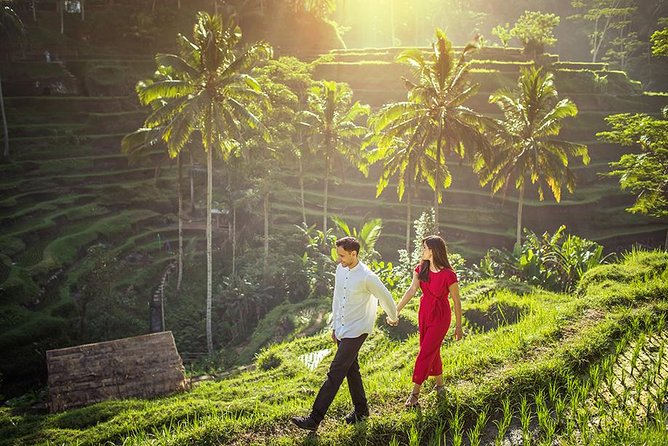
Tegalalang Rice Terrace is scheduled for about one hour. Its appeal comes from the layered rice fields and the traditional farming system that shaped much of Bali’s inland culture.
This stop gives you more than a pretty view. Rice cultivation is tied to daily life, community cooperation, and the island’s long agricultural traditions. The tour also presents the rice-field system as part of its wider look at Balinese life, so your driver can help connect the terraces to the people who work them.
One hour is enough for a view and a short walk, but not for a lengthy exploration. The stop may also feel busy because Tegalalang is one of Bali’s best-known photo locations. Go with realistic expectations: you are seeing a major scenic site as part of a broad cultural day, not taking a dedicated rice-terrace walk.
Comfortable shoes are sensible. The information does not provide exact walking distances or terrain, so you should be ready for some time on uneven ground. Smart-casual clothing is requested for the overall tour, which is also useful for the temple visit later.
More Temple Tours in Nusa Dua and Jimbaran
- Uluwatu Temple Entry and Kecak Fire Dance Ticket
★ 5.0 · 479 reviews - Kecak and Fire Dance Ticket at Uluwatu Temple
★ 4.0 · 222 reviews - Uluwatu Temple, Beaches and Southern Bali Tour
★ 4.5 · 81 reviews - All Inclusive Sekumpul Waterfall Trekking , Handara Gate & Temple
★ 5.0 · 64 reviews
Tirta Empul brings religion into the itinerary
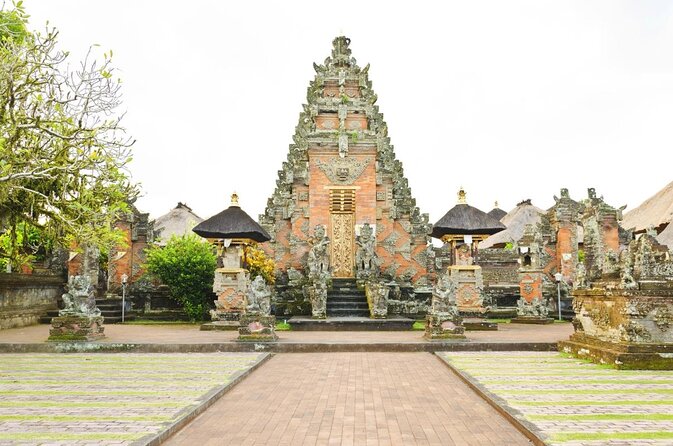
Tirta Empul is a Hindu Balinese water temple near Tampaksiring. Its compound includes a bathing structure, or petirtaan, and the temple is known for its sacred water.
This is an important stop because it gives the day a religious center. The Monkey Forest includes Hindu temples, but Tirta Empul is specifically a water temple, with its own ritual purpose and customs. You get a better sense of Balinese Hindu practice by seeing both settings.
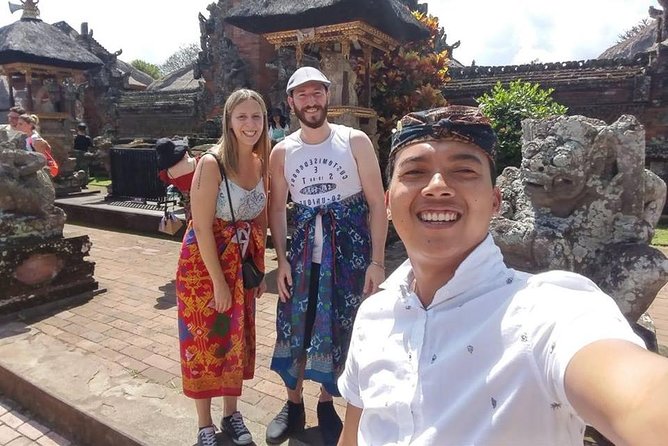
Plan to dress respectfully. The requested dress code is smart casual, and temple visits call for modest clothing. The supplied information does not confirm that a purification bathing experience is included, so do not assume you will take part in the ritual. Ask your driver what is appropriate when you arrive.
The visit lasts about one hour. That is enough to see the temple compound and learn its basic significance, though anyone deeply interested in Balinese religion may want more time than this schedule provides.
One point worth clarifying before departure is the temple name. The overview refers to Puseh Batuan Temple, while the detailed route identifies Tirta Empul. If visiting a particular temple matters to you, confirm the final plan with Bali Natural Tours before the day begins.
Village stops turn sightseeing into a cultural lesson
The tour includes several village visits that add a working side of Bali to the better-known sights.
Tohpati is associated with handicrafts and handwoven batik. The village is also linked with the scenery around the village area. This stop may interest you if you want to understand how cloth is made and see traditional designs in a local setting.
Mas Village is known for wooden art and carving. It is described as an artistic countryside south of Ubud, with woodworkers among the village’s defining professions. This gives you a different craft focus from Tohpati, moving from textiles to wood.
A separate stop is described as the largest silver-crafting place in Bali. The details do not name the location, but the purpose is clear: you will have a chance to see silverwork and possibly shop for Balinese craft items.
These stops can be useful when approached as cultural visits rather than compulsory shopping. Craft production is part of Bali’s local economy, and seeing batik, wood art, or silverwork gives context to the objects sold in shops across the island. At the same time, you should expect commercial elements. If you do not want to buy anything, say so politely and treat the stop as a chance to look and ask questions.
The schedule does not assign exact times to these village visits. Their length may depend on traffic, the day’s pace, and your group’s interests. That flexibility is one advantage of a private tour, but it also means the day may not run to a precise minute.
Family life, plantations, and coffee production
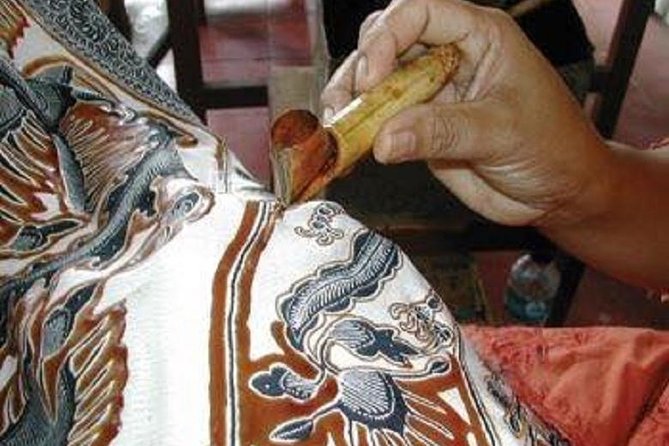
The wider tour description includes a visit to a typical Balinese family compound, plantations, and a coffee production site. These are some of the most useful elements for anyone who wants more than scenic stops.
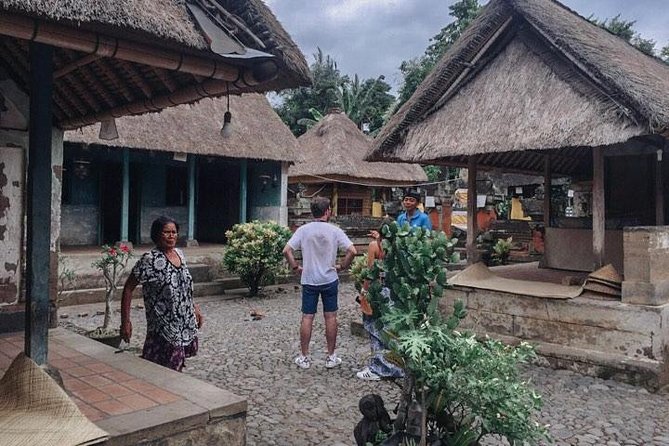
A family compound can help you understand how daily domestic life is arranged in Bali. The information does not give a precise compound name or list every building, so the depth of the visit may vary. Still, it adds a human scale to the day that a waterfall or rice terrace cannot provide.
The plantation and coffee component offers another view of local work. You can learn about coffee production and see how agricultural products fit into the island’s economy. The supplied details do not state that tastings are included, so treat any purchase or tasting as optional unless your guide confirms otherwise.
This part of the route is valuable because it links the visual attractions to the people and work behind them. You see the rice fields, then learn about farming. You visit craft villages, then see how local skills become products. You visit temples, then receive context about religion and family life.
What the $37 price really covers
At $37 per person, the tour offers solid value if you need transportation from Nusa Dua and want several admissions handled in advance. The price includes hotel pickup and return, an English-speaking driver, petrol, parking, mineral water, an air-conditioned vehicle, and entrance fees.
Those inclusions matter in Bali. A long inland day involves fuel, parking, and several entry charges. Paying one price also makes budgeting easier, especially for a private group.
Meals are not included, and personal optional expenses are separate. Alcoholic drinks can be purchased, but they are not part of the tour price. Bring money for lunch and any craft purchases, since the route includes village stops where shopping may be offered.
Group discounts are available, though the tour itself is private for your own group. If several people are sharing the vehicle, the per-person cost becomes more attractive. For a solo booking, the price still buys convenience, but you should compare it with the cost of arranging a private car independently.
Timing, comfort, and who should book
Eight hours sounds generous, but the route is ambitious. The listed sightseeing stops alone account for about five hours: one hour at Tegenungan, two hours at the Monkey Forest, one hour at Tegalalang, and one hour at Tirta Empul. Add driving, lunch, family-compound time, plantations, and craft villages, and you have a full schedule.
That is not a criticism. It tells you what kind of day this is. You are buying variety, convenience, and a broad introduction to Ubud. You are not buying a slow retreat.
I would recommend it to you if you are staying in Nusa Dua and want to see inland Bali without planning a complicated route. It also suits first-time visitors who want temples, nature, agriculture, wildlife, and crafts in one outing.
Families should note the minimum age is five. Most people can participate, but exact accessibility details are not provided. Anyone with mobility concerns should ask the provider about walking surfaces and access before booking.
Cruise ship passengers must provide the ship name, docking time, disembarkation time, and re-boarding time at booking. That information helps the provider judge whether the schedule fits the port call.
The tour is usually booked about 10 days ahead, so reserving early is sensible if your Bali dates are fixed. Confirmation is provided at booking, and free cancellation is available up to 24 hours before the start time. Cancellations or changes made inside that window are not accepted for a refund, and the experience requires a minimum number of participants.
The guide can shape the whole day
The driver is an English-speaking local guide, not simply a person behind the wheel. That distinction matters on a route built around religion, farming, family compounds, and traditional work.
The strongest praise in the available feedback focuses on the guides being kind, helpful, and able to make the day memorable. No guide names are provided, so I cannot point you to a particular driver. I can say that the human side of this tour appears to be one of its strongest assets.
Use that resource. Ask about the rice-growing system, the meaning of the water temple, the family compound, and the difference between batik, wood carving, and silverwork. A good question can turn a quick stop into a useful lesson.
Should you book this Ubud day trip?
Book it if you want a well-priced private overview of inland Bali from Nusa Dua. The combination of included transport, entrance fees, a local English-speaking driver, and a varied route makes the $37 price attractive, especially for a small group.
Skip it if you want a quiet, highly focused day. The schedule has many moving parts, and the craft stops may include shopping. You should also confirm whether the temple visit will be Tirta Empul or Puseh Batuan, since both names appear in the tour information.
For most first-time visitors who want to see Ubud’s main sights without arranging every detail, this is a practical choice. Go for the range of experiences, use the private format to ask questions, and keep your expectations focused on a lively introduction rather than a leisurely retreat.
FAQ
How long is the Ubud day trip?
The tour lasts approximately 8 hours, with pickup beginning at about 8:30 a.m.
Is hotel pickup and return included?
Yes. Pickup and drop-off are included for hotels and locations in areas such as Nusa Dua, Tanjung Benoa, Sanur, Kuta, Seminyak, Ubud, Tanah Lot, and Benoa Port.
Is this a private tour?
Yes. Only your group will participate in the private tour or activity.
What is included in the $37 price?
The price includes hotel return transfer, an English-speaking driver, petrol, parking, mineral water, an air-conditioned vehicle, and entrance fees.
Are meals included?
No. Meals and personal optional expenses are not included. Alcoholic drinks are available for purchase.
What is the minimum age?
The minimum age is 5 years.
Can I cancel for a full refund?
Yes, if you cancel at least 24 hours before the experience start time. Cancellations or changes made less than 24 hours before the start time are not accepted for a refund.
More Monkey Forest Visits
- Bali Private Tour: Waterfall, Monkey forest and Tanah lot sunset
★ 5.0 · 12 reviews - Ubud Sacred Monkey Forest & Art Village Tour
★ 5.0 · 11 reviews - Cretya Ubud and Monkey Forest Sanctuary Tours
★ 5.0 · 3 reviews - Ubud: Monkey Forest, Jungle Swing, Rice Terrace, and Water Temple
★ 5.0 · 7,160 reviews
More Waterfall Tours in Nusa Dua and Jimbaran
- Bali : Instagrams Tour Lempuyang Temple, Tirta Gangga- Tukad Cepung , Tibumana Waterfall
★ 5.0 · 52 reviews - Bali ATV Ride Ubud Waterfall,RiceField,River,Kingkong-Temple cave
★ 5.0 · 38 reviews - Lempuyang Gates of Heaven, Tirta Gangga Temple Swim & Jungle Waterfalls
★ 5.0 · 34 reviews - Bali ATV Ride Ubud Waterfall, Ricefield,River,Barong Cave, Lunch
★ 4.5 · 22 reviews
Just added around Nusa Dua and Jimbaran
- Uluwatu Temple & Kecak Fire Dance Tour★ 4.5 · 17 reviews
- Bali Private Tour: Waterfall, Monkey forest and Tanah lot sunset★ 5.0 · 12 reviews
- Ubud Countryside Sightseeing Tour by ATV Ride★ 4.5 · 3 reviews
- Besakih Mother Temple Tukad Cepung East Bali Private Guided Tour★ 5.0 · 5 reviews
- Ubud Private Tour From Cruise Port Benoa Bali All Inclusive★ 4.5 · 13 reviews
- A La Carte Spa – 180min Custom Plan★ 5.0 · 7 reviews
- Ubud Bali ATV Quad Bike Legong Temple cave with Lunch and Pool★ 5.0 · 6 reviews
- Private Tour Rafting Uluwatu Kecak Dance Sunset and Dinner in Jimbaran Bay★ 5.0 · 8 reviews
Ubud Monkey Forest, compared.
Monkey Forest, Jungle Swing, Rice Terrace, and Water Temple
Read our review →
Ubud Tour with Monkey Forest Waterfalls Temples and More
Read our review →
Tetebatu Walking Tour – Rice Terraces, Waterfall & Monkey Forest
Read our review →
Gorilla Cave ATV Bali Ubud, Monkey Forest, Temple, and Lunch
Read our review →
Tanah Lot Tour with Ubud Monkey Forest, Rice Terraces, and Waterfalls
Read our review →
Bali ATV Quad Adventure – Ubud Monkey Forest and Waterfall
Read our review →
Ubud Tour with Swing, Temple, Monkey Forest, and Waterfall
Read our review →