
Reviewed · NUSA DUA AND JIMBARAN TOURS
Bali Art Experience: Batik Painting & Cultural Connection
Make something you can actually take home. This private batik workshop gives you a direct, hands-on way to meet Indonesian craft traditions, with a demonstration followed by your own cloth design. I especially like the personal instruction from Jenn, whose clear guidance helps beginners get comfortable, and the chance to create your own design instead of copying a fixed pattern. The relaxed café setting also makes the 2.5-hour session feel social rather than formal.
I also like that the finished cloth becomes a meaningful souvenir, not another shop-bought trinket. You learn how wax, color, and a fixing liquid work together, then receive instructions for completing the final stage at home. The main consideration is that the process is not finished during the class: you must wait at least 24 hours before doing the remaining steps, and transportation, food, and drinks are not included.
In This Review
- Key Points About the Batik Workshop
- Why Batik Makes a Better Souvenir
- Choosing a Design You Can Finish
- The Wax and Color Process
- Why the 24-Hour Wait Matters
- Jenn’s Friendly, Personal Teaching
- Nusa Dua and Mengiat Beach
- Price, Timing, and Overall Value
- Who Will Enjoy This Most
- Booking Details to Keep in Mind
- Should You Book the Nusa Dua Batik Class?
- FAQ
- Where does the batik experience begin?
- Where does the activity end?
- How long does the batik class take?
- What is included in the price?
- Are transportation, food, and drinks included?
- Can I bring my own design?
- Is the experience private?
- Is the batik finished during the workshop?
Key Points About the Batik Workshop
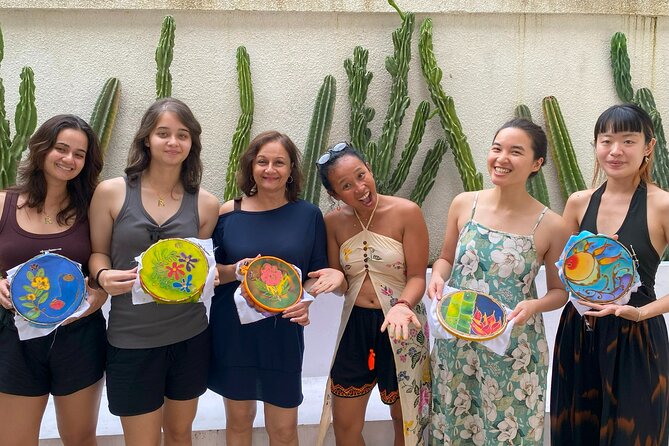
- Create your own design: Choose from available artwork or bring a simple design of your own to trace onto the cloth.
- Learn the wax-resist method: You pencil the design first, paint melted wax along the lines, then add color.
- Jenn provides personal guidance: Her teaching style has been praised for being clear, friendly, and supportive.
- Private group format: Only your own group participates, making it a good fit for friends, couples, or a one-on-one creative session.
- Plan for 1.5 to 2.5 hours: The pace depends on how quickly you work through the stages.
- Finish the project later: The class includes written instructions for the final part, which must be done at home at least 24 hours later.
Why Batik Makes a Better Souvenir
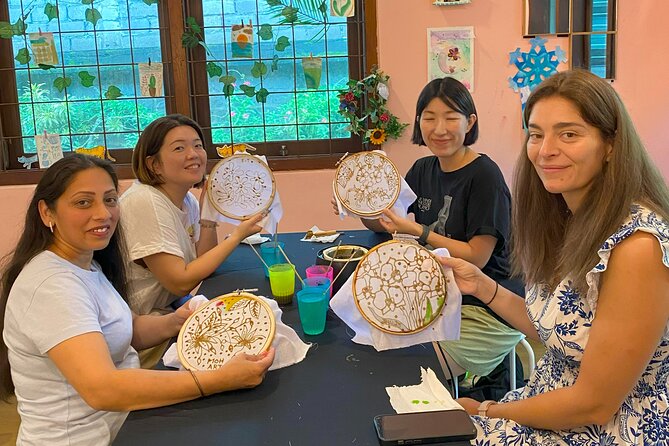
Batik is not simply painting on cloth. The process uses wax to control where dye or paint settles, creating lines and patterns that give the finished piece its character. In this class, you see that method step by step rather than only viewing finished fabric in a shop.
That matters because you leave with a souvenir tied to an activity you remember. You chose the image, traced it, worked the wax, and applied the colors yourself. It will not have the polished finish of a professional textile artist’s work, but that is part of its appeal. A slightly uneven line can remind you exactly where you were still learning.
The workshop also offers a small window into Indonesian craftsmanship without requiring prior art experience. You do not need to arrive as a painter or textile expert. The demonstration comes first, and the instructor supports you as you repeat each stage.
I find this format more rewarding than a short craft demonstration where you watch someone else work. Here, the skill becomes understandable because your hands are involved. You get a better sense of how much care goes into a finished batik piece.
A few more Nusa Dua and Jimbaran trips worth comparing
- ️ Bali Instagram Tour: The Most Famous Spots (Private & All-Inclusive)
★ 5.0 · 2,857 reviews - Nusa Penida Snorkeling Adventure (Private & All-Inclusive)
★ 5.0 · 1,197 reviews - Nusa Penida One Day Trip with All-inclusive
★ 4.5 · 743 reviews
Choosing a Design You Can Finish
Your first task is selecting artwork to trace onto the cloth. You can use one of the provided designs, or bring your own simple image. That option is useful, but keep the word simple in mind. A detailed picture with many tiny lines could make the wax stage slow and frustrating within the available time.
A clean outline, basic shape, or uncomplicated pattern should work better. If you already have an idea, bring it with you in a form that is easy to copy. The supplied information does not specify whether the design is printed, drawn, or shown as a selection, so you should expect some choice but not a huge design studio.
You then trace the artwork with a pencil. This stage may look easy, but it sets up the whole piece. The pencil lines guide the wax, and the wax helps keep color in the intended sections. Take your time here. A careful outline can make the later painting much easier.
I like this design stage because it gives the class a personal center. You are not just filling in a souvenir prepared by someone else. Even when you use a provided image, the finished cloth reflects your decisions about color and application.
The Wax and Color Process
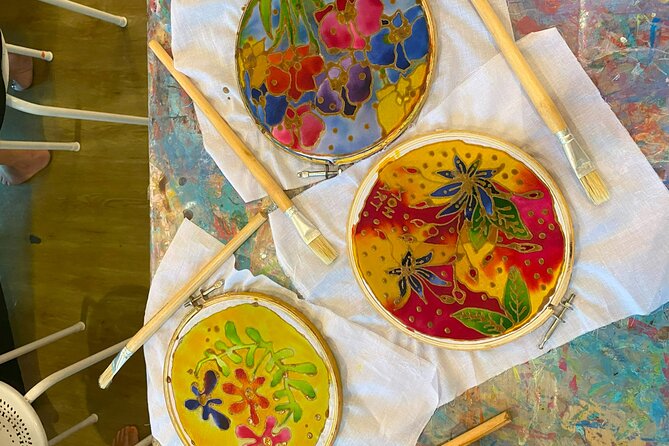
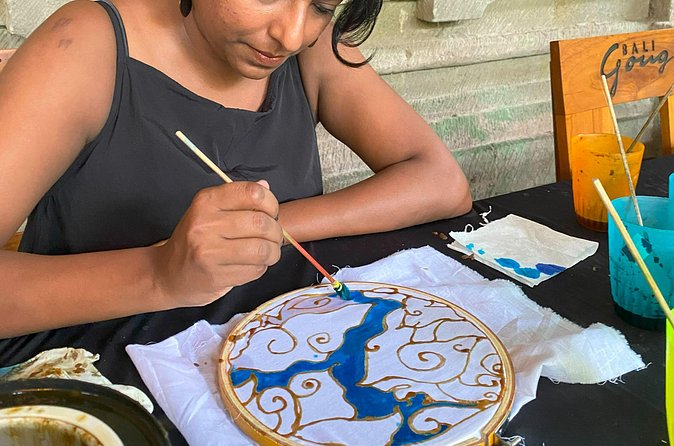
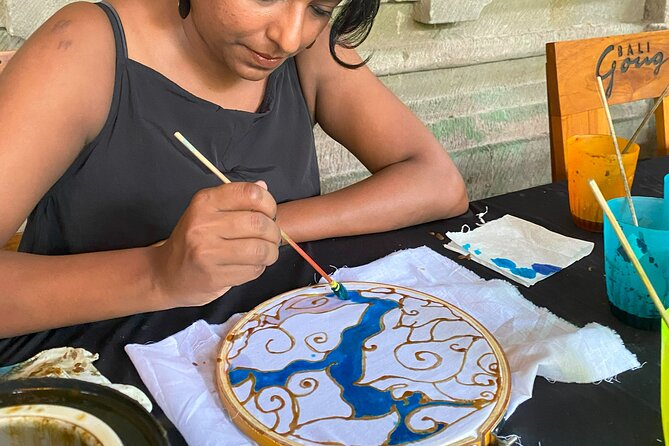
After tracing, you paint melted wax onto the cloth along the pencil lines. This is the part that gives batik its distinctive method. The wax acts as a barrier, helping separate areas when you add color.
The demonstration is important here. You will see the technique before handling the tools yourself, and the guide provides help throughout the process. Follow the lines with care rather than rushing to cover the cloth. The aim is control, not speed.
Once the wax work is done, you paint colors onto the cloth. This is where the activity becomes more open-ended. You can follow the original artwork closely or make your own choices. The information provided does not list the exact color range, so it is best not to arrive expecting a particular palette.
The class is likely most enjoyable if you accept that your piece will be handmade. This is not a precision contest. The pleasure comes from seeing a flat piece of cloth slowly take shape through several traditional steps.
The final class stage involves applying a liquid to fix the colors. At that point, the in-person work is complete, but the batik is not fully finished.
Why the 24-Hour Wait Matters
You must complete the remaining process at home at least 24 hours later. The instructor gives you a handout explaining what to do. This is a useful part of the experience, but it also creates a practical issue for anyone expecting to pack the finished piece immediately.
Before booking, think about your itinerary. If you are leaving Bali shortly after the class, you can still take the cloth and instructions with you, but the souvenir will require a little follow-up after the workshop. If you prefer an activity that produces a finished object before you walk away, this may feel incomplete.
On the other hand, the delayed final step adds continuity. Your Bali craft experience does not end when you leave the café. You have a small project to complete later, and the instructions give you a way to remember the process once you are home.
The supplied information does not say exactly what the home stage involves, so you should rely on the handout rather than assume you know the procedure. Ask questions before leaving if any part of the instructions is unclear.
Still Nusa Dua and Jimbaran, at a slower pace:
- Uluwatu Temple Entry and Kecak Fire Dance Ticket
★ 5.0 · 479 reviews - Kecak and Fire Dance Ticket at Uluwatu Temple
★ 4.0 · 222 reviews - Bali Instagram Tour: The Most Popular Spots ( Private All-Inclusive )
★ 5.0 · 162 reviews - Bali Instagram Tour – Lempuyang Bali Gate of Heaven
★ 5.0 · 149 reviews
Jenn’s Friendly, Personal Teaching
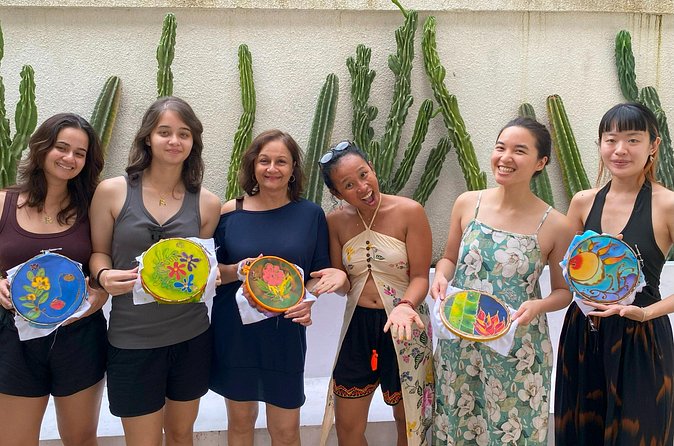
The instructor, Jenn, is one of the strongest reasons to choose this workshop. Her teaching has been praised for explaining each stage clearly and giving participants room to be creative. That combination is important in a craft class. Too much direction can make the result feel generic, while too little can leave a beginner unsure what to do next.
The private format strengthens that personal feel. Only your own group participates, and the class may be suitable for a one-on-one session, a couple, or a small group of friends. One person described having a 1:1 class, while another attended with a friend. That suggests the pace can feel tailored rather than like a large production.
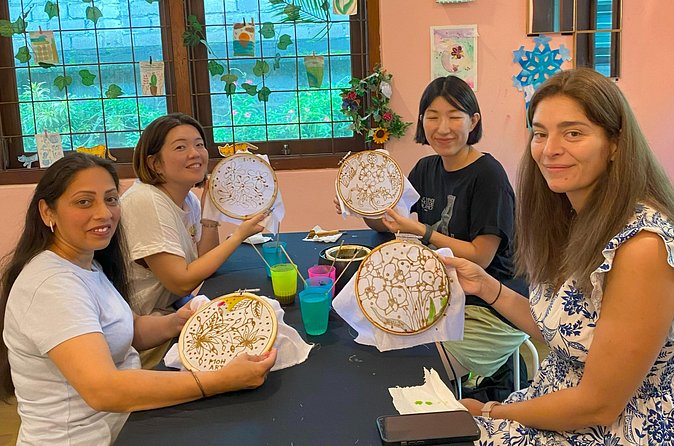
There is no pressure to perform for a crowd. You sit around a table for roughly 1.5 to 2.5 hours, depending on how quickly the work moves. That range is worth noting. A careful artist may need the full time, while a faster participant may finish sooner.
The setting is described as a nice café. That makes the class feel informal, though food and drinks are not included in the price. You should treat the café as the workshop setting, not as part of a meal package.
Nusa Dua and Mengiat Beach
The experience information lists Nusa Dua Beach and Mengiat Beach as stops. These names place the activity in the Nusa Dua area, but the details do not specify how long you spend at either beach or what organized activities take place there.
That means you should not book this primarily as a beach excursion. The main event is the batik class. The beach references may help describe the surrounding area or the itinerary, but you should not assume that swimming, sightseeing, beach equipment, or guided coastal walks are included.
This is still useful when planning your day. Nusa Dua and Mengiat Beach are recognizable points in the area, and you can arrange your own time around them if you want to add beach time before or after the workshop. Transportation is not included, so you must make your own way to the meeting point and back.
The meeting point is TOPM Pizzeria at Jl. Siligita No. 99x, Benoa, Kuta Selatan, Badung, Bali 80361. The activity ends at that same location. Check your route carefully before setting out, especially if you are staying outside Nusa Dua.
Price, Timing, and Overall Value
At $33.45 per person, the price covers the cloth, batik tools, a design to trace, and a licensed guide. It does not cover transportation, food, or drinks. For a private class with materials and personal instruction, the price is reasonable if you value making something yourself.
The value is less about the amount of fabric you take home and more about the time with the process. A shop can sell you finished batik, but it cannot give you the memory of applying the wax and choosing the colors. The private format also makes the cost easier to justify for a small group that wants an activity built around its own pace.
Still, budget honestly. You may need to pay for a taxi or other transport to the meeting point, and you may want to buy something to eat or drink at your own expense. Since the final home process happens later, the price does not buy an entirely finished object on the spot.
The activity is typically booked about 16 days ahead. That does not guarantee that every date will sell out, but it is a sensible reason to reserve before your Bali plans become fixed. The listed operating hours are Monday through Friday, from 9:00 a.m. to 5:00 p.m., for the stated booking period from October 21, 2024, through December 16, 2026.
Who Will Enjoy This Most
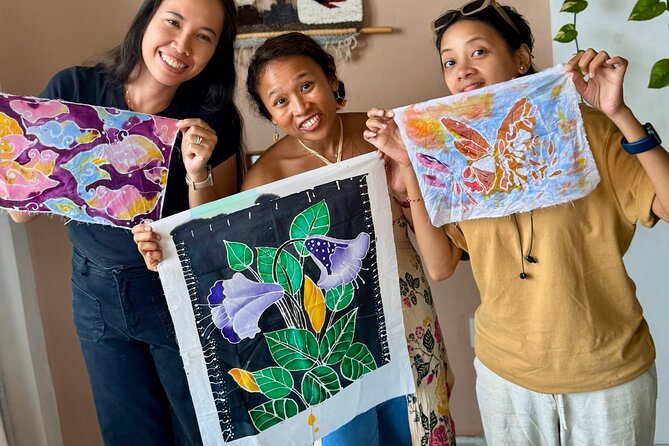
I would recommend this class to anyone who likes making things with their hands. It is especially suited to couples, friends, solo participants, and families or groups who want a quieter cultural activity rather than a fast-moving sightseeing tour.
It is also a good choice if you want a souvenir with a personal story. Your piece may not look perfect, but it will carry your choices from beginning to end. That is often more memorable than buying a mass-produced item.
Beginners should feel comfortable booking. The class starts with instruction, and the guide provides support as you work. The available information says most participants can take part, and service animals are allowed.
You may want to skip it if you dislike seated activities, prefer a fully finished souvenir immediately, or have no time for the home step. The session lasts up to 2.5 hours, and much of that time is spent around a table. It is a craft workshop, not an active beach outing.
Booking Details to Keep in Mind
You receive confirmation at the time of booking, and the experience uses a mobile ticket. The activity is private, so only your group takes part.
The booking is non-refundable and cannot be changed for any reason. Read the date and time carefully before paying. Since transportation is not included, allow enough time to reach TOPM Pizzeria in Nusa Dua.
Bring a simple design if you want full control over the image, but do not choose something overly detailed unless you are happy to spend extra time on fine lines. You should also keep the written instructions for the final stage and plan where you will complete it at least 24 hours later.
Should You Book the Nusa Dua Batik Class?
Book it if you want a personal, creative activity and like the idea of leaving Bali with something you helped make. The strongest points are Jenn’s clear instruction, the private setting, and the freedom to choose your own design and colors.
Think twice if you need transport included, want a finished item immediately, or are mainly searching for a beach tour. The beach stops are part of the stated itinerary, but the class details focus on batik, not organized beach activities.
For the right person, this is a pleasant way to spend part of a Nusa Dua day. It gives you a closer look at Indonesian craft, keeps the group small, and sends you home with both a cloth souvenir and a skill you can try again.
FAQ
Where does the batik experience begin?
It begins at TOPM Pizzeria, Jl. Siligita No. 99x, Benoa, Kuta Selatan, Badung, Bali 80361, Indonesia.
Where does the activity end?
The activity ends back at the meeting point at TOPM Pizzeria.
How long does the batik class take?
The session lasts approximately 2.5 hours. The seated workshop itself may take between 1.5 and 2.5 hours, depending on how quickly the process moves.
What is included in the price?
The price includes batik tools, cloth, a design to trace, and a licensed guide.
Are transportation, food, and drinks included?
No. Transportation, food, and drinks are not included.
Can I bring my own design?
Yes. You can bring your own simple design to trace onto the cloth.
Is the experience private?
Yes. Only your own group participates in this private activity.
Is the batik finished during the workshop?
No. After the in-person stages, you must complete the remaining process at home at least 24 hours later. You receive a handout with instructions.
Just added around Nusa Dua and Jimbaran
- Uluwatu Temple & Kecak Fire Dance Tour★ 4.5 · 17 reviews
- Bali Private Tour: Waterfall, Monkey forest and Tanah lot sunset★ 5.0 · 12 reviews
- Ubud Countryside Sightseeing Tour by ATV Ride★ 4.5 · 3 reviews
- Besakih Mother Temple Tukad Cepung East Bali Private Guided Tour★ 5.0 · 5 reviews
- Ubud Private Tour From Cruise Port Benoa Bali All Inclusive★ 4.5 · 13 reviews
- A La Carte Spa – 180min Custom Plan★ 5.0 · 7 reviews
- Ubud Bali ATV Quad Bike Legong Temple cave with Lunch and Pool★ 5.0 · 6 reviews
- Private Tour Rafting Uluwatu Kecak Dance Sunset and Dinner in Jimbaran Bay★ 5.0 · 8 reviews
Nusa Dua and Jimbaran Tours, compared.

Bali Instagram Tour: The Most Famous Spots (Private & All-Inclusive)
Read our review →
Nusa Penida Snorkeling Adventure (Private & All-Inclusive)
Read our review →

Uluwatu Temple Entry and Kecak Fire Dance Ticket
Read our review →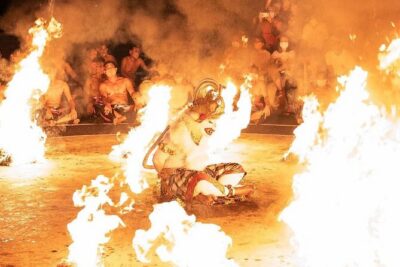

Bali Instagram Tour: The Most Popular Spots ( Private All-Inclusive )
Read our review →
Bali Instagram Tour – Lempuyang Bali Gate of Heaven
Read our review →
Bali Parasailing Adventure,Banana Boat,Jet Ski and Donut Boat with Transfers
Read our review →Browse the lists this tour appears in